
Reviewed · MUSEUMS
American Museum of Natural History Admission Ticket
Dinosaurs, elephants, and a giant blue whale await. The American Museum of Natural History gives you an enormous indoor route through nature, science, and the 13-billion-year story of the universe. I love the range of exhibits, from the Tyrannosaurus Rex skeleton to the 94-foot blue whale model, and I like that you can set your own pace rather than follow a timed tour.
The main drawback is the voucher exchange. Some people get inside quickly, while others must wait to turn a voucher into the actual museum ticket. That extra line can be a serious nuisance with small children, especially when direct museum tickets may move faster.
The museum is worth your time, but you should plan before you arrive. Three hours is the bare minimum for a useful visit, and a half day is more comfortable. If you want the planetarium, butterfly vivarium, special exhibitions, or giant-screen film, you will need to arrange those separately.
In This Review
- Key points before you go
- Why this museum deserves a half day
- Start with the dinosaurs and ancient life
- Meet the elephants in the Akeley Hall
- Look up at the blue whale
- Explore space at the Rose Center
- Make room for the Richard Gilder Center
- What the $37 ticket is really worth
- The entrance process needs careful planning
- Crowds, walking, and family comfort
- Who will enjoy this admission most
- Cancellation and final booking advice
- Should you book the American Museum of Natural History ticket?
- FAQ
- How much does admission cost?
- How long should I allow for the museum?
- What does General Admission include?
- What is not included with General Admission?
- Are children under three charged admission?
- Is the museum accessible for strollers and ADA needs?
- Can I cancel for a refund?
Key points before you go

- More than 40 permanent galleries: You can move from dinosaurs and mammals to ocean life, gems, human cultures, Earth science, and space.
- A 94-foot blue whale: The Milstein Hall of Ocean Life contains one of the museum’s most memorable sights, a huge suspended model that gives the room real drama.
- Great for mixed ages: Children can hunt for dinosaurs and familiar animals while adults enjoy the science, art, and cultural displays.
- Plan for four levels and plenty of walking: Three to four hours works for a focused visit, but seeing all four levels can take longer.
- Extra attractions cost more: General Admission includes the permanent halls, Rose Center, and Richard Gilder Center, but not several ticketed shows and exhibitions.
- Allow time for the entrance process: A voucher may need to be exchanged for an admission ticket, so do not schedule a tight appointment immediately afterward.
Why this museum deserves a half day
The American Museum of Natural History is not a small collection you can quickly check off your New York list. It is a large, multi-level museum with more than 40 exhibition galleries, and its subject matter ranges from the beginning of the cosmos to detailed displays of animals, minerals, fossils, and human societies.
I like the way the museum gives you several kinds of experience under one roof. One room may offer a huge animal model that delights a young child. The next may explain plate tectonics, evolution, or the history of the universe in a way that gives an adult plenty to think about.
The advertised visit lasts about three to four hours, but that depends on your habits. If you walk quickly and choose only major sights, you can cover a lot in that time. If you stop to read labels, take photographs, or let children enjoy each display, you can easily use much of the day.
That flexibility is the ticket’s greatest strength. You are not tied to a guide or a fixed route. You can pause when something catches your eye and leave when everyone’s legs have had enough.
More Museum Tours in New York City
- NYC: 9/11 Memorial & Museum Timed-Entry Ticket
★ 4.8 · 31,428 reviews - NYC: Empire State Building Tickets – Observatory & Museum
★ 4.7 · 25,757 reviews - New York City: American Museum of Natural History Ticket
★ 4.5 · 15,447 reviews
Start with the dinosaurs and ancient life
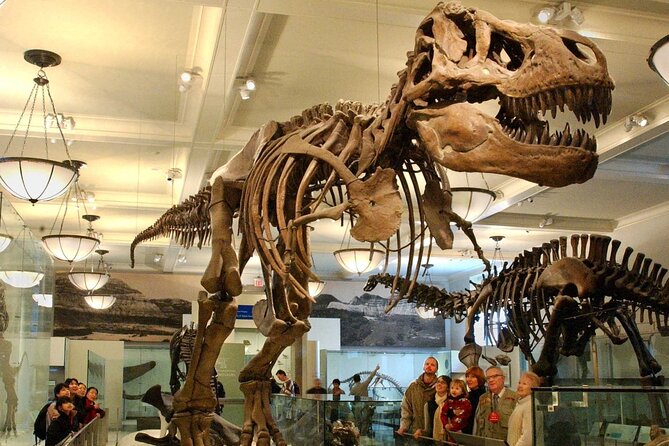
The dinosaur halls are usually the natural first target for families, and the museum gives you plenty to see. The Tyrannosaurus Rex skeleton in the Hall of Saurischian Dinosaurs is a major attraction, with the size and shape of the fossil making an immediate impression.
I would make this area a priority if you have children, teenagers, or anyone who enjoys fossils. It gives the visit a clear beginning and helps younger children connect the museum with something familiar. Adults may appreciate the scientific side, but the first reaction is often simple awe.
You should not expect to see every label in detail on a first pass. The museum is too large for that unless you spend the entire day. Pick the dinosaur displays that interest you most, then move on before tired children turn a good outing into a march.
The building contains four levels, and the route is not always easy to follow. Pick up a paper map at an entrance, information desk, or membership desk. Mark two or three priority areas before you start, since it is easy to lose time wandering between rooms.
Meet the elephants in the Akeley Hall
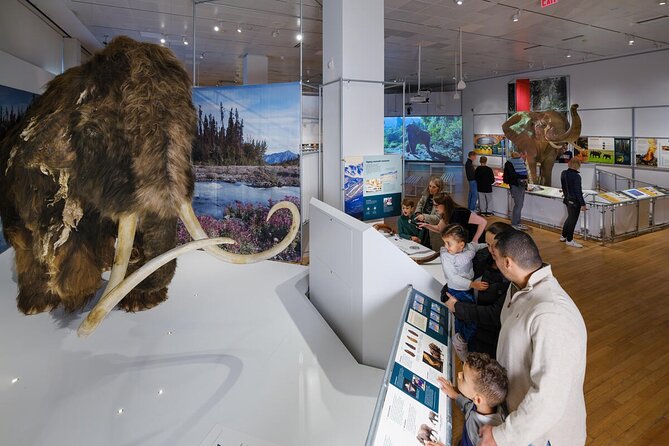
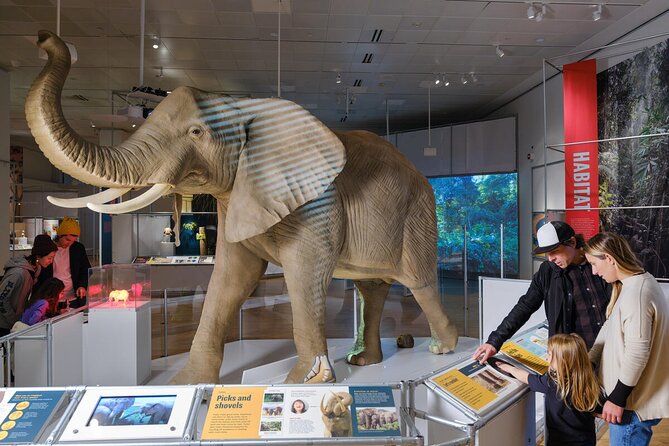
The Akeley Hall of African Mammals is another strong stop. Its Asian elephants provide the kind of large, instantly understandable display that works for nearly every age group.
The animal halls are designed to make you look closely. You will see preserved animals arranged in carefully built scenes, giving the displays a visual quality beyond a simple row of specimens. The result can be especially effective for children, who may recognize the animals before they understand the science behind them.
This is also a good area for families with different interests. One person can study the animals and habitats, while another focuses on the construction and detail of the displays. If your group includes adults and children, these halls help keep everyone involved.
Still, the museum’s size means you should not linger equally long everywhere. I would use the animals as anchor points, then choose a few nearby exhibits instead of trying to cover every room in sequence.
Look up at the blue whale

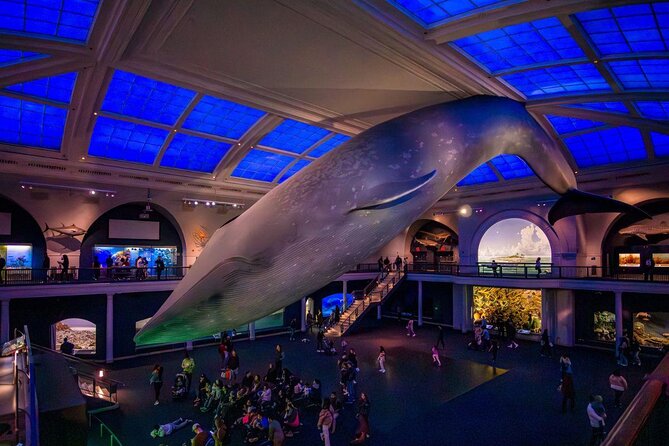
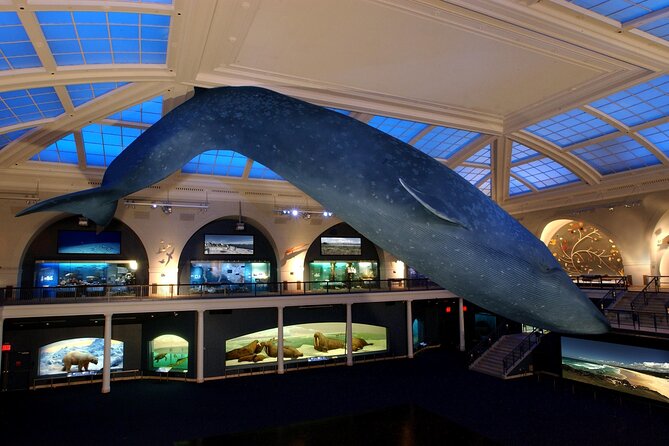
The 94-foot-long blue whale model in the Milstein Hall of Ocean Life is one of the museum’s signature sights. Its scale changes the whole mood of the room. You do not simply read about ocean life, you look up at a creature large enough to make the surrounding galleries feel small.
This is a good stop when children need a visual break from fossils and text panels. It is also one of the better places to take photographs, although the museum can become crowded and warm during busy periods.
The ocean galleries add variety to a visit dominated by dinosaurs and land animals. You can shift from bones and fossils to marine life, then continue to other parts of natural science without leaving the building.
I would place this hall high on your list, especially if you are visiting for only three hours. It is memorable, easy to appreciate without a long scientific background, and different from the museum’s other major rooms.
A different kind of day out entirely:
- NYC: SUMMIT One Vanderbilt Tickets
★ 4.7 · 51,195 reviews - NYC: Empire State Building Observation Deck Tickets
★ 4.7 · 22,072 reviews - NYC: Edge Observation Deck Admission Ticket
★ 4.6 · 20,918 reviews - New York City: Statue of Liberty & Ellis Island with Ferry
★ 4.6 · 18,683 reviews
Explore space at the Rose Center
General Admission includes access to the Rose Center for Earth and Space. This gives you a chance to move beyond Earth’s animals and fossils and consider the larger story of planets, stars, and the universe.
The museum presents the history of the universe as roughly 13 billion years, giving the visit a very broad time scale. After seeing a dinosaur skeleton, you can shift your attention from one ancient creature to the origins and structure of the cosmos.
The Rose Center works well for adults and older children who enjoy science. Younger children may prefer the huge animal displays, so I would watch your group’s energy and not force everyone to read every panel.
The separate Hayden Planetarium Space Show is not included with General Admission. That distinction matters. If you want the planetarium presentation, you need a different ticket, and you should not assume the basic admission pass covers it.
Make room for the Richard Gilder Center

The admission also includes the Richard Gilder Center for Science, Education, and Innovation. It adds a newer science-focused part of the museum experience and gives you another reason to set aside more than a quick hour.
The Gilder Center is useful for a return visit as well as a first visit, since the permanent halls already offer more material than most people can see in one day. If you are planning your route, check the map and work this area into your schedule instead of hoping you will find it by accident.
Because the museum can feel confusing, a little planning pays off. Choose a starting point, identify the rooms you most want to see, and use the map to connect them. A planned route will save energy and reduce the backtracking that can make the building feel harder than it needs to be.
What the $37 ticket is really worth
At $37 per person, this is not a casual five-minute attraction. The price makes the most sense when you use the museum as a substantial part of your day.
For a family, the total cost rises quickly, so you should decide whether your group will stay long enough to benefit. If you plan only a short visit before another timed activity, the value is weaker. If you expect to spend three to six hours among the halls, the admission gives you plenty to work with.
The ticket includes more than 40 permanent exhibition halls, the Rose Center for Earth and Space, and the Richard Gilder Center. That is a solid core visit, particularly for children who enjoy animals, dinosaurs, and space.
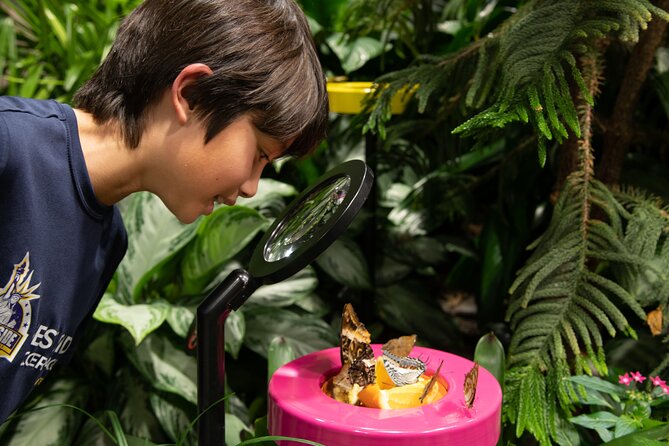
It does not include ticketed exhibitions, Invisible Worlds, the butterfly vivarium, the giant-screen film, or the Hayden Planetarium Space Show. Check those exclusions before you arrive. Several special attractions sound like natural parts of a museum visit, and it is easy to assume they are included when they are not.
New York residents have a different arrangement: they may pay what they choose for General Admission to the museum. That makes the $37 price less attractive for eligible local residents, while out-of-town visitors may find the standard admission easier to justify.
The entrance process needs careful planning
The most important practical warning concerns the voucher. A voucher is not always the same thing as the final admission ticket. You may need to exchange it at the museum, and the line can be short or frustratingly long.
Some people report quick entry, while others wait much longer, including an hour or more when the museum is crowded. With a one-year-old and a three-year-old, that delay can change the whole mood of the day.
If your schedule is tight, direct purchase through the museum may be worth comparing before you commit. The third-party voucher can be convenient, but convenience disappears if you still need to queue for a ticket and deal with a code that does not load properly.
Save the confirmation information before you leave your hotel. A few people have had trouble opening the link or retrieving the QR code, creating a delay at the entrance. This is not a reason to skip the museum, but it is a reason to prepare.
Once inside, collect the paper map. The museum has many halls and four levels, and the signs may not always give you the clean route you want. A map in your hand is more useful than wandering until you happen upon the blue whale or dinosaur halls.
Crowds, walking, and family comfort
The museum is family-friendly, but family-friendly does not mean effortless. You will do a lot of walking on hard floors, and a full visit can tire both adults and children.
The museum may feel busy even early in the day. Crowds can build quickly, and some rooms may become hot or humid when many people gather inside. If you want a calmer first hour, arriving near opening time is sensible, though early arrival cannot guarantee empty galleries.
Strollers and ADA access work well according to the available information, which makes the museum more practical for families with small children and people with mobility needs. Service animals are allowed, and most people can take part without special requirements.
Food is another small but useful consideration. The food court has gluten-free choices, including gluten-free pizza and brownies. That will not replace a full meal plan for every family, but it can make a long museum day easier for someone with dietary restrictions.
Plan a real break if you stay several hours. The museum is large enough that even enthusiastic children may need food, rest, or a change of pace before continuing.
Who will enjoy this admission most
I would recommend this experience most strongly to families, couples, friends, and solo visitors who enjoy choosing their own route. Teenagers can find plenty here, especially in the dinosaur, animal, space, and ocean galleries.
It also suits a rainy or very hot New York day. The museum gives you hours of indoor activity and pairs well with Central Park, which is nearby for a walk before or after your visit.
You should be comfortable with a large building and a lot of walking. If you dislike crowded rooms, confusing routes, or reading displays at your own pace, this may feel tiring rather than relaxing.
The museum is also a good choice for repeat New York visits. You do not need to see every gallery in one day. A first visit could focus on dinosaurs, animals, and the whale, while another visit gives more time to space, Earth science, or the Gilder Center.
Cancellation and final booking advice
Free cancellation is available if you cancel at least 24 hours before the local start time. Cancellations made within 24 hours are not refundable, and changes inside that period are not accepted.
I would book this admission if you want a major museum day and can allow at least three hours. Before paying, compare the voucher process with buying directly from the museum, particularly during a busy season or when traveling with toddlers.
Should you book the American Museum of Natural History ticket?
Yes, with one important condition: plan enough time and prepare for the ticket exchange.
The museum earns its place on a New York schedule through its scale and variety. The T. Rex, Asian elephants, blue whale, Rose Center, and Gilder Center give you clear highlights, while the many permanent galleries let you build a visit around your own interests.
At $37, it is good value for a long visit, but less so for a rushed stop. Bring the map, save your voucher, allow extra time at the entrance, and decide in advance which three or four areas matter most to you. If you do that, this can be one of the most rewarding indoor stops in Manhattan, especially for a family.
FAQ
How much does admission cost?
The listed price is $37 per person.
How long should I allow for the museum?
The approximate visit length is three to four hours. You may need longer if you want to see many of the more than 40 galleries in detail.
What does General Admission include?
General Admission includes more than 40 permanent exhibition halls, the Rose Center for Earth and Space, and the Richard Gilder Center for Science, Education, and Innovation.
What is not included with General Admission?
Ticketed exhibitions, Invisible Worlds, the butterfly vivarium, the giant-screen film, and the Hayden Planetarium Space Show are not included.
Are children under three charged admission?
Children under three qualify for waived admission fees.
Is the museum accessible for strollers and ADA needs?
The available information indicates that the museum works well for strollers and ADA access. Service animals are also allowed.
Can I cancel for a refund?
Yes. You can receive a full refund if you cancel at least 24 hours before the experience start time. Cancellations within 24 hours are not refundable.
More History Tours in New York City
- NYC: Starship Landmark 90 Minute Sightseeing Cruise
★ 4.6 · 3,666 reviews - Starship Landmark 90 Minute Sightseeing Cruise
★ 4.5 · 2,073 reviews - NYC: Speakeasy Drinks and Prohibition History Tour
★ 4.7 · 474 reviews - History and Hauntings of Salem Guided Walking Tour
★ 5.0 · 14,564 reviews
Just added in New York City
- All Inclusive Airport Arrival Transfer to NYC/ Brooklyn/Queens★ 4.0 · 849 reviews
- All Inclusive Airport Departure Transfer NYC/ Brooklyn/Queens★ 4.0 · 342 reviews
- The Escape Game Brooklyn: Epic 60-Minute Adventures in City Point★ 5.0 · 332 reviews
- Brooklyn Food Walking Tour: Local Eats & Family‑Run Shops★ 5.0 · 592 reviews
- Brooklyn Bridge & DUMBO Food Tour: Local Eats & Landmarks★ 5.0 · 478 reviews
- Harlem: Central Harlem Sunday Gospel with Locals★ 3.9 · 499 reviews
- West Harlem: Gospel Church Service and Sunday Walking Tour★ 4.3 · 411 reviews
- Manhattan: Statue and Skyline Cruise Aboard a Luxury Yacht★ 4.8 · 540 reviews
Museums, compared.


Empire State Building Tickets – Observatory & Museum
Read our review →

9/11 Memorial, Ground Zero Tour with Optional 9/11 Museum Ticket
Read our review →

All-Access 9/11: Ground Zero Tour, Memorial and Museum, One World Observatory
Read our review →
Browse the lists this tour appears in