
Reviewed · HISTORICAL TOURS
Charleston: History and Architecture Guided Walking Tour
Charleston hides its best stories in plain sight. I like the way this 90-minute walking tour connects grand landmarks with three quiet alleys, and I like that guides such as Jeff, Emerson, Paige, Jackson, and Jaxson bring local stories instead of simply pointing at old buildings. The main consideration is access: the tour is described as wheelchair accessible, yet it is also marked unsuitable for people with mobility impairments, so you should confirm the route before booking.
You’ll walk about one mile through the South of Broad and French Quarter districts, passing cobblestone streets, historic homes, wrought-iron gates, Rainbow Row, City Market, and several major landmarks. Entry inside St. Michael’s Church, Dock Street Theatre, and the Old Exchange depends on availability, so treat those interiors as welcome extras rather than guaranteed stops.
In This Review
- Key details that shape the experience
- Starting downtown and finding your bearings
- South of Broad: houses, gates, and Charleston style
- Three alleys that change the pace
- French Quarter landmarks and historic interiors
- Rainbow Row and Charleston’s picture-postcard side
- City Market and St. Philip’s Church
- A fuller look at Charleston’s past
- Finishing at Pineapple Fountain
- Is $29 a fair price?
- Who should book this Charleston walk?
- Should you book it?
- FAQ
- How long is the Charleston History and Architecture Tour?
- Where does the tour meet?
- What landmarks are included?
- Are the historic building interiors guaranteed?
- Is the tour wheelchair accessible?
- What should I bring?
Key details that shape the experience
- Three secret alleys add quieter corners and architectural details that are easy to miss on your own.
- A one-mile route keeps the tour manageable, with frequent stops for stories and questions.
- Three important interiors may be included: St. Michael’s Church, Dock Street Theatre, and the Old Exchange.
- Expert local guides have been praised for humor, clear storytelling, local knowledge, and patience with questions.
- The route finishes at Pineapple Fountain, giving you a pleasant place to continue exploring afterward.
- The $29 price is strong value if the historic interiors are open and you want context for Charleston’s famous streets.
Starting downtown and finding your bearings
The tour begins in Charleston’s Historic Downtown at the Charleston Tours & Activities windows. Your guide meets you beneath the awning, usually arriving about 15 minutes before departure. I would arrive 10 minutes early for check-in, especially if you need to locate the meeting point in an unfamiliar part of town.
There is no transport involved. You walk from the start to the finish, so this works best as an early introduction to the city. After 90 minutes, you will know which streets deserve a second look and which landmarks you want to revisit at your own pace.
The pace is described as leisurely, with frequent stops. That matters in Charleston, where the heat, humidity, uneven pavement, and occasional cobblestones can make even a short walk feel longer than the mileage suggests. Wear comfortable shoes and clothing suited to the weather. The tour runs rain or shine, so a light rain layer can be more useful than relying on a perfect forecast.
More History Tours in Charleston
- Charleston’s Old South Carriage Historic Horse & Carriage Tour
★ 5.0 · 10,023 reviews - Historic Charleston Guided Sightseeing Walking Tour
★ 5.0 · 6,216 reviews - Charleston Horse-Drawn Carriage Tour: Explore Historic Charleston
★ 5.0 · 3,561 reviews
South of Broad: houses, gates, and Charleston style
The South of Broad district gives the tour its strongest visual opening. Here you see the historic homes and formal streetscapes that make downtown Charleston so recognizable. The buildings are not just backdrops for photographs. Their proportions, colors, gates, and decorative ironwork help explain how the city presents its past.
Pay close attention to the centuries-old gates. The wrought iron is one of the route’s most appealing details, and a guide can show you features you might walk past without noticing. From the street, a house can look like another pretty Charleston facade. With context, you begin to notice the entrance design, the boundary between public pavement and private garden, and the small choices that give each property its character.
The architecture portion is strongest when your guide links design to local history. Paige was praised for explaining how architecture fit into Charleston’s beginnings, while other guides have been singled out for pointing out details that would otherwise go unnoticed. That combination is useful: you get the broad story, then a reason to look closely at the buildings in front of you.
One limitation is that the tour promises architecture and history within a tight 90-minute window. If you want a technical study of building materials, floor plans, or architectural periods, you may find the discussion fairly brisk. One person specifically wished for more architectural detail and a longer tour. I would view this as a well-paced introduction, not a specialist architecture seminar.
Three alleys that change the pace
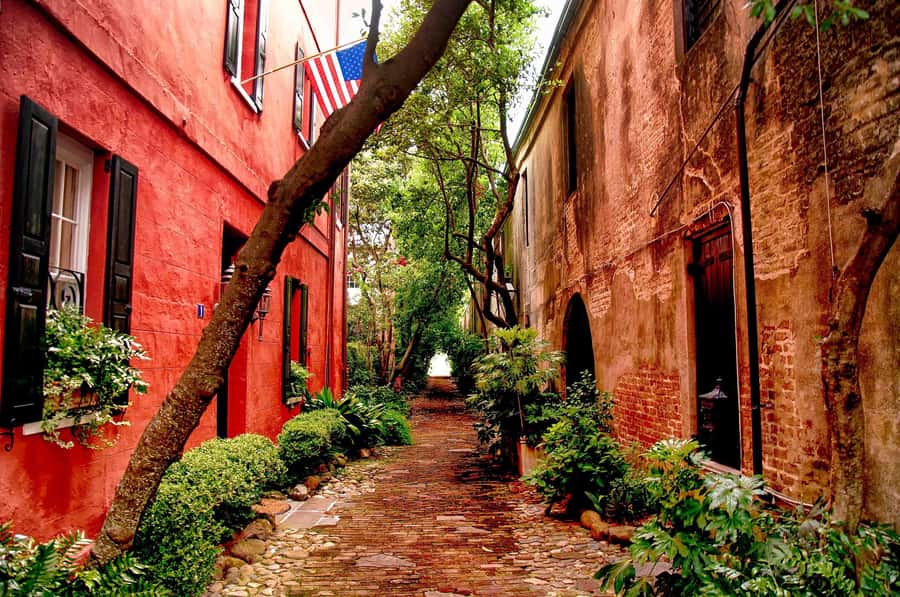
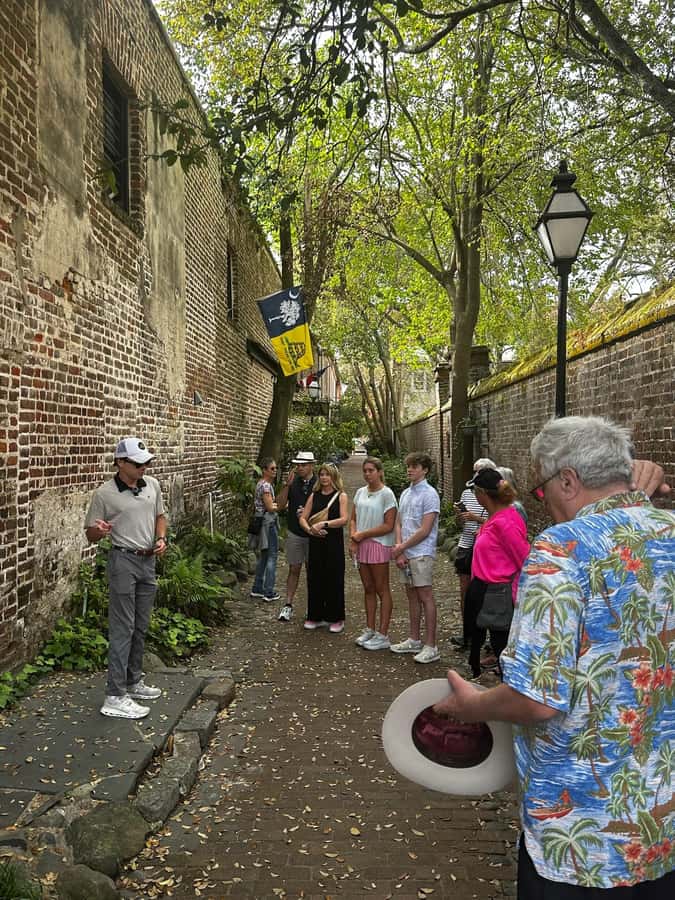
The three secret alleys are a major reason to choose this tour over a basic downtown stroll. They give you a break from the obvious attractions and show a more intimate side of Charleston. These narrow passages are also where a guide’s local awareness earns its keep, since you might not discover them without help.
I like this part because it turns sightseeing into a bit of detective work. You move from well-known streets into quieter corridors, then hear why these spaces matter. The alleys also make the tour feel less like a checklist of famous facades.
Do not expect each alley to be a major attraction in itself. Their value comes from the stories, the change of scale, and the chance to see corners that are easy to overlook. If you are taking photographs, these stops may offer more atmosphere than the larger landmarks, but the exact experience depends on the guide and current access.
French Quarter landmarks and historic interiors
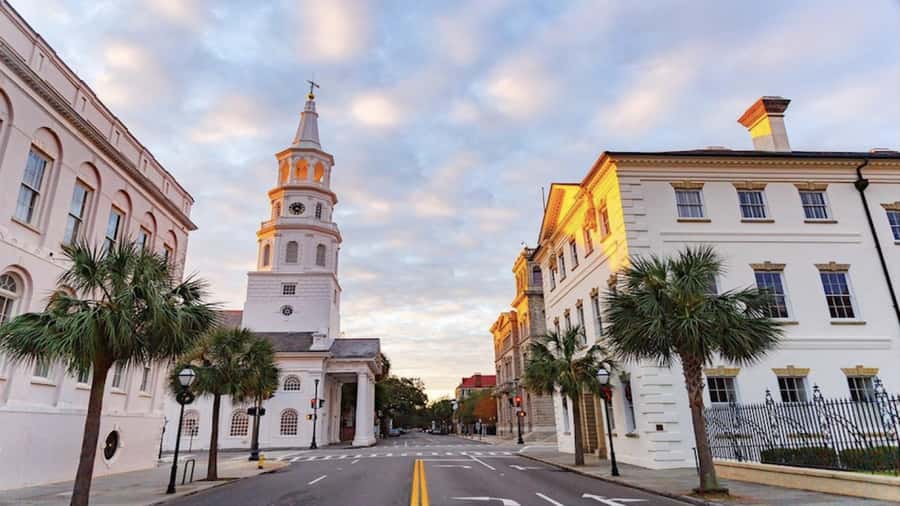
The route continues through Charleston’s French Quarter, a district filled with historic buildings, churches, galleries, and streets made for slow looking. The tour includes possible visits inside St. Michael’s Church, Dock Street Theatre, and the Old Exchange.
The word possible is important. Interior entry is subject to availability, so you should not book this tour solely for guaranteed access to all three. When open, these interiors add real value because you are not only looking at Charleston from the sidewalk. You get a closer sense of the spaces behind the facades and a better connection between the city’s public buildings and its past.
St. Michael’s Church is one of the major landmarks on the route. A guide can give the church a place in the wider story of Charleston rather than leaving it as a photo stop. Dock Street Theatre adds another kind of historical setting, while the Old Exchange brings a major civic building into the walk.
Access can affect the day’s balance. If one or more interiors are closed, the tour still has the districts, alleys, homes, gates, and outdoor landmarks, but the $29 value is a little less impressive than it would be with all three entries available. If interior visits matter greatly to you, check conditions when you book or ask the operator before departure.
More Walking Tours in Charleston
- Ghosts of Charleston Night-Time Walking Tour with Unitarian Church Graveyard
★ 4.5 · 2,835 reviews - Hidden Alleyways and Historic Sites Small-Group Walking Tour
★ 5.0 · 2,335 reviews - Highlights of Charleston Guided Walking Tour
★ 5.0 · 2,206 reviews - Charleston Haunted Booze and Boos Ghost Walking Tour
★ 5.0 · 1,569 reviews
Rainbow Row and Charleston’s picture-postcard side
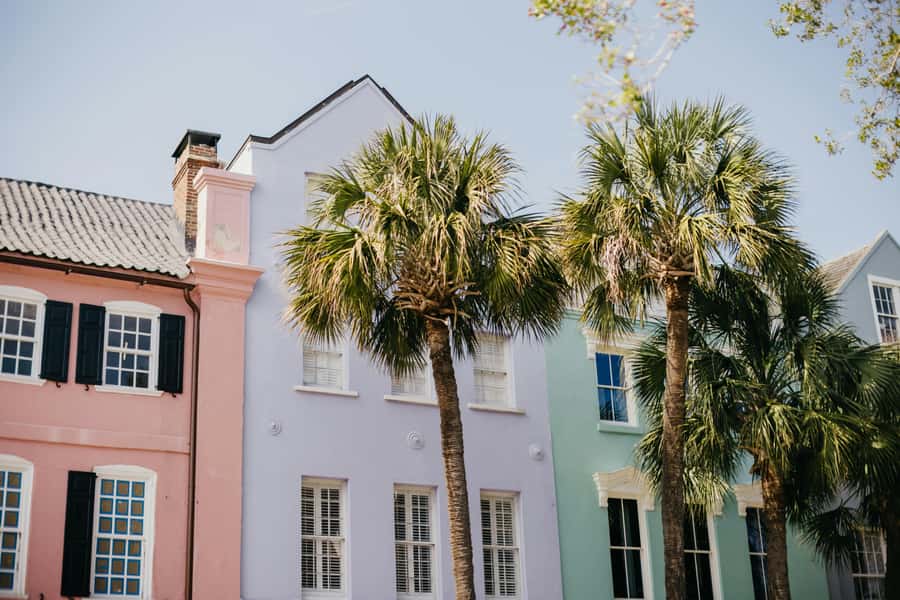
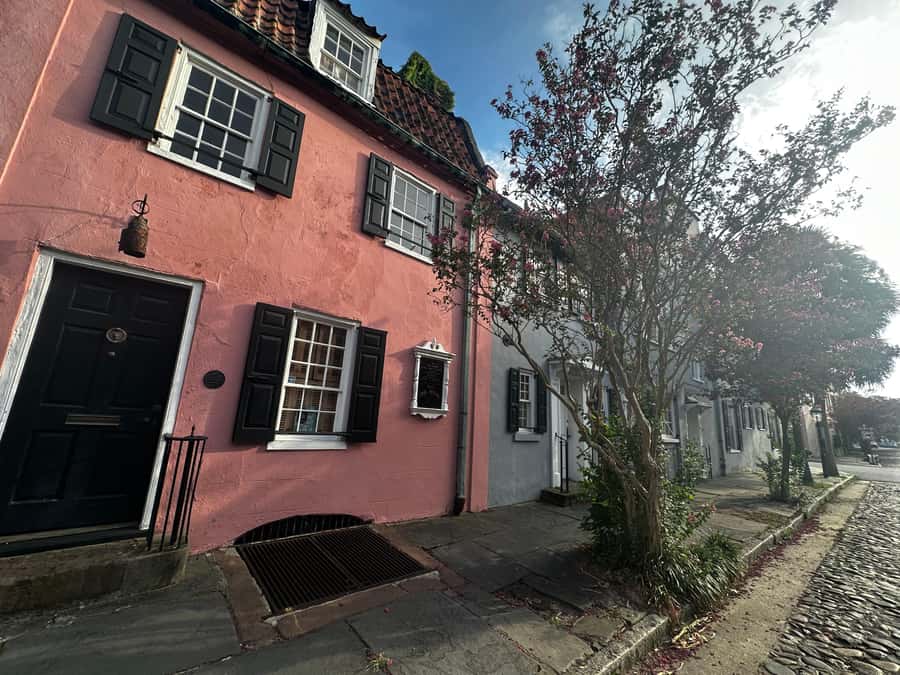
Rainbow Row is one of the city’s most recognizable stretches of colorful historic homes. It is an easy place to admire the colors and take photographs, but the guide’s explanation is what gives the stop more meaning.
I find guided context especially useful here. Without it, Rainbow Row can become a quick photo stop surrounded by other visitors. With a good explanation, you can better understand how this famous group of buildings fits into the French Quarter and the city’s larger architectural identity.
The route does not promise a long pause at every landmark. The guide must keep the group moving and still reach Pineapple Fountain within the 90-minute schedule. You should enjoy Rainbow Row as one part of a wider walk, not expect an extended photography session.
City Market and St. Philip’s Church
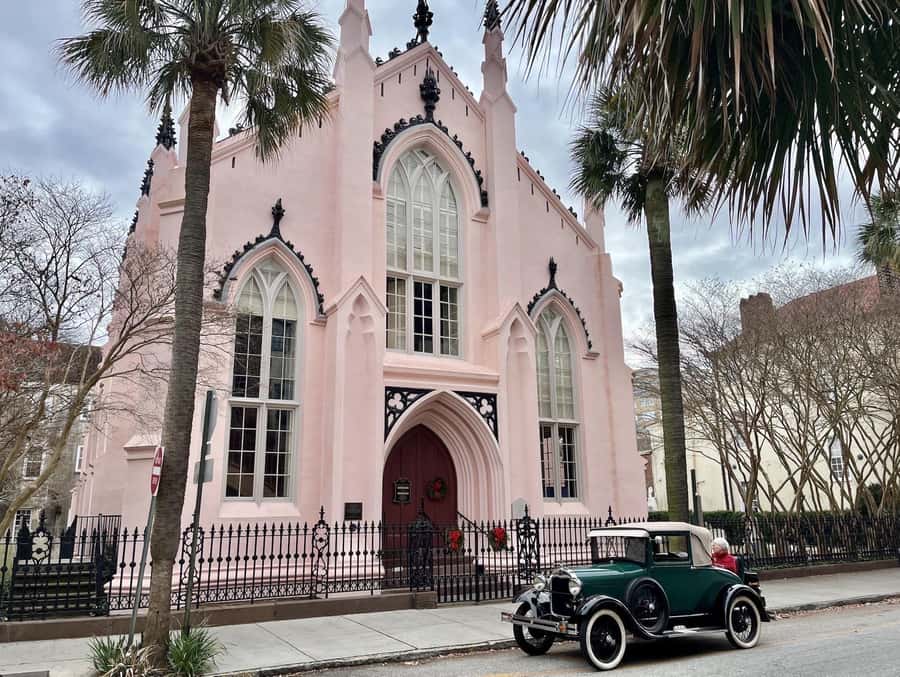
City Market adds a busier public space to the route. After the quieter alleys and residential streets, the market gives you a livelier change of scene. It also helps show that Charleston is not only grand homes and historic churches. It is a working downtown with places where people gather, shop, and pass through.
St. Philip’s Church brings the focus back to Charleston’s religious and civic architecture. Stops like this work best when you listen for the link between the building and the city around it. Several guides have been praised for answering questions and adding local details about food, drinks, and Charleston life, so this is a good point to ask about anything you notice.
The tour’s strongest guides appear to balance prepared material with conversation. Jeff has been praised for entertaining anecdotes and a native Charleston perspective. Emerson has earned praise for his background in history and ability to explain the city clearly. Paige has been described as passionate and willing to discuss the Gullah Geechee people. Jackson and Jaxson have been appreciated for humor, energy, and an easy way of keeping the walk moving.
The guide you receive will shape the experience. That is true of any walking tour, but especially here because so much of the value comes from storytelling. The company uses several guides, and the tone may range from history-focused to more playful. The strong pattern is clear: visitors value guides who welcome questions, speak clearly, and connect facts to stories.
A fuller look at Charleston’s past
The tour covers Charleston’s past and present, but you should know what kind of history fits into 90 minutes. You will hear stories tied to buildings, streets, churches, local customs, and the city’s growth. The route gives you a useful framework for later visits to museums and historic houses.
At the same time, the treatment of slavery and the slave trade deserves attention. One assessment of the tour found that this subject did not receive as much space as expected, while another specifically praised Paige for discussing the Gullah Geechee people and keeping the presentation direct. That suggests the depth can depend on the guide and the questions asked.
If this history is central to your visit, I would treat the tour as an introduction, then seek out a dedicated experience focused on slavery, the African American experience, or Gullah Geechee culture. That is not a reason to reject this walk. It is a reason to set your expectations correctly and ask thoughtful questions along the way.
Finishing at Pineapple Fountain
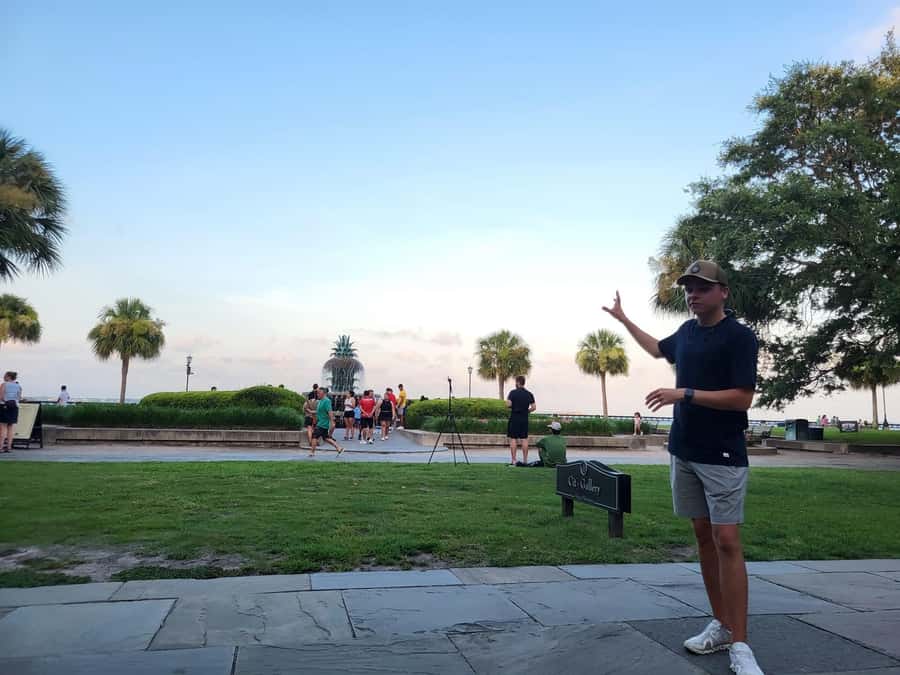
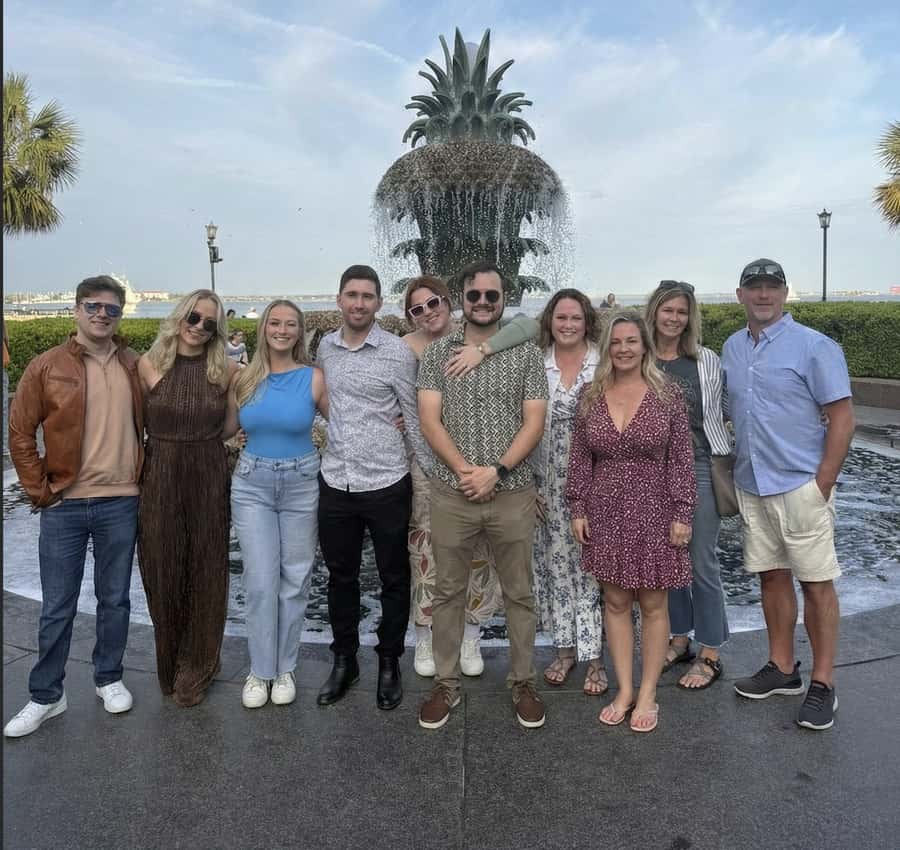
The tour ends at Pineapple Fountain, a fitting final landmark for a Charleston introduction. The finish gives you a clear endpoint rather than dropping you somewhere mid-route, and it leaves you well placed to continue exploring on foot.
Pineapple Fountain is also useful as a planning marker. After the tour, you can pause, take photographs, or decide where to go next. The route’s finish makes the experience easy to pair with the rest of a day downtown, though the tour itself does not include transportation or additional activities after the fountain.
Because the walk covers only about one mile, you still have energy for more sightseeing. I would schedule this tour near the beginning of your Charleston stay, or at least early in your day. The guide can help you decide which streets and landmarks deserve a second visit.
Is $29 a fair price?
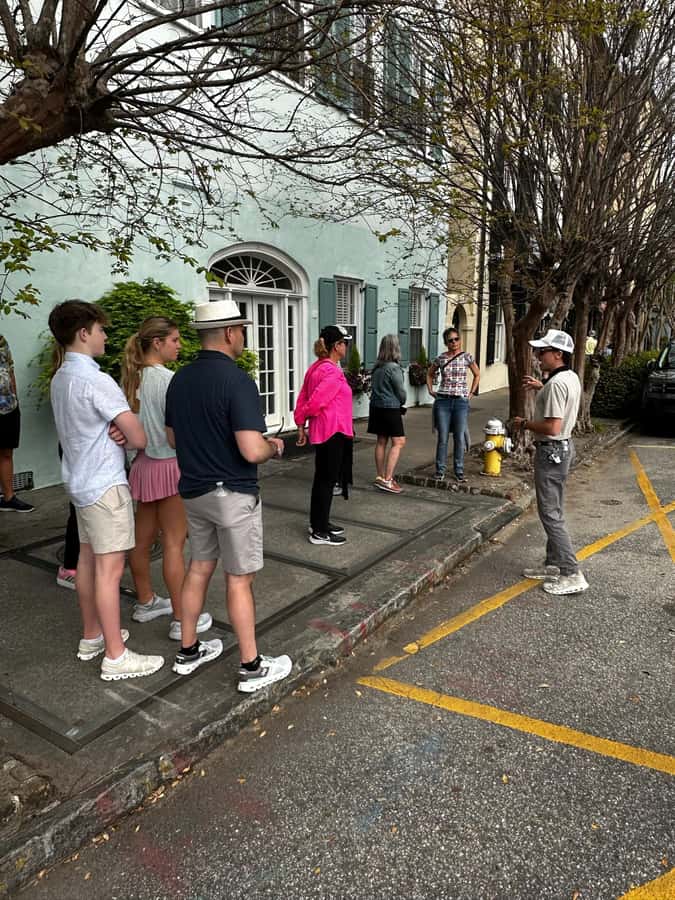
At $29 per person, this is a good-value orientation tour. You are paying for a local guide, a 90-minute walk, access to three secret alleys, and possible entry to three historic buildings. Even without every interior visit, the combination of South of Broad, the French Quarter, Rainbow Row, City Market, St. Philip’s Church, and Pineapple Fountain covers a lot of central Charleston.
The price looks strongest for first-time visitors who want stories attached to the architecture. As Alicia pointed out, Charleston’s buildings are attractive on their own, but context changes what you see. That is the key value here. You are not paying for distance. You are paying for interpretation.
The value is less clear if you already know downtown Charleston well, dislike group walking tours, or want a long technical discussion of architecture. One person found the group a little too large, and another wanted the tour to last longer. A private group is available, which may solve the crowd issue and give you more room for questions, but the supplied details do not state the private-group price or exact format.
The overall rating is 4.8 out of 5 from 349 reviews, with repeated praise for the guides’ storytelling, local insight, humor, and willingness to answer questions. The most consistent strength is not a single landmark. It is the human explanation that ties the route together.
Who should book this Charleston walk?
I would recommend it to first-time visitors, couples, families with older children, history fans, architecture lovers, and anyone who wants to get oriented before exploring alone. It is also a smart choice if you have limited time and want a compact look at the Historic Downtown.
You will get the most from it if you enjoy frequent stops and conversation. Bring questions. Ask about the ironwork, the alleys, the churches, the market, and the people whose work shaped Charleston. The guides appear comfortable with dialogue, and several assessments specifically praised their ability to respond rather than simply recite.
I would be more cautious if you have difficulty walking, need guaranteed step-free access, or are sensitive to uneven streets. The tour is labeled wheelchair accessible, but it is also marked unsuitable for people with mobility impairments. That conflict should be resolved directly with Empire Tours and Productions before you reserve.
The tour runs rain or shine, so weather is another practical factor. On a hot or wet day, the one-mile route may feel more demanding. Comfortable footwear is essential, and weather-appropriate clothing is not optional.
Should you book it?
Book this tour if you want a friendly, story-led introduction to Charleston’s historic core for a reasonable price. The three alleys, the iron gates, and the chance to enter St. Michael’s Church, Dock Street Theatre, and the Old Exchange make it more rewarding than a simple walk past famous facades.
Do not book it expecting a specialist lecture, guaranteed interior access, or a full treatment of every difficult chapter in Charleston’s past. Instead, use it to get your bearings, learn how to read the city’s architecture, and collect ideas for deeper visits afterward. If you can join a guide such as Jeff, Emerson, Paige, Jackson, or Jaxson, you are likely to get the lively storytelling and local perspective that make this $29 walk worthwhile.
FAQ
How long is the Charleston History and Architecture Tour?
The walking tour lasts 90 minutes and covers about one mile at a leisurely pace, with frequent stops.
Where does the tour meet?
Your guide meets you beneath the awning in front of the Charleston Tours & Activities windows in Charleston’s Historic Downtown. Guides typically arrive about 15 minutes early, and arriving 10 minutes before departure is recommended.
What landmarks are included?
The route includes three secret alleys, South of Broad, the French Quarter, Rainbow Row, City Market, St. Philip’s Church, and Pineapple Fountain. It may also include interior visits to St. Michael’s Church, Dock Street Theatre, and the Old Exchange.
Are the historic building interiors guaranteed?
No. Entry to St. Michael’s Church, Dock Street Theatre, and the Old Exchange depends on availability.
Is the tour wheelchair accessible?
The activity is described as wheelchair accessible, but it is also marked as unsuitable for people with mobility impairments. Contact the operator before booking to confirm that the route meets your needs.
What should I bring?
Bring comfortable shoes and clothing suitable for the weather. The tour departs rain or shine.
Just added in Charleston
- Middleton Place Admission with Self Guided Tour and Lunch★ 4.5 · 326 reviews
- Charleston Ghosts of Liberty Guided Walking Tour★ 4.5 · 473 reviews
- Undiscovered Charleston: Half Day Food, Wine & History Tour with Cooking Class★ 5.0 · 948 reviews
- 2-Hour Guided Kayak Eco Tour in Charleston★ 5.0 · 954 reviews
- Charleston’s Best Highlights: History, Culture & Architecture★ 5.0 · 422 reviews
- Savor the Flavors of Charleston Walking Food Tour★ 4.5 · 881 reviews
- Afternoon Schooner Sightseeing Dolphin Cruise on Charleston Harbor★ 4.5 · 620 reviews
- Real Hauntings of Charleston! (Small Group Ghost Tour)★ 5.0 · 724 reviews
Historical Tours, compared.

History and Hauntings of Salem Guided Walking Tour
Read our review →
Charleston’s Old South Carriage Historic Horse & Carriage Tour
Read our review →

Big Island in a Day: Volcanoes Waterfalls Sightseeing and History
Read our review →
Freedom Trail History Small Group Walking Tour
Read our review →
Historic Charleston Guided Sightseeing Walking Tour
Read our review →
Starship Landmark 90 Minute Sightseeing Cruise
Read our review →Browse the lists this tour appears in