
Reviewed · WALKING TOURS
Highlights of Charleston Guided Walking Tour
Charleston reveals more when you slow down. This two-hour walk through the French Quarter and South of Broad links famous façades with the harder stories behind them, from colonial commerce to the city’s role in slavery. I like the route’s compact list of major sights, and I like that a strong guide can adjust the talk for curious newcomers or serious history fans.
The tour is especially appealing if you want context rather than a photo checklist. Guides such as Bill Harris have earned praise for humor, sharp historical detail, and an honest account of Charleston’s past. The main drawback is that the experience may be more lecture than stroll: one guide reportedly spent long stretches speaking in one place, so you may cover less ground than expected.
In This Review
- Four things to know before you book
- Why this Charleston walk works for first-time visitors
- St. Philip’s Church and Charleston’s religious story
- The French Huguenot Church adds a surprising angle
- The Pink House Gallery and the pleasure of looking closely
- The Old Slave Mart Museum brings the difficult subject forward
- The Old Exchange explains Charleston’s public power
- Rainbow Row is famous, but the story matters more than the photo
- The guide is the main attraction
- Physical effort, weather, and group size
- Who will get the most from this experience
- Is the tour a good value?
- Booking advice and final verdict
- FAQ
- How long is the Highlights of Charleston Guided Walking Tour?
- Where does the tour begin?
- Where does the tour finish?
- What sights are included?
- Is admission to the museums included?
- What should I bring?
- Are children and service animals allowed?
- What happens if bad weather cancels the tour?
Four things to know before you book
- The route connects six important sights: St. Philip’s Church, the French Huguenot Church, the Pink House Gallery, the Old Slave Mart Museum, the Old Exchange, and Rainbow Row.
- The guide makes or breaks the experience: Bill Harris is often praised for his wit, broad knowledge, and lively delivery. Vanna has also been praised for making the walk warm and interesting.
- It is mainly an outdoor history lesson: Bring water, sunscreen, a hat, sunglasses, and rain gear. Restrooms may not be available along the route.
- Two hours gives you an overview, not a full Charleston education: You see key landmarks, but some stops are viewed from outside and museum admission is extra.
- The route is small-group in design: The maximum is 20 people, which should make it easier to hear the guide than on a large bus or trolley.
- This is best for history-minded visitors: Children can enjoy it, but the subject matter and extended talks may suit adults and older children better.
Why this Charleston walk works for first-time visitors
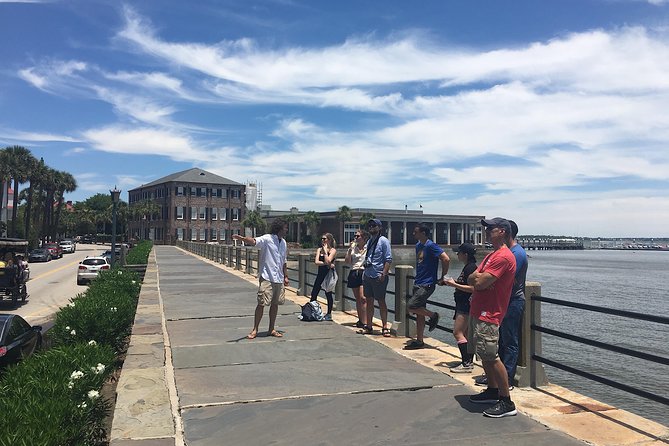
Charleston can be confusing at first. The old center is walkable, but its streets are packed with churches, pastel homes, courtyards, museums, markets, and plaques. Without some guidance, you can admire the architecture while missing why the buildings matter.
This tour gives you a quick framework. It begins at 200 East Bay Street and generally finishes near Meeting and Broad streets, a useful part of town for continuing your day. You are not spending two hours riding around and looking through glass. You are on foot, close to the buildings, with time to look up, ask questions, and notice small details.
I particularly like the way the route joins the French Quarter with South of Broad. These districts show different sides of old Charleston, including religious life, private homes, trade, political power, and slavery. That combination keeps the walk from becoming only an architecture tour.
The rating is strong, at 4.9 from 2,206 ratings, with 98 percent recommending the experience. The most consistent praise goes to the guides, not simply the route. That distinction matters. The landmarks are fixed, but the quality of the storytelling can vary with the person leading your group.
More Walking Tours in Charleston
- Historic Charleston Guided Sightseeing Walking Tour
★ 5.0 · 6,216 reviews - Ghosts of Charleston Night-Time Walking Tour with Unitarian Church Graveyard
★ 4.5 · 2,835 reviews - Hidden Alleyways and Historic Sites Small-Group Walking Tour
★ 5.0 · 2,335 reviews
St. Philip’s Church and Charleston’s religious story
The first stop is St. Philip’s Church, known here as the historic church of Charleston’s longest-meeting congregation. You view the building and hear about its place in the city’s religious and civic story.
The ten-minute stop is short, but it sets up an important point: Charleston’s churches were not isolated houses of worship. They were part of the city’s public life, tied to prominent families, political influence, and the growth of the colony.
This is a viewing stop, and admission is free. You should not expect a long interior visit or a formal service-related program. The value comes from the guide explaining what you are looking at and placing the church within the city’s development.
A good guide can also make this stop useful for visitors who know little about Charleston before arriving. Several guides have been praised for explaining not only local events, but also the religious and political forces that shaped the wider colonies.
The French Huguenot Church adds a surprising angle
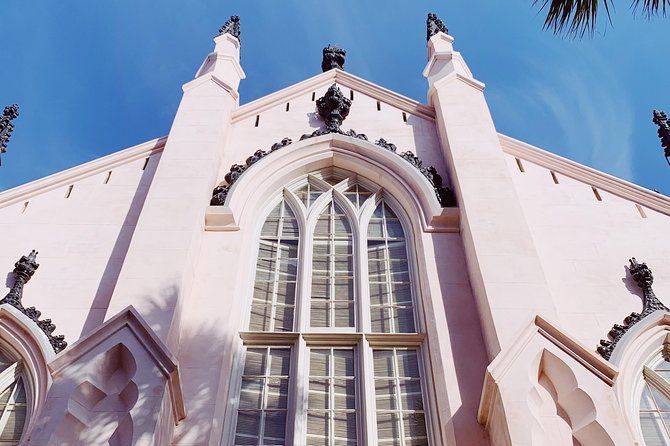
Next comes the French Huguenot Church, described as the only church of its denomination in North America. That makes it one of the route’s more distinctive stops.
The building gives the walk a chance to move beyond the familiar English colonial story. You get a glimpse of the European religious migrations that helped shape Charleston. The stop lasts about ten minutes and does not include an admission ticket.
I like this part because it adds variety early in the tour. You are not simply moving from one grand building to another. You are being shown how different communities helped form the city.
The guide’s skill matters here. A dry explanation of denominations may lose a casual sightseer, while a lively guide can connect the church to broader questions about migration, belief, and settlement. Bill Harris has been praised for his command of religious history, so this is one stop where his particular background may add extra value if he leads your group.
The Pink House Gallery and the pleasure of looking closely
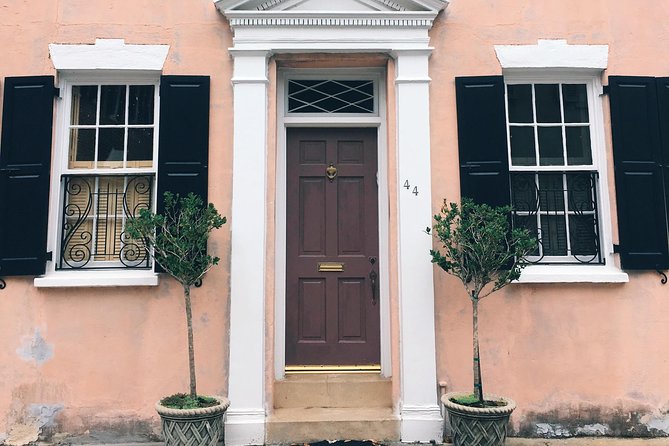
The Pink House Gallery is presented as Charleston’s oldest private residence. You view it from the route during another roughly ten-minute stop.
This is one of those places that can look like a pretty photo opportunity until someone explains why it matters. Its small scale and unusual appearance make it a useful contrast with the larger churches and public buildings nearby.
I would treat this as a visual pause rather than a museum visit. The experience does not include admission, and the information provided does not promise access inside. That is not a serious flaw, but it is worth knowing if you want interior tours of historic homes.
This stop also shows the tour’s balance. Charleston’s story is told through grand institutions, but also through individual houses and the people who lived in them. Keep your camera ready, but listen for the explanation behind the façade.
A different kind of day out entirely:
- Charleston’s Old South Carriage Historic Horse & Carriage Tour
★ 5.0 · 10,023 reviews - Haunted Evening Horse and Carriage Tour of Charleston
★ 4.5 · 3,678 reviews - Charleston Horse-Drawn Carriage Tour: Explore Historic Charleston
★ 5.0 · 3,561 reviews - Fort Sumter Admission and Self-Guided Tour with Roundtrip Ferry
★ 4.5 · 3,343 reviews
The Old Slave Mart Museum brings the difficult subject forward
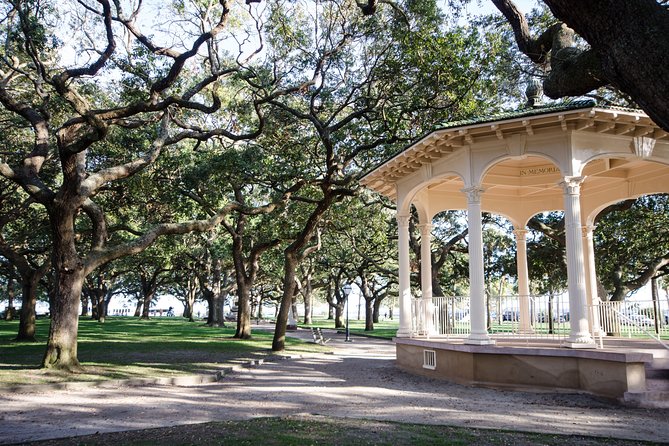
The Old Slave Mart Museum is the most important stop for understanding the city’s connection to slavery. It is described as the only museum dedicated to the history of enslaved people in Charleston.
The tour views the museum, but admission is not included. That means you may need to return on your own if you want to go inside. The two-hour walk does not appear to allow a full museum visit, so plan your time carefully if this is a priority.
I appreciate that slavery is not treated as a footnote. The strongest comments about this experience praise guides for offering an honest account of Charleston, including less comfortable facts and the forces that created the city’s wealth. That approach gives the architecture a necessary frame.
Expect serious material. The guide may discuss the system that brought enslaved Africans to Charleston, the economic structure built around forced labor, and the long effects on the city and country. The exact depth depends on the group and guide, but this is not a lightweight sightseeing stop.
If you have already taken a trolley tour, this walk can still add something important. A vehicle tour may give you a broad look at streets and houses, while this experience gives you time to stop and examine the historical meaning of a specific place.
The Old Exchange explains Charleston’s public power
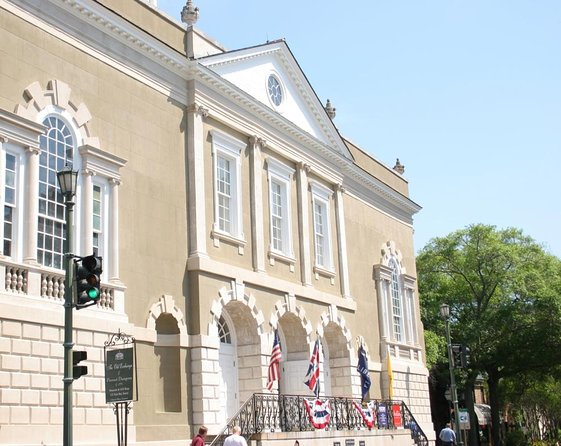
The Old Exchange and Provost Dungeon represents Charleston’s pre-Revolutionary economic center. This stop shifts the focus from private houses and religious buildings to trade, government, and public life.
You view the site for about ten minutes. Admission is not included, so the same advice applies: consider returning later if you want an interior visit. The walk itself is designed to give you the setting and the story, not a full guided museum tour.
This stop helps explain why Charleston became important. Economic power, political decisions, and colonial ambitions met here. A guide can connect that local building to events in the colonies and the wider world, which is one reason history-focused visitors have rated the tour so highly.
The Old Exchange also gives the route a useful rhythm. After the emotional weight of the Old Slave Mart Museum, you move into the machinery of commerce and government. Those subjects are closely linked, and placing them together encourages you to think about how the city worked rather than simply admire its old streets.
Rainbow Row is famous, but the story matters more than the photo
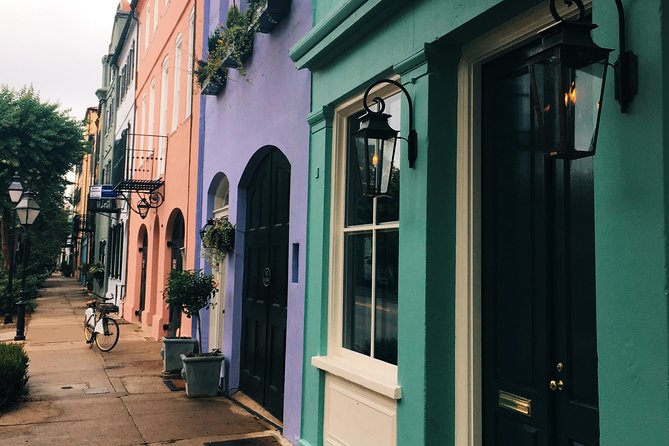
Rainbow Row is the final listed sight and perhaps Charleston’s most photographed view. The colorful row of buildings is easy to appreciate at a glance, but the guide’s job is to give the picture a little substance.
The stop is free and lasts about ten minutes. You should have time to take photographs, but do not let the bright façades distract you from the larger lesson of the route. Beautiful buildings can preserve memory, but they do not tell the whole story by themselves.
I like ending here because it leaves you with a memorable image of Charleston. At the same time, the route has already asked you to look beyond color and charm. By this point, you should see the city’s streets as places shaped by religion, wealth, forced labor, politics, and preservation.
The exact finish can change according to walking speed and the guide. It generally ends near the intersection of Meeting and Broad streets, so do not arrange a tight pickup at a precise curb.
The guide is the main attraction
The strongest praise is directed at the people leading the walk. Bill Harris is repeatedly described as funny, personable, passionate, and exceptionally well informed. Some descriptions compare his style to a stand-up comic, while others say they could have listened to him for hours.
That tells you what kind of experience this is. You may get more than dates and building names. You may hear a wider account of Charleston, South Carolina, the colonies, the country, religion, and social change. Bill has also been praised for asking the group whether it wanted a lighter tour or a more serious historical treatment.
Vanna has also received praise for being warm, funny, and well prepared. Since guides can vary, I would not book on the assumption that one specific person is guaranteed unless the provider confirms it.
There is one caution. A guide who loves history may talk at length. One low rating describes long periods standing in one place and too little walking or sightseeing. If you prefer constant movement and short explanations, this may feel slow. If you enjoy a classroom-style conversation outdoors, that same quality may be the reason you remember the tour.
Physical effort, weather, and group size
The walk lasts about two hours and requires a moderate level of fitness. You should be comfortable walking and standing outdoors for that length of time. The route is near public transportation, but parking is not included.
If you drive, the recommended garages are at 1 Cumberland Street and 89 Cumberland Street, each about a five-minute walk from the meeting point. Parking fees may apply, so public transportation or a city garage can make the morning less stressful.
Charleston’s weather deserves practical planning. Bring bottled water because it may not be available for purchase along the route. Pack sunscreen, a hat, sunglasses, or a parasol, and bring your own rain gear when needed.
Tours normally run in rain, but dangerous conditions such as lightning, flooding, or high winds can cause cancellation. The experience requires good weather, and a cancellation for unsafe conditions brings the choice of another date or a full refund.
Use a restroom before you arrive. Facilities are not always accessible along the route. Arrive five to ten minutes early because the group cannot be held for late arrivals.
The maximum group size is 20. That is not a private tour, but it is small enough to offer a better chance of hearing the guide and asking questions than a large city sightseeing vehicle.
Who will get the most from this experience
I would recommend this walk to a first-time visitor who wants orientation and substance in one morning or afternoon. It is also a good choice if you enjoy architecture but want to understand the people and systems behind the buildings.
History teachers, serious students of American history, and readers who prefer an honest account of slavery and colonial power should find plenty to consider. The tour is also a smart follow-up to a trolley ride because it slows down and examines a smaller section of the city.
Families can join, and children of all ages have taken the route. Still, the provider says the tours are designed for adults. Young children may struggle with long talks, while older children and teenagers who enjoy history may find the material rewarding. Notify the provider if you plan to bring a stroller.
This is not the best choice if you want a fast walk with constant photo stops, a fully indoor activity, or included entry to the Old Slave Mart Museum and Old Exchange. It also may not suit anyone who dislikes discussion of slavery, religion, and political conflict.
Is the tour a good value?
No ticket price is provided here, so I cannot judge the exact cost against other Charleston walks. The better question is what your admission covers.
You are paying for a guide, a planned route, and two hours of interpretation. The churches, Pink House, and Rainbow Row are viewed without admission charges. Entry to the Old Slave Mart Museum and Old Exchange costs extra, and parking is also your responsibility.
That can still be good value if the guide gives you a clear understanding of the city. A strong guide can save you from wandering between disconnected sights and can point out why a modest-looking building matters. The value is less about the number of locations and more about the quality of the explanation.
You should also allow time after the walk if you want to visit the two paid sites. Think of the tour as an introduction, not a substitute for every museum in the district.
Booking advice and final verdict
Book this Charleston walking tour if you want a compact route, serious history, and a guide who can tell a story with personality. I especially like its movement from churches to private homes, slavery, commerce, and Rainbow Row. That sequence gives you a much fuller picture than a walk devoted only to pretty streets.
Go in prepared for outdoor heat, standing, and possibly long explanations. Arrive early, carry water, and leave room in your schedule for the Old Slave Mart Museum or Old Exchange if you want to enter them.
I would choose this experience for a curious first visit, a history-focused weekend, or anyone who wants more than the polished version of Charleston. I would skip it only if you need a brisk sightseeing pace or a mostly indoor tour. The route is useful, but the guide is the real variable, so request Bill Harris if the provider can accommodate that preference.
FAQ
How long is the Highlights of Charleston Guided Walking Tour?
The tour lasts approximately two hours.
Where does the tour begin?
It begins at 200 East Bay Street, Charleston, South Carolina 29401.
Where does the tour finish?
It generally ends near the intersection of Meeting Street and Broad Street. The exact end point can change depending on the group’s walking speed and the guide.
What sights are included?
The route includes St. Philip’s Church, the French Huguenot Church, the Pink House Gallery, the Old Slave Mart Museum, the Old Exchange and Provost Dungeon, and Rainbow Row.
Is admission to the museums included?
No. Admission to the Old Slave Mart Museum and the Old Exchange is not included in the ticket price. The other listed stops are viewed without an admission charge.
What should I bring?
Bring comfortable walking shoes, bottled water, sunscreen, a hat, sunglasses, or a parasol. Bring rain gear if wet weather is expected.
Are children and service animals allowed?
Children may join but must be accompanied by an adult. Registered service animals are allowed. Other pets are not permitted.
What happens if bad weather cancels the tour?
If dangerous or disruptive weather causes cancellation, you may reschedule or receive a full refund. You can also cancel up to 24 hours before the start time for a full refund. Cancellations within 24 hours are not refunded.
Just added in Charleston
- Middleton Place Admission with Self Guided Tour and Lunch★ 4.5 · 326 reviews
- Charleston Ghosts of Liberty Guided Walking Tour★ 4.5 · 473 reviews
- 2-Hour Guided Kayak Eco Tour in Charleston★ 5.0 · 954 reviews
- Charleston’s Best Highlights: History, Culture & Architecture★ 5.0 · 422 reviews
- Undiscovered Charleston: Half Day Food, Wine & History Tour with Cooking Class★ 5.0 · 948 reviews
- Savor the Flavors of Charleston Walking Food Tour★ 4.5 · 881 reviews
- Afternoon Schooner Sightseeing Dolphin Cruise on Charleston Harbor★ 4.5 · 620 reviews
- Real Hauntings of Charleston! (Small Group Ghost Tour)★ 5.0 · 724 reviews
Walking Tours, compared.
History and Hauntings of Salem Guided Walking Tour
Read our review →
New Orleans Premier Ghost, Voodoo and Vampire Walking Tour
Read our review →
Freedom Trail History Small Group Walking Tour
Read our review →
Historic Charleston Guided Sightseeing Walking Tour
Read our review →
New Orleans Food Walking Tour of the French Quarter with Small-Group Option
Read our review →
Cambridge: Harvard University Student-Guided Walking Tour
Read our review →Browse the lists this tour appears in