
Reviewed · HISTORICAL TOURS
Charleston: Old Walled City Historical Walking Tour
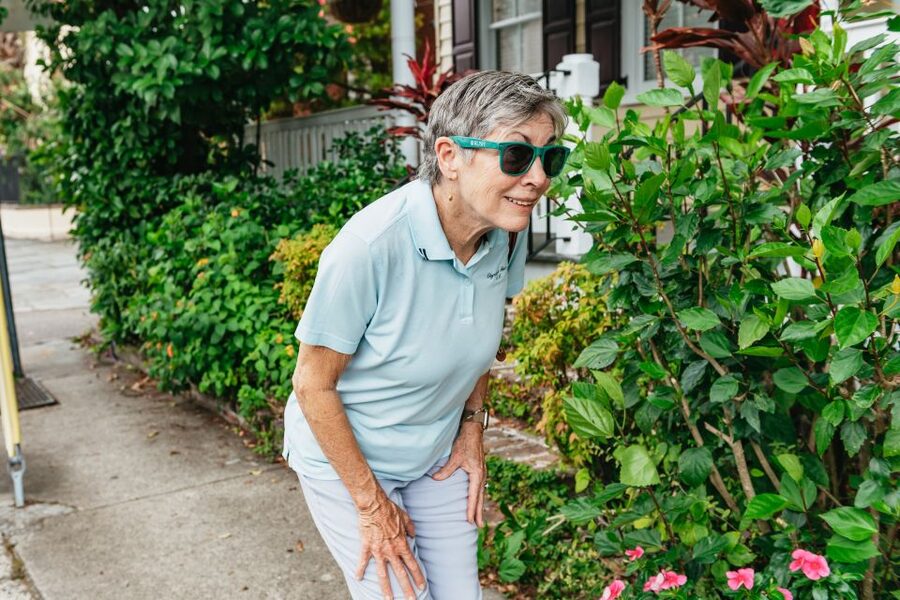
History is under your feet here. Charleston’s Old Walled City Historical Walking Tour turns two hours of cobblestones, churches, homes, and public buildings into a readable story of colonial ambition, piracy, rice wealth, war, disaster, and survival. I like the way the walk connects famous sights with lesser-known local tales, and I like that guides such as seventh-generation Charlestonian Bruce and longtime guide Alfie bring personal knowledge to the route. The main drawback is simple: you cover a fair amount of ground, and a guide with a fast delivery can make the information hard to catch.
This is a strong first activity in Charleston, especially if you want to understand the historic district before exploring it on your own. The $30 price is reasonable for a live, two-hour guide who handles the history and route planning. Bring water, sunscreen, and good shoes, though, because Charleston’s old streets can be uneven and the tour involves substantial walking.
In This Review
- Five details that make this Charleston walk worthwhile
- Starting on Meeting Street and Chalmers Street
- The French Quarter: Charleston’s history in close quarters
- Dock Street Theatre and the city’s public face
- The Old Exchange and Provost Dungeon
- Waterfront Park and the edge of the old city
- Rainbow Row and the pleasure of looking up
- Historic homes and the Heyward-Washington House
- Churches, tombstones, and St. Michael’s Episcopal Church
- Charleston’s disasters and the stories between the dates
- The local guide makes the difference
- Is $30 a fair price for two hours?
- What to bring and how to make the walk better
- Who should book the Old Walled City walk?
- FAQ
- How long does the Charleston Old Walled City Historical Walking Tour last?
- What language is the tour offered in?
- How much does the tour cost?
- Where does the tour meet?
- What should I bring?
- Is there a lot of walking?
- Should you book it?
Five details that make this Charleston walk worthwhile
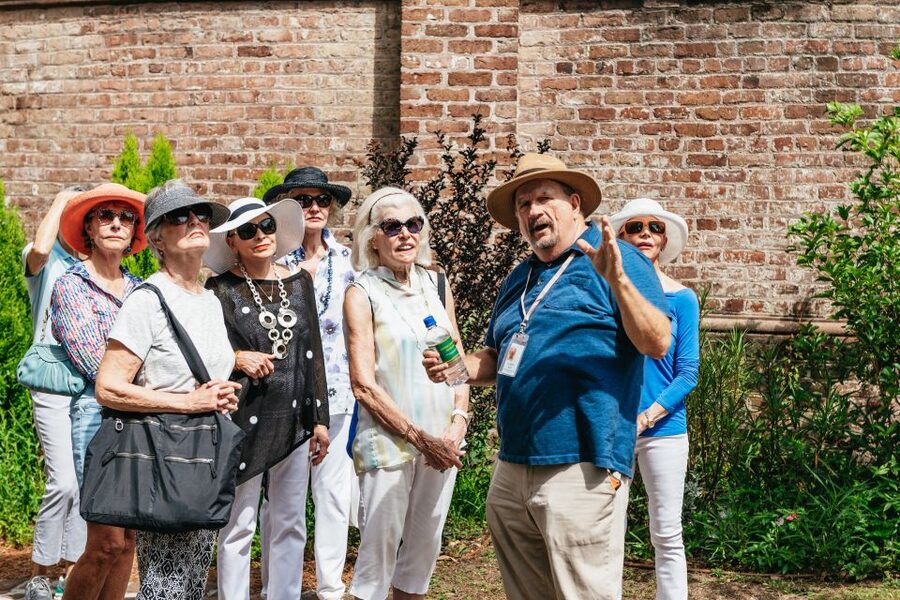
- A seventh-generation local guide: Bruce has deep family ties to Charleston, while guides including Al, Eric, and Alfie bring years of local guiding experience and plenty of personal stories.
- A broad historical sweep: The walk covers colonial beginnings, piracy, rice planters, epidemics, fires, hurricanes, sieges, bombardments, and the earthquake that reshaped the city.
- Landmarks you can connect: The French Quarter, Dock Street Theatre, Old Exchange, Waterfront Park, Rainbow Row, historic homes, and St. Michael’s Episcopal Church all fit into one compact route.
- Stories beyond dates: Guides explain famous residents, old symbols on tombstones, local architecture, and the human choices behind Charleston’s growth.
- A useful introduction: The route gives you a practical sense of the old city’s layout before you return to explore museums, churches, homes, and restaurants on your own.
Starting on Meeting Street and Chalmers Street
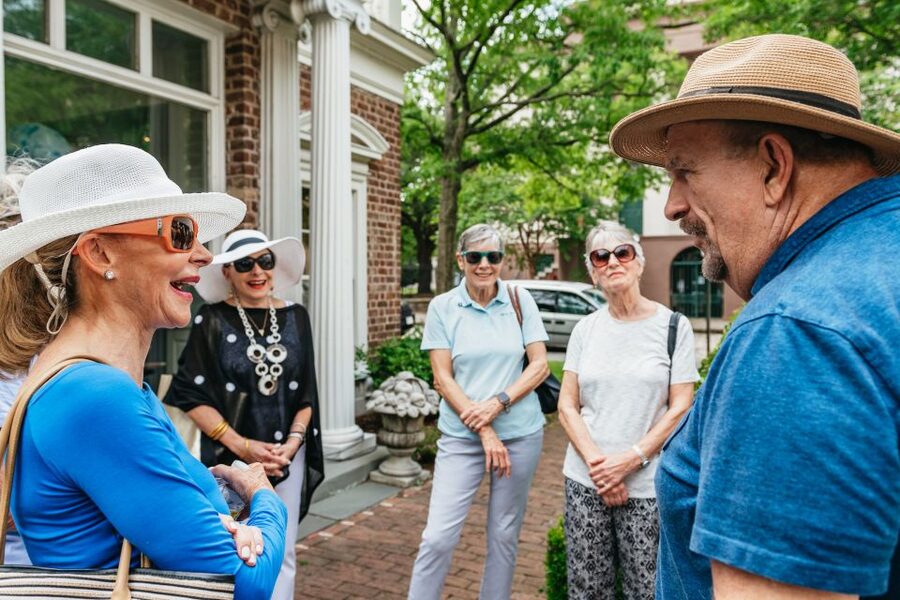
The meeting point is on the sidewalk at the corner of Meeting Street and Chalmers Street, beside the cobblestones. That detail matters. Chalmers Street puts you right in the old district, where the setting begins working before the guide says a word.
Expect an English-language walking tour led by a professional guide. The group size can vary, and some departures may feel small and personal. One past outing had only two people, while another group of eight was described as an ideal size. A small group gives you more room for questions and makes it easier to hear the guide.
The tour lasts two hours and returns to the starting point. That is long enough to build a useful picture of Charleston without taking up an entire morning or afternoon. I would schedule it early in your stay. You will learn the basic street pattern, see several major landmarks, and collect ideas for what deserves a closer look later.
The walk is not described as strenuous, but it does cover substantial ground. Charleston’s old streets include cobblestones, and you may spend much of the time standing while the guide talks. Wear shoes you can trust, not the pair that looks best in vacation photos.
More History Tours in Charleston
- Charleston’s Old South Carriage Historic Horse & Carriage Tour
★ 5.0 · 10,023 reviews - Historic Charleston Guided Sightseeing Walking Tour
★ 5.0 · 6,216 reviews - Charleston Horse-Drawn Carriage Tour: Explore Historic Charleston
★ 5.0 · 3,561 reviews
The French Quarter: Charleston’s history in close quarters
The French Quarter receives the longest scheduled portion of the walk, about 50 minutes. That gives the guide time to do more than point at attractive buildings.
This part of Charleston is especially useful for understanding how the city’s colonial roots remain visible in its streets and architecture. You will pass colorful homes, storefronts, churches, and public buildings from different periods. The point is not simply to admire façades. The guide explains how the city grew, who had power, how trade shaped local life, and why certain buildings look the way they do.
The French Quarter also gives the tour its strongest sense of place. The streets are compact, so several layers of history appear within a short walk. A church may sit near a colonial home, while an old commercial building hints at the city’s trading past. The guide’s job is to connect those pieces.
Al is praised repeatedly for combining humor with clear explanations of Charleston’s past. Eric is also noted for linking history and architecture in an easy, conversational way. If you enjoy asking questions, this is likely the section where the format pays off most.
The only caution is information density. One person found the guide’s enthusiasm welcome but wished the delivery were slower. If you have trouble hearing, stay near the guide and mention it at the start. One guide was also noted for occasionally allowing his voice to trail off, so positioning yourself well can make a real difference.
Dock Street Theatre and the city’s public face

The walk continues to Dock Street Theatre for about 15 minutes. This is a brief stop, but it adds an important piece to the city’s cultural story.
The theatre is presented as part of Charleston’s changing public life, not just as a pretty building to photograph. The guide gives meaning to the site and places it among the churches, houses, and civic buildings you have already seen.
This stop also shows the tour’s balance. It is not limited to military history or grand political events. Architecture, entertainment, religion, commerce, and ordinary city life all enter the story. That broader approach helps explain why Charleston feels more layered than a simple collection of old houses.
You should expect a photo stop and an exterior-focused visit rather than a full theatre performance or extended indoor tour. If you want to explore the building in detail, plan a separate visit.
The Old Exchange and Provost Dungeon
The Old Exchange and Provost Dungeon follows with about 12 minutes. This stop brings the darker and more turbulent chapters of Charleston’s past into view.
The guide discusses the forces that altered the city over time, including sieges and bombardments. You also hear about the age of piracy, a period that can seem romantic in popular stories but had real consequences for a port city.
The word dungeon signals a change in mood. This is a place where the city’s civic and commercial history meets imprisonment and conflict. A good guide helps you see both sides: Charleston’s wealth and ambition, along with the violence and instability that came with them.
The stop is short, so expect a focused explanation rather than a full museum visit. That is useful if you want an overview, but less satisfying if you prefer long indoor exhibits. The tour’s strength is its connections between sites, not extended time inside each one.
More Walking Tours in Charleston
- Ghosts of Charleston Night-Time Walking Tour with Unitarian Church Graveyard
★ 4.5 · 2,835 reviews - Hidden Alleyways and Historic Sites Small-Group Walking Tour
★ 5.0 · 2,335 reviews - Highlights of Charleston Guided Walking Tour
★ 5.0 · 2,206 reviews - Charleston Haunted Booze and Boos Ghost Walking Tour
★ 5.0 · 1,569 reviews
Waterfront Park and the edge of the old city
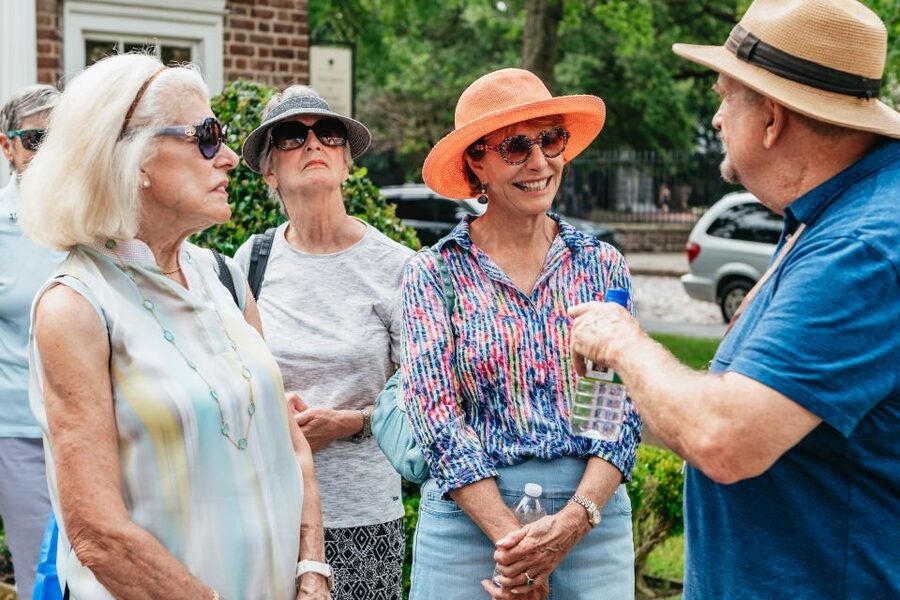
The route then reaches Waterfront Park for roughly 15 minutes, with scenic views along the way. This section gives your feet a break from the tighter streets and lets you see how Charleston meets the water.
The waterfront helps make sense of the city’s growth. Ports, trade, shipping, defense, and weather all shaped Charleston, and the guide uses the setting to explain those pressures. The city’s history is not only found in homes and churches. Its position beside the water affected its economy and exposed it to hurricanes, bombardments, and other threats.
This is also one of the more pleasant photo opportunities. The open views provide a change after the close streets of the French Quarter. In hot weather, however, shade may vary, and the South Carolina sun can be tiring. Bring water and sunscreen as requested.
One helpful detail from a past tour is that a guide chose a shadier route to keep the group cooler. That kind of judgment can improve the experience, but you should still dress for the weather rather than count on shade.
Rainbow Row and the pleasure of looking up
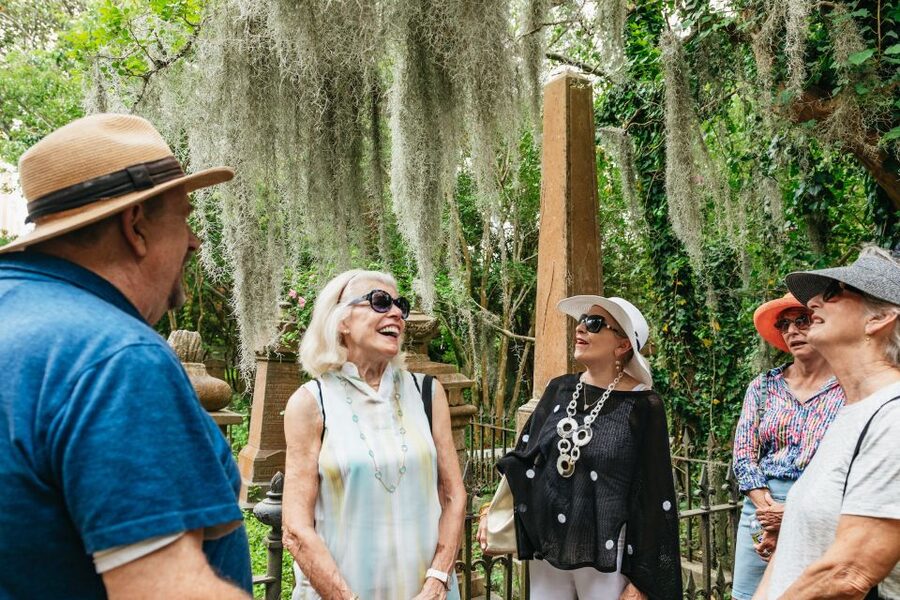
Rainbow Row takes only about seven minutes, but it is a natural crowd-pleaser. The colorful historic façades make an easy photo stop, and the site gives you a clear example of Charleston’s visual character.
The value here comes from context. Without a guide, you may see a row of attractive buildings and move on. With one, you get a better sense of how these houses fit into the city’s commercial and residential past, and how Charleston’s old architecture survived repeated changes.
This is also a good reminder to look above street level. Doorways, windows, rooflines, signs, and decorative details often carry clues about age and purpose. The guide encourages you to read the city rather than simply photograph it.
Do not expect a long stop. Seven minutes is enough for a quick explanation and pictures, but not enough for a detailed architectural study. If this is one of your favorite parts, note the location and return later at your own pace.
Historic homes and the Heyward-Washington House
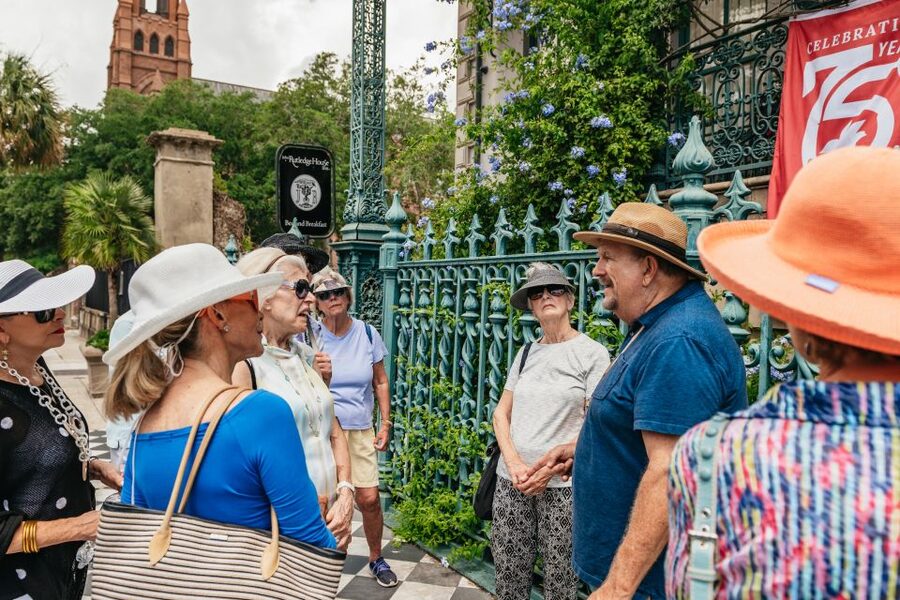
The Heyward-Washington House appears as a short, approximately five-minute stop. It gives the guide another chance to discuss the people who lived in Charleston’s old homes and the society that produced them.
The tour does not appear to include a full house admission or extended interior visit at this point. Instead, the house works as a visual anchor for stories about notable residents, domestic life, social rank, and architecture.
This is where the tour’s handling of difficult subjects matters. A past guide was praised for answering questions honestly and sensitively, without avoiding uncomfortable parts of Charleston’s past. That approach is essential in a city shaped by colonial expansion, rice wealth, slavery, war, disease, and disaster.
The stop is short, but the subjects are not. You may want to return to historic houses later if you enjoy interiors and furnishings. On this walk, the goal is to understand the wider city rather than tour every room.
Churches, tombstones, and St. Michael’s Episcopal Church
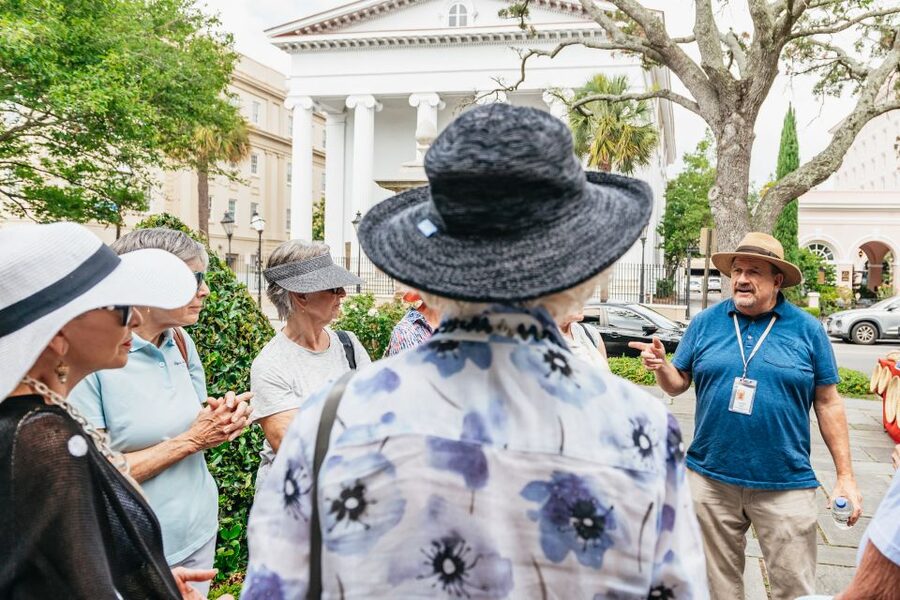
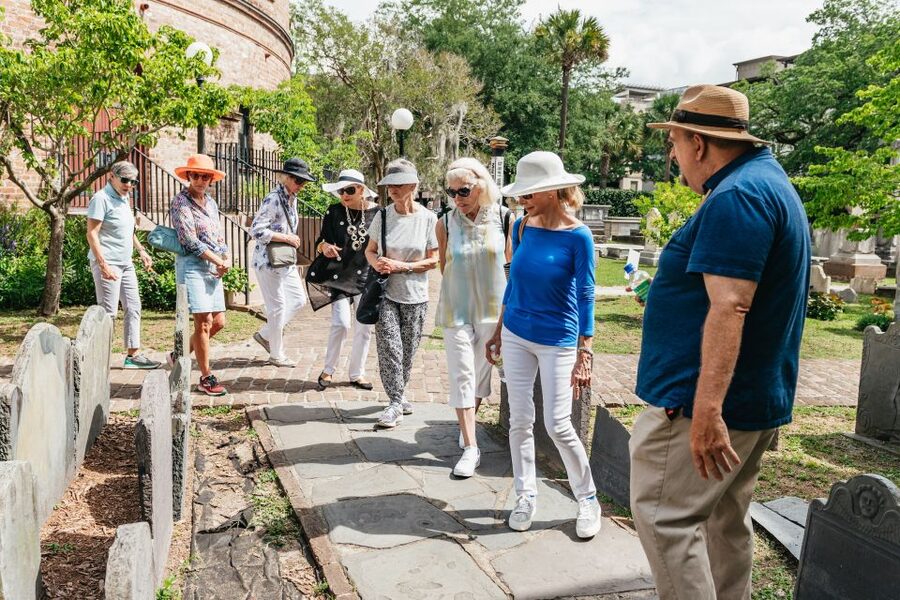
Churches are central to the route, and St. Michael’s Episcopal Church receives about 12 minutes. Its presence helps explain the religious and civic order of old Charleston, while its setting offers another chance to study the city’s architecture.
The guide also draws attention to tombstones and their old symbols. This is one of the tour’s most distinctive details. Cemeteries and grave markers can reveal beliefs, family ties, status, disease, and changing customs, but those clues are easy to miss without someone explaining what you are seeing.
St. Michael’s is not treated as an isolated sight. It fits into the larger account of Charleston’s growth, disasters, and changing population. The result is more useful than a list of church names because you begin to understand how religious buildings helped define the old city.
Again, this is a sightseeing stop, not a detailed church tour. If you need quiet time for photographs or reflection, you may prefer to return after the guided walk.
Charleston’s disasters and the stories between the dates
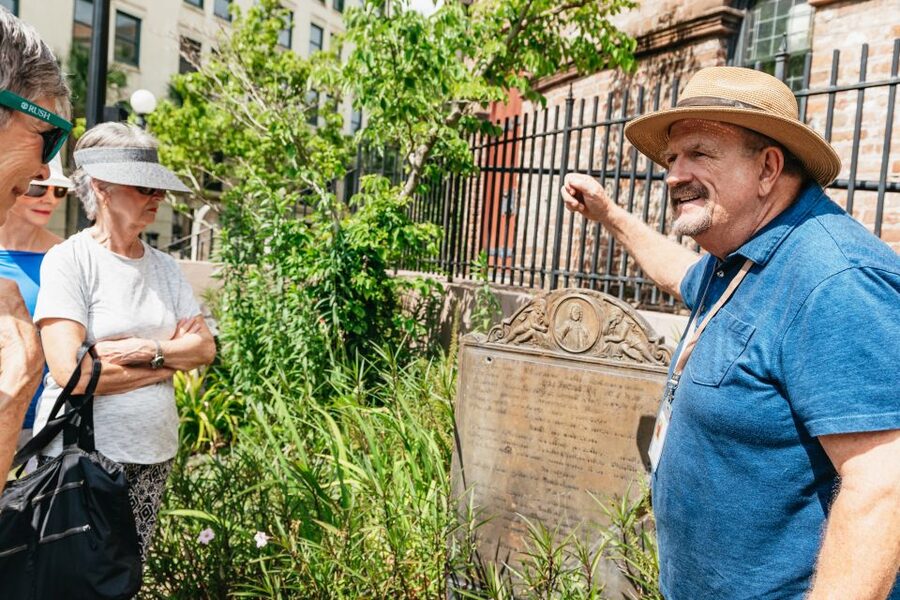
The tour’s broadest subject is the series of disasters that repeatedly tested Charleston. The guide covers seven major fires, hurricanes, epidemics, sieges, bombardments, and a devastating earthquake.
That list may sound like a lot for two hours, and it is. The best guides make the material manageable by telling stories instead of reciting a timeline. Al is praised for making Charleston’s history come alive, while Bruce is remembered for mixing humor and local experience with serious subjects.
The disaster theme gives you a practical way to understand the city’s appearance. Buildings were lost, rebuilt, altered, and preserved. Streets and neighborhoods carry traces of both destruction and recovery. You learn not only what happened, but how people responded.
This is also the section where the tour is most likely to feel emotionally heavy. Charleston’s beauty can hide painful stories. A worthwhile guide does not treat those subjects as decoration, and the strongest accounts from this experience suggest that the guides can be direct while remaining respectful.
Because the content is dense, I would not plan a demanding activity immediately afterward. Give yourself time to absorb what you have heard, especially if you are interested in the city’s colonial economy and the human cost behind it.
The local guide makes the difference
The route is good, but the guide determines how much you take away. The most praised guides include Al, Bruce, Eric Wright, Alfie, and several others who are described as warm, funny, patient, and deeply familiar with Charleston.
Bruce is identified as a seventh-generation Charlestonian. Alfie is described as a native Charlestonian who has guided since 1982. Eric is praised for connecting history and architecture, answering questions, and adjusting the route for a person using a wheelchair. Al is repeatedly singled out for humor, enthusiasm, and local stories.
That variety matters because no two guides will tell the same tour in exactly the same way. One may focus more on architecture, another on famous residents, another on disasters or personal memories. The experience is not a recorded script, so the guide’s personality is part of what you are paying for.
Several accounts also point to patient, child-friendly service and close attention to the group. If you have children, a question-heavy group, or mobility concerns, speak up early. One guide adapted the route for a wheelchair, but the tour still involves old streets and significant walking, so individual needs should be discussed before relying on that example.
Is $30 a fair price for two hours?
At $30 per person, this tour offers solid value if you want an introduction to Charleston’s historic center. You are paying for a professional English-language guide, a planned route, local interpretation, and two hours of connected storytelling.
The value is strongest for a first visit. Instead of spending your first afternoon wandering from one attractive building to another, you get a framework for understanding what you see. You also receive practical orientation for later visits to the Old Exchange, historic homes, churches, and waterfront areas.
The value is lower if you dislike walking, already know Charleston well, or want long interior visits. The tour moves through many locations, so each stop is necessarily brief. A private guide or a museum-focused visit may suit you better if you want a slower, narrower subject.
The booking terms also reduce risk. You can reserve now and pay later, and cancellation is allowed up to 24 hours before the tour for a full refund. Times vary, so check the available start time when planning your day.
What to bring and how to make the walk better
Wear comfortable shoes with a dependable sole. Cobblestones and old pavement are part of the setting, but they are not kind to flimsy footwear.
Bring water, sunscreen, and clothing suited to the forecast. Charleston can feel hot and exposed, especially near the waterfront. A hat may also be useful, though it is not specifically required.
Stay close enough to hear the guide. If you have hearing difficulty, say so at the beginning and position yourself near the speaker. Guides can be enthusiastic and speak quickly when telling a favorite story.
I would also avoid booking this as your last possible activity before a meal or appointment. Two hours can pass quickly, and the route covers enough ground that you may want a few quiet minutes afterward.
Who should book the Old Walled City walk?
I recommend this tour to first-time visitors who want history with personality. It suits people who enjoy architecture, old cemeteries, local stories, and a clear explanation of how war, wealth, disease, weather, and politics shaped a city.
It is also a good fit for repeat visitors. One long-term Charleston resident discovered new places and stories on the route, which suggests that the local angle can add value even if you already know the main streets.
Families can benefit too, especially if children respond better to stories than to museum labels. The guide may tailor the discussion to group interests, and past outings included patient treatment of children.
I would hesitate only if you need an entirely seated experience, dislike warm-weather walking, or want to spend most of your time indoors. For everyone else, the combination of major sights, local voices, and difficult history makes this a useful and fairly priced way to meet Charleston.
FAQ
How long does the Charleston Old Walled City Historical Walking Tour last?
The tour lasts two hours and returns to the starting point at the corner of Meeting Street and Chalmers Street.
What language is the tour offered in?
The tour is conducted in English with a live guide.
How much does the tour cost?
The listed price is $30 per person.
Where does the tour meet?
Meet on the sidewalk at the corner of Meeting Street and Chalmers Street, beside the cobblestone street.
What should I bring?
Bring comfortable shoes, sunscreen, water, and clothing suited to the weather.
Is there a lot of walking?
Yes. The tour involves a substantial amount of walking through Charleston’s historic streets, so plan for time on your feet and uneven cobblestones.
Should you book it?
Book this walk if you want Charleston’s landmarks explained by a local voice rather than viewed as a series of pretty façades. The strongest reason to go is the guide quality, especially if you get a guide such as Bruce, Al, Eric, or Alfie. Their humor, personal connections, and command of the city’s story turn a basic sightseeing route into a useful history lesson.
Skip it if you want a slow museum visit or cannot manage a long walk. Otherwise, $30 buys an efficient first look at the old walled city, with enough stories to shape the rest of your time in Charleston.
Just added in Charleston
- Middleton Place Admission with Self Guided Tour and Lunch★ 4.5 · 326 reviews
- Charleston Ghosts of Liberty Guided Walking Tour★ 4.5 · 473 reviews
- Charleston’s Best Highlights: History, Culture & Architecture★ 5.0 · 422 reviews
- Undiscovered Charleston: Half Day Food, Wine & History Tour with Cooking Class★ 5.0 · 948 reviews
- 2-Hour Guided Kayak Eco Tour in Charleston★ 5.0 · 954 reviews
- Savor the Flavors of Charleston Walking Food Tour★ 4.5 · 881 reviews
- Afternoon Schooner Sightseeing Dolphin Cruise on Charleston Harbor★ 4.5 · 620 reviews
- Real Hauntings of Charleston! (Small Group Ghost Tour)★ 5.0 · 724 reviews
Historical Tours, compared.


History and Hauntings of Salem Guided Walking Tour
Read our review →
Charleston’s Old South Carriage Historic Horse & Carriage Tour
Read our review →

Big Island in a Day: Volcanoes Waterfalls Sightseeing and History
Read our review →
Freedom Trail History Small Group Walking Tour
Read our review →
Historic Charleston Guided Sightseeing Walking Tour
Read our review →
Starship Landmark 90 Minute Sightseeing Cruise
Read our review →Browse the lists this tour appears in