
Reviewed · WALKING TOURS
Lost Stories of Black Charleston Walking Tour
History changes when you hear who was left out. The Lost Stories of Black Charleston Walking Tour brings overlooked voices into the city’s famous streets, linking slavery, Reconstruction, civil rights, and Charleston today. Led by Damon Fordham, a writer, historian, educator, musician, and licensed guide, the tour uses research, personal perspective, and lively storytelling rather than a dry list of dates.
I like the focus on stories you are unlikely to find on a standard sightseeing walk. I also like the route, which connects the Charleston City Market, Catfish Row, the harbor, Waterfront Park, and the Old Slave Mart Museum. The main consideration is delivery: Fordham’s direct, forceful style will appeal to many people, but one review found his corrections of guests and theatrical presentation somewhat abrasive.
This is a two-hour walking tour beginning at 3:30 p.m. at Buxton Books, 160 King Street. It costs $39 per person, accepts mobile tickets, is conducted in English, and returns to the starting point. The group can include up to 20 people, small enough for questions but large enough to feel like a proper public tour.
In This Review
- Key points to know before you book
- Why this tour matters in Charleston
- Meeting at Buxton Books on King Street
- Charleston City Market and the Jehu Junes Hotel site
- Catfish Row and the story behind Porgy and Bess
- Passing the Heyward-Washington House
- Along the harbor and through Waterfront Park
- Mother Emanuel A.M.E. Church and stories that faded
- Finishing at the Old Slave Mart Museum
- How Damon Fordham shapes the experience
- What the $39 price gets you
- Who should book this Charleston walk
- Final verdict: should you book it?
- FAQ
- Where does the Lost Stories of Black Charleston Walking Tour begin?
- What time does the tour start?
- How long does the walking tour last?
- Where does the tour finish?
- Is admission to the historic sites included?
- Is the tour suitable for children?
- What happens if the weather is poor?
Key points to know before you book
- Damon Fordham leads the walk personally: His background as an author, professor, historian, educator, and musician shapes the tour’s strong storytelling style.
- The route connects famous places to overlooked stories: You visit or pass sites including Charleston City Market, the Jehu Junes Hotel site, Catfish Row, the Heyward-Washington House, and the Old Slave Mart Museum.
- Mother Emanuel A.M.E. Church stories are included: The experience brings forward accounts that have faded from common memory.
- Expect history with personal perspective: Fordham adds family connections and present-day context to his historical research.
- The tour is mostly outdoors: Charleston’s heat can make standing in one place uncomfortable, so water, comfortable shoes, and weather planning matter.
- The value is in the interpretation: At $39, you are paying less for admission to buildings and more for two hours of guided context, storytelling, and conversation.
Why this tour matters in Charleston
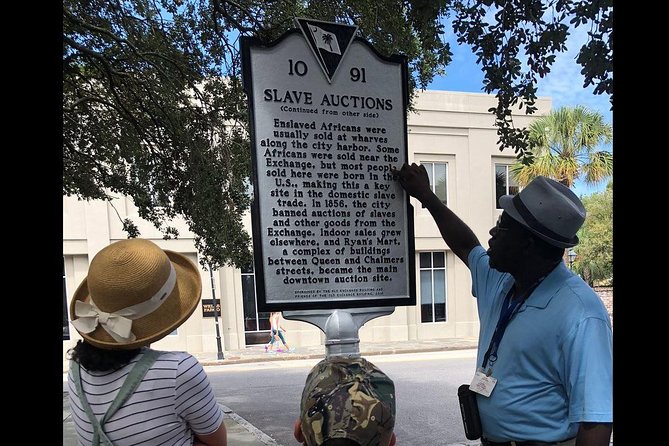
Charleston is easy to admire at street level. You see grand houses, pretty gardens, church steeples, cobbled lanes, and the harbor. But the city’s polished appearance can also make its past seem tidier than it was.
This tour asks you to look again. It follows the city through the lives of Black Charlestonians, including people whose work, resistance, faith, and community building did not receive equal space in traditional accounts. That makes the walk useful for anyone who wants more than architecture and famous names.
I especially appreciate the tour’s effort to connect the past with the present. The walk is not limited to slavery as an isolated chapter. It follows a path through slavery, Reconstruction, and the civil rights era, showing how those periods relate to Charleston as you see it now.
The tone is serious, but the experience is not described as a silent lecture. Fordham is known for humor, music, spontaneous answers, and dramatic storytelling. He may use different voices or play the melodica, an unusual musical touch mentioned in several reviews. That mix can make difficult subjects easier to follow without making them less important.
More Walking Tours in Charleston
- Historic Charleston Guided Sightseeing Walking Tour
★ 5.0 · 6,216 reviews - Ghosts of Charleston Night-Time Walking Tour with Unitarian Church Graveyard
★ 4.5 · 2,835 reviews - Hidden Alleyways and Historic Sites Small-Group Walking Tour
★ 5.0 · 2,335 reviews
Meeting at Buxton Books on King Street
You meet the guide and group at Buxton Books, 160 King Street, at 3:30 p.m. Since the tour returns to this point, the location works well as a simple anchor for your afternoon plans.
Arrive ready to walk and stand outdoors. The tour lasts about two hours, and its stops include several periods when Fordham tells extended stories from one place. One review specifically advises preparing to stand in one spot for a while, which is useful to know if you have limited stamina or prefer constant movement.
The group limit is 20 people. That is not a private tour, but it should allow the guide to address questions without the crowd becoming unwieldy. Reviews repeatedly praise Fordham’s willingness to answer questions and discuss topics beyond his prepared material.
The tour is offered in English, and mobile tickets are accepted. Children must be accompanied by an adult. Service animals are allowed, and the tour information says most people can participate.
Charleston City Market and the Jehu Junes Hotel site
The first named section of the walk begins around Charleston City Market. This gives you a familiar downtown setting, but the purpose is not simply to admire the market’s activity or architecture. Fordham uses the area to introduce Black Charleston through the people who worked, traded, gathered, and built lives in the city.
From there, the route continues toward the Jehu Junes Hotel site. The site is part of the tour’s effort to show that Black life in Charleston was not confined to plantation stories or stories of suffering. Hotels, businesses, gathering places, and neighborhood institutions also helped form the city’s social world.
The first section is listed as about 30 minutes. That is long enough for more than a quick point on a map. You should expect a mix of location-based history and longer narrative passages, with the guide explaining why these sites matter.
This part is a good early test of the tour’s style. Fordham’s supporters praise his enthusiasm, wit, and command of the subject. His approach is not passive. He wants you to listen closely, think about the choices made in historical storytelling, and ask questions when something needs clarification.
Catfish Row and the story behind Porgy and Bess
The walk continues to Catfish Row, the setting associated with the opera Porgy and Bess. This stop gives the tour a useful cultural connection. You are not simply hearing about a famous work of American theater. You are considering the Black Charleston world that helped shape the setting and the way that world has been represented.
This is one of the places where the tour’s title makes sense. A location may be famous to a broad audience, yet the people and communities behind its public image can remain less familiar. Fordham’s job here is to add those missing layers.
You might find this section especially useful if you know the opera but have never examined its Charleston setting. You do not need to be an opera fan to benefit. The point is the connection between place, culture, and historical memory.
A different kind of day out entirely:
- Charleston’s Old South Carriage Historic Horse & Carriage Tour
★ 5.0 · 10,023 reviews - Haunted Evening Horse and Carriage Tour of Charleston
★ 4.5 · 3,678 reviews - Charleston Horse-Drawn Carriage Tour: Explore Historic Charleston
★ 5.0 · 3,561 reviews - Fort Sumter Admission and Self-Guided Tour with Roundtrip Ferry
★ 4.5 · 3,343 reviews
Passing the Heyward-Washington House
The route passes the Heyward-Washington House, which belonged to Thomas Heyward Jr., a signer of the United States Declaration of Independence. The house represents the kind of celebrated site that often dominates Charleston sightseeing.
That contrast is important. The building carries the name of a prominent white political figure, while the tour keeps attention on the Black people whose labor and lives formed the society around such homes. You are encouraged to see the famous house and ask who else made its existence possible.
The stop is listed as about 10 minutes, and admission is not included. The information provided describes passing by the house rather than promising an interior visit. If entering the property is important to you, treat it as a separate museum visit and budget for its admission.
I like this portion because it prevents the walk from becoming a collection of disconnected Black history sites. Instead, it places Black stories beside the city’s better-known landmarks, where the contrast is impossible to miss.
Along the harbor and through Waterfront Park
The route then reaches Charleston’s waterfront, including Waterfront Park and views along Charleston Harbor. This is the most open and scenic section of the walk, but the subject remains grounded in history.
Here, the guide discusses lesser-known people who made history but missed the standard textbooks. The park and harbor provide a visual pause while Fordham traces the passage from slavery through Reconstruction and into civil rights.
The change of setting matters. You are no longer hearing only about individual buildings or downtown addresses. The waterfront becomes a place to consider movement, work, power, and public memory. The city’s beauty is still present, but it is placed beside the harder truths that shaped it.
This section is listed as about 30 minutes. The combination of walking and storytelling can be rewarding, but Charleston’s weather deserves respect. The tour requires good weather, and heat can make a two-hour outdoor experience feel longer. Wear practical shoes, bring water, and consider the afternoon forecast before you book.
Mother Emanuel A.M.E. Church and stories that faded
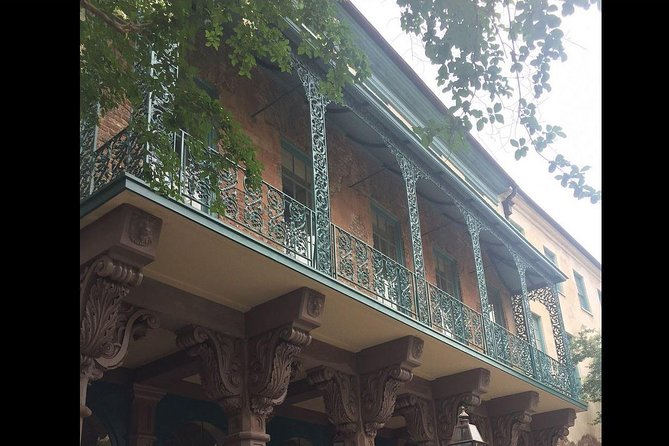
Mother Emanuel A.M.E. Church stories are included as part of the experience. The tour information does not present this as a simple photo stop. Instead, Fordham brings forward stories connected to the church that have faded from memory over the centuries.
That focus fits the tour’s larger purpose. Black Charleston is not treated as a footnote to the city’s better-known story. Faith communities, leaders, families, and ordinary residents all become part of the account.
This may be one of the more emotional sections. The tour deals with painful subjects, and the goal is not to make the past comfortable. Fordham’s strongest quality, based on the many positive comments about his work, is his willingness to speak with passion and specificity rather than flattening difficult events into a few polite sentences.
Finishing at the Old Slave Mart Museum
The walk ends with the Old Slave Mart Museum area, a downtown building that once held slave auction galleries. The listed stop lasts about 15 minutes, and admission is not included.
That detail matters when planning your afternoon. You can hear about the site as part of the walking tour, but the $39 price does not cover entry. The route description presents the museum as part of the final historical section, so you should not assume that an extended indoor museum visit is included in the two-hour experience.
The site is a powerful final stop because it brings the tour back to one of Charleston’s most direct connections to the domestic slave trade. After hearing about businesses, neighborhoods, culture, faith, resistance, and community, you reach a place that makes the violence and commercial structure of slavery unmistakable.
The sequence also gives the tour a clear arc. You begin with public city spaces, move through Black community and cultural stories, see the relationship between celebrated buildings and overlooked labor, and finish at a site tied directly to enslavement.
How Damon Fordham shapes the experience
The guide is the heart of this tour. Damon Fordham is described as a published author, adjunct professor, historian, educator, musician, and licensed tour guide. Those roles show up in the way he presents the material.
You can expect more than memorized dates. Fordham combines researched history with personal and family connections to South Carolina. Several comments praise the way he makes the material feel lived-in rather than rehearsed, while others note that he can answer questions beyond the planned route.
His style also includes humor and music. The melodica has become a memorable part of the experience for some people, and his theatrical use of different voices adds drama to certain stories. That approach will work best for you if you enjoy a guide who performs as well as teaches.
There is a fair point of caution here. One review found the delivery awkward and felt that Fordham sometimes scolded or corrected people too sharply. That response is not universal, but it is worth considering. This is a passionate, direct presentation, not a soft-spoken audio guide. You should book it if you value candor and strong opinions, while understanding that the style may not suit everyone.
What the $39 price gets you
At $39 per person, this tour sits in the moderate range for a guided two-hour city walk. The price does not include admission to the Heyward-Washington House or Old Slave Mart Museum, so the value comes mainly from the guide and the interpretation.
I think the price is fair for the right audience. You are getting a focused route, a small maximum group of 20, and a guide whose work includes extensive research, teaching, writing, and personal knowledge of the region. The tour also covers material that is easy to miss if you simply walk through the historic district on your own.
The value is lower if you want a fast-moving sightseeing tour with lots of interiors. Much of the experience takes place on public streets and outdoor sites. You are paying for context, storytelling, and access to a particular historical viewpoint, not for a package of museum tickets.
With an average booking lead time of 13 days, planning ahead is sensible. Confirmation is sent within 48 hours of booking, subject to availability. Free cancellation is available up to 24 hours before the start time for a full refund. Cancellations or changes made within 24 hours are not refunded or accepted, and poor weather can result in a rescheduled date or full refund.
Who should book this Charleston walk
I would recommend the tour to you if you want to:
- Understand Charleston beyond its grand homes and decorative streets
- Hear Black history presented by a Black author and historian with South Carolina family ties
- Connect slavery, Reconstruction, civil rights, religion, music, and present-day Charleston
- Ask questions and take part in a more personal guide-led discussion
- See familiar downtown locations through a different historical lens
It is also a good choice for repeat visitors who have already taken a standard Charleston sightseeing tour. The route includes recognizable places, but the focus and interpretation are different.
Families can attend, though children must be accompanied by an adult. The serious subjects may be best suited to older children and teenagers who can engage with difficult history. Since the tour is conducted in English, strong English comprehension will help you follow the details and wordplay.
I would be more cautious if you dislike extended storytelling, outdoor heat, or guides with a forceful personality. You should also think twice if you want a tour built mainly around entering historic houses. This walk is about hearing the stories attached to places, with limited admission included.
Final verdict: should you book it?
Book the Lost Stories of Black Charleston Walking Tour if you want Charleston presented as a living city shaped by Black workers, leaders, artists, families, worshippers, and activists. Damon Fordham’s mix of scholarship, personal insight, wit, music, and direct commentary gives the walk a voice that is difficult to replace with a guidebook.
The 4.9 rating from 412 reviews and 98 percent recommendation rate reflect the tour’s strongest qualities: powerful storytelling, careful research, and a clear sense of purpose. Just know what you are choosing. This is not a polished, neutral-sounding stroll past pretty houses. It is a serious and sometimes theatrical examination of what Charleston remembers, what it forgets, and why that matters.
At $39, I consider it a worthwhile choice for your first full day or two in the city, especially if you want the historic district to make more sense. Bring water, allow time to stand and listen, and arrive ready to think as well as look.
FAQ
Where does the Lost Stories of Black Charleston Walking Tour begin?
The tour begins at Buxton Books, 160 King Street, Charleston, South Carolina 29401.
What time does the tour start?
The tour begins at 3:30 p.m.
How long does the walking tour last?
The experience lasts approximately two hours.
Where does the tour finish?
The tour ends back at the starting point at Buxton Books.
Is admission to the historic sites included?
Admission is not included for the Heyward-Washington House or the Old Slave Mart Museum. The tour includes walking by or visiting these sites as part of the guided experience.
Is the tour suitable for children?
Children may participate, but they must be accompanied by an adult.
What happens if the weather is poor?
The experience requires good weather. If the tour is canceled because of poor weather, you will be offered a different date or a full refund. You can also cancel at least 24 hours before the start time for a full refund.
Just added in Charleston
- Middleton Place Admission with Self Guided Tour and Lunch★ 4.5 · 326 reviews
- Charleston Ghosts of Liberty Guided Walking Tour★ 4.5 · 473 reviews
- 2-Hour Guided Kayak Eco Tour in Charleston★ 5.0 · 954 reviews
- Charleston’s Best Highlights: History, Culture & Architecture★ 5.0 · 422 reviews
- Undiscovered Charleston: Half Day Food, Wine & History Tour with Cooking Class★ 5.0 · 948 reviews
- Savor the Flavors of Charleston Walking Food Tour★ 4.5 · 881 reviews
- Afternoon Schooner Sightseeing Dolphin Cruise on Charleston Harbor★ 4.5 · 620 reviews
- Sip History in The Sun Cabana Covered Cocktail Class★ 5.0 · 332 reviews
Walking Tours, compared.
History and Hauntings of Salem Guided Walking Tour
Read our review →
New Orleans Premier Ghost, Voodoo and Vampire Walking Tour
Read our review →
Freedom Trail History Small Group Walking Tour
Read our review →
Historic Charleston Guided Sightseeing Walking Tour
Read our review →
New Orleans Food Walking Tour of the French Quarter with Small-Group Option
Read our review →
Cambridge: Harvard University Student-Guided Walking Tour
Read our review →Browse the lists this tour appears in