
Reviewed · MUSEUMS
NYC: Express Highlights Tour of the MET Museum
The Met can overwhelm even seasoned museumgoers. This two-hour tour gives you a clear route through its biggest treasures, from the Temple of Dendur and Egyptian tombs to paintings by Van Gogh, Monet, and other European masters. I especially like the small group of 15 or fewer and the guide’s story-led approach. You get more than dates and labels, with legends, artist habits, and useful context that makes the art easier to understand.
I also like the priority access and efficient route, a real help when your New York schedule is tight. The tradeoff is simple: two hours only scratches the surface of a museum this large, and the pace may feel brisk if you want to linger at every painting.
In This Review
- Key points to know before booking
- Why a short tour helps inside the Met
- Starting at the Metropolitan Museum of Art
- Ancient Egypt and the Temple of Dendur
- Greek sculpture and the art of looking closely
- Van Gogh, Monet, and the European masters
- Rodin and the value of a personal guide
- What the pace feels like in two hours
- Is $69 a fair price?
- Accessibility, language, and practical limits
- Who will get the most from this Met tour?
- Should you book the two-hour Met highlights tour?
- FAQ
- How long does the Met highlights tour last?
- What does the $69 price include?
- Is the tour available in languages other than English?
- Can I use wheelchair access for this experience?
- Are specific artworks guaranteed to be included?
- Can I cancel the booking?
Key points to know before booking

- The Temple of Dendur is a major stop: This striking Egyptian monument gives the tour a memorable centerpiece.
- Guides make the difference: Charlie, Ryan, Katie, Kevin, Jett, Rob, and others have been praised for clear explanations, humor, and personal attention.
- You see famous European art quickly: Van Gogh, Monet, Rodin, and other major names appear within a carefully planned route.
- Small groups keep the tour personal: A maximum of 15 people gives you room to ask questions and request a brief detour.
- Two hours is an introduction, not a full visit: Plan extra time afterward if you want Asian art, musical instruments, decorative arts, or temporary exhibitions.
- The tour is family-friendly but brisk: Engaging stories can hold the attention of children and teens, while older visitors should be comfortable walking at a moderate pace.
Why a short tour helps inside the Met
The Metropolitan Museum of Art is not a museum you casually conquer. Its galleries cover 5,000 years of human creativity, and the building can leave first-time visitors unsure which direction to take. You can spend half an hour finding a department before seeing a single famous work.
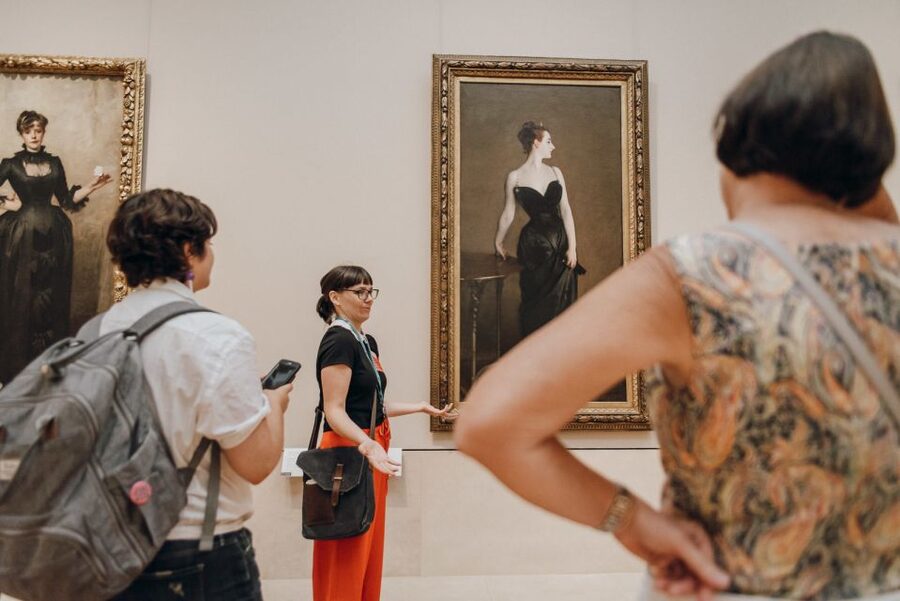
This experience solves that problem with a fixed route and a live guide. Instead of trying to read every wall panel, you move from one major work to the next while hearing why each object matters. I like this approach for a first visit because it gives you a mental map and a list of places to revisit later.
The tour is offered as a shared small group or a private walk, depending on the option you choose. The shared format offers the best balance of price and interaction. With no more than 15 people, the guide can still respond to questions and adjust the route a little when someone has a special interest.
The experience has earned a 4.4 rating from 795 reviews, with especially strong praise for the guides. Names that appear repeatedly in the feedback include Ryan, Katie, Charlie, Kevin, Jett, and Rob. That matters because the Met’s collection is not the hard part. The hard part is making sensible choices and explaining them well.
More Museum Tours in New York City
- NYC: 9/11 Memorial & Museum Timed-Entry Ticket
★ 4.8 · 31,428 reviews - NYC: Empire State Building Tickets – Observatory & Museum
★ 4.7 · 25,757 reviews - New York City: American Museum of Natural History Ticket
★ 4.5 · 15,447 reviews
Starting at the Metropolitan Museum of Art
You meet at the Metropolitan Museum of Art, though the precise meeting point can vary by the option booked. Check your confirmation carefully and arrive ready to walk. The tour begins and ends at the museum, so there is no hotel transportation to arrange or wait for.
Priority entry reduces time spent dealing with the ticket line. It does not remove the need to meet the guide at the correct place, so do not treat skip-the-line access as permission to arrive at the last second.
Once inside, expect a quick orientation and then a steady walk through several departments. The exact galleries can change. Museum rooms may close, and individual works can be absent without notice. Your guide may switch the order or replace a stop, which is normal in a working museum rather than a failure of the tour.
The route is in English. You should be comfortable walking at a moderate pace for two hours. There is no food or drink included, and you are responsible for making your own plans before or after the visit.
Ancient Egypt and the Temple of Dendur
The Egyptian galleries provide one of the tour’s strongest openings or central stops. Ancient tombs and mummies offer an immediate sense of age and purpose, but a guide can help you look beyond the familiar images of pharaohs and burial objects.
The Temple of Dendur is the showpiece. This stone temple was relocated to New York after the construction of the Aswan High Dam threatened to submerge it. The story raises useful questions about international cultural exchange, preservation, and who gets to keep ancient monuments.
That context makes the temple more than a dramatic room for photographs. You can look at its architecture, carvings, and placement beside the water while considering the modern decisions that brought it here. A good guide will also explain why the Met holds Egyptian material and how the museum’s role fits into that complicated story.
This is a place where the guide’s personality matters. Charlie has been praised for explaining the museum’s connection to Egyptian artifacts in a clear way, while other guides have used the temple to encourage questions about ownership and preservation. You should expect interpretation, not just a quick stop and a photo opportunity.
Greek sculpture and the art of looking closely
The Greek galleries shift the mood from monumental architecture to the human figure. Exquisite statues give your guide a chance to talk about pose, balance, ideal beauty, and the ways later artists borrowed from ancient models.
You may already recognize some of the forms, but the value lies in learning how to look. A guide can point out details in posture, drapery, expression, and surface treatment that you could easily miss while walking alone.
This part of the tour also breaks up the better-known modern painting stops. It reminds you that the Met is not simply a hall of European masterpieces. The collection reaches across cultures and centuries, and the express route tries to show that range within a limited window.
The limitation is time. Sculpture rewards a slow walk around the object, while a group tour needs to keep moving. If a Greek statue catches your eye, make a note of its location and return after the guided portion.
A different kind of day out entirely:
- NYC: SUMMIT One Vanderbilt Tickets
★ 4.7 · 51,195 reviews - NYC: Empire State Building Observation Deck Tickets
★ 4.7 · 22,072 reviews - NYC: Edge Observation Deck Admission Ticket
★ 4.6 · 20,918 reviews - New York City: Statue of Liberty & Ellis Island with Ferry
★ 4.6 · 18,683 reviews
Van Gogh, Monet, and the European masters
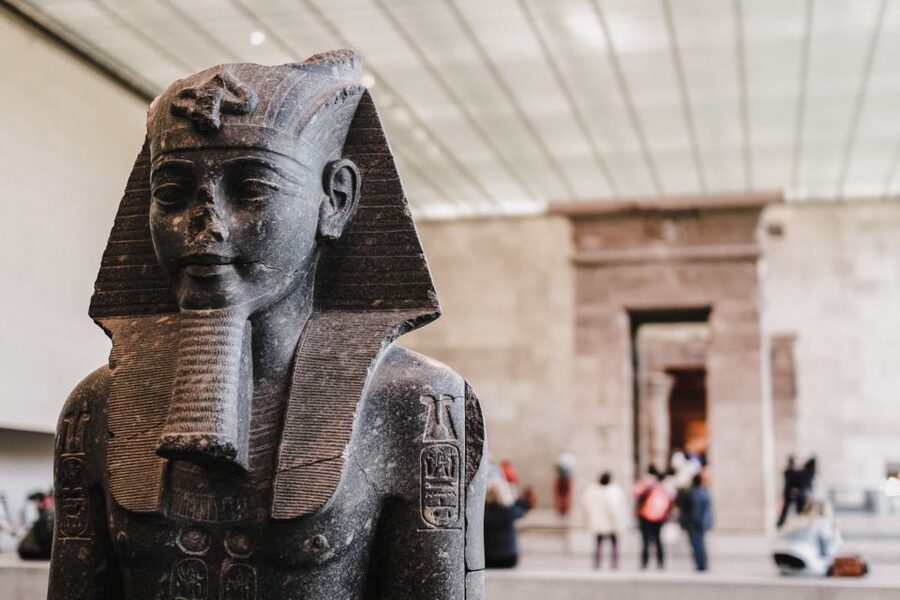
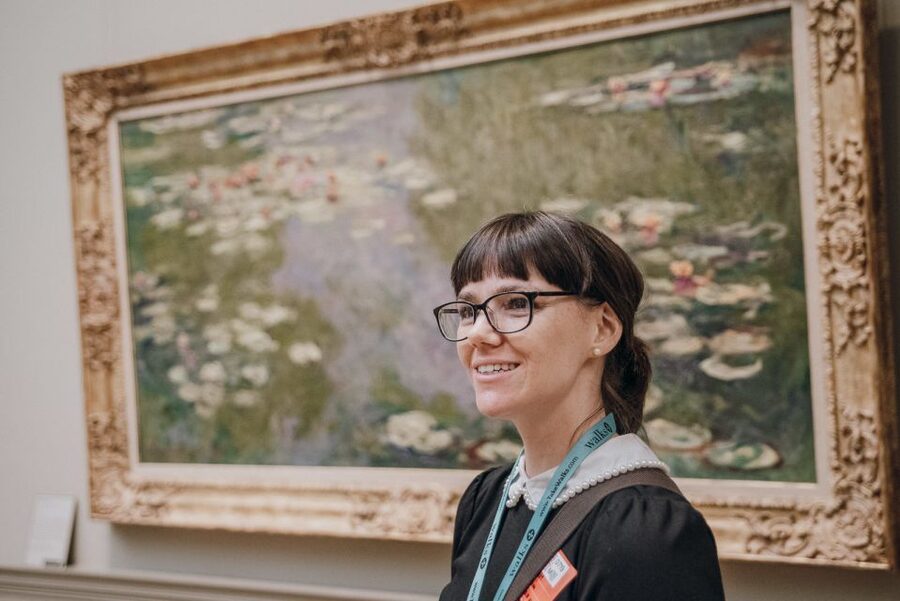
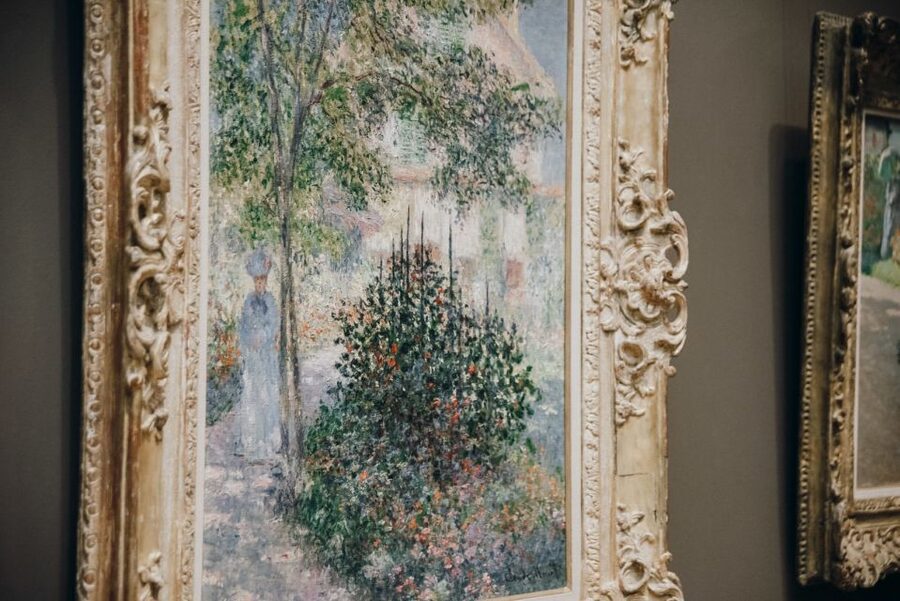
The European painting galleries bring the tour to the works many people most want to see. Van Gogh and Monet are central attractions, but the route also includes other major artists and works selected to show different styles and ideas.
The guide’s job here is to make the paintings feel less remote. Instead of repeating a label, the commentary may connect brushwork with the artist’s state of mind, explain a technique, or share an unusual story from the artist’s life. The experience description promises museum gossip, but the best version of that idea is useful gossip: facts and legends that help you notice something in the work.
Van Gogh is especially suited to this approach. You can look at the movement of the brushstrokes and ask how paint becomes emotion. Monet invites a different conversation about light, perception, and the difficulty of painting what the eye actually sees.
The tour is not an art school course, and you do not need prior knowledge. Guides such as Kevin and Rob have been praised for combining art history with questions about how to interpret a painting. That is a strong fit if you want to understand why a work matters rather than simply confirm that it is famous.
Families may find these stops easier than expected. One guide, Jett, was singled out for keeping two children interested, while Ryan was praised for making the material enjoyable for children as well as adults. The stories give younger visitors something to follow, and the short stops prevent the usual museum fatigue from arriving too early.
Rodin and the value of a personal guide
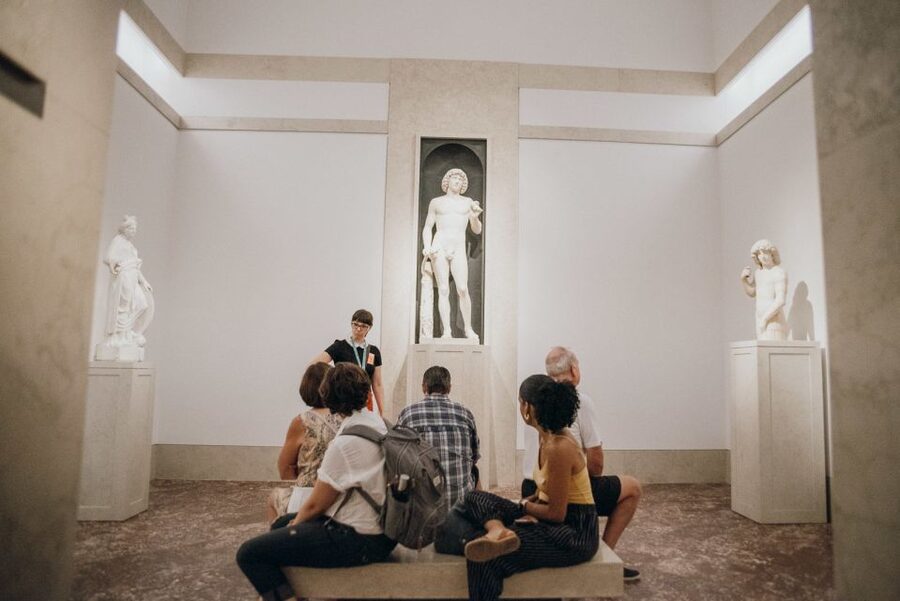
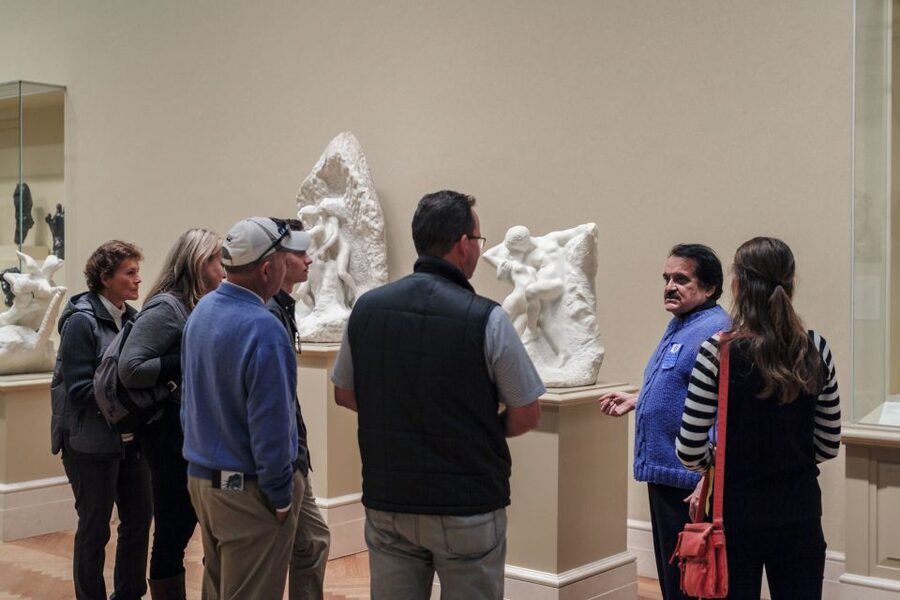
Rodin offers another chance to consider how artists represent the body, movement, and feeling. The stop fits the tour’s wider method: use a recognizable work to open a larger discussion rather than pile on facts.
I like the way the guides often connect a group’s interests to the route. Ryan once added a brief detour to show the oldest surviving piano in the world after learning that one participant was a musician. That is exactly the kind of small adjustment that can make a large institution feel personal.
Do not expect a completely custom route in a shared group. The guide has to serve everyone and keep to the two-hour schedule. Still, the maximum group size allows some flexibility, and several guides have helped people find departments they wanted to explore once the tour ended.
This is also where a private option may make sense. If you have a narrow interest in sculpture, painting, ancient art, or music, a private walk should give you more room to shape the conversation. The available information does not promise a particular route for private bookings, so confirm the arrangement when you reserve.
What the pace feels like in two hours
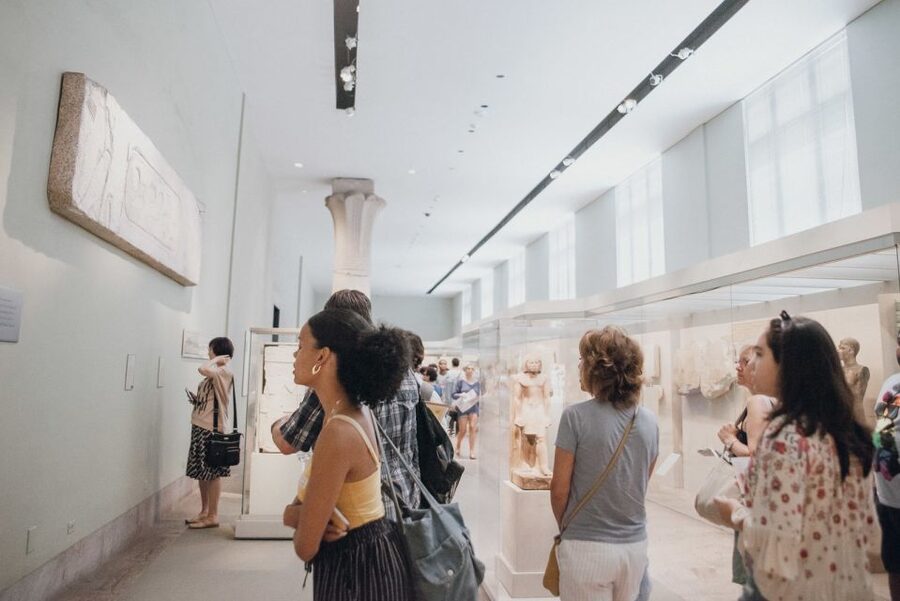
Two hours is enough to get the Met under control, not enough to see it all. The tour moves at a steady pace, with explanations at selected works and time for questions. You are not sprinting, but you are also not spending twenty minutes in front of one painting.
That rhythm has clear advantages. You avoid wandering, keep your attention fresh, and leave with a sensible plan for a return visit. Tara, who had taken Met tours before, appreciated how quickly the guide moved through the museum while still providing useful information.
The drawback is equally clear. Some participants have wished for a longer tour because the museum is so large. If you already know the Met and want an in-depth look at one department, this express route may feel too broad.
I would treat the tour as a first chapter. Afterward, you can continue independently and revisit the galleries that interested you most. Several guides point out what to see next, and some have helped people locate another department or find their way to lunch.
Wear comfortable shoes and keep your schedule realistic. A two-hour museum walk can be tiring, especially when combined with a full day around New York. Older visitors should note that the tour requires moderate walking, though one review praised Charlie for speaking clearly and keeping the pace comfortable for an older couple.
Is $69 a fair price?
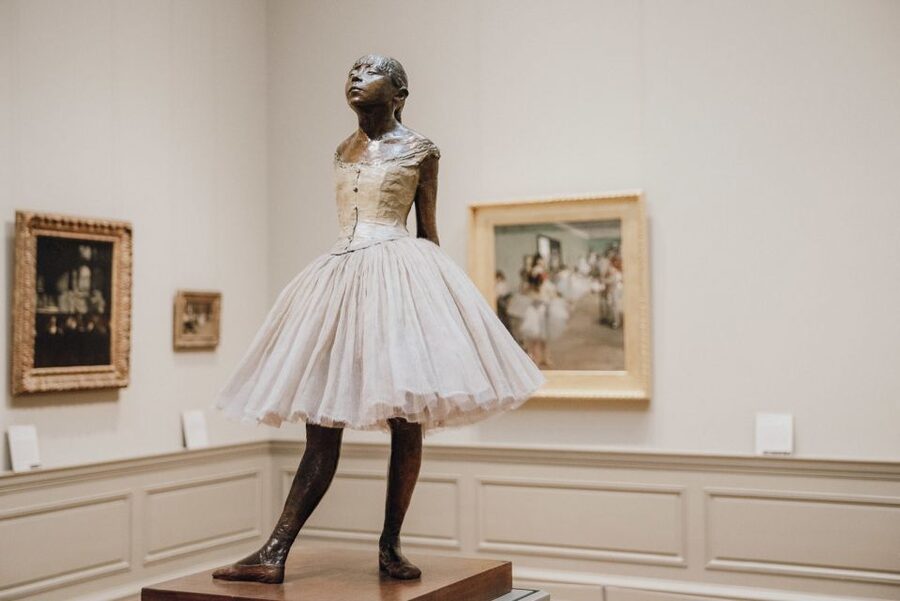
At $69 per person, this is not the cheapest way to enter the Met. The fee includes a pre-arranged museum ticket with the donation included, a live English-speaking guide, and a shared or private walking format based on your booking.
The real value is time and direction. If you are visiting New York for only a few days, priority entry and a sensible route can prevent a large museum from consuming your entire afternoon. You are also paying for explanations that turn famous objects into memorable encounters.
I think the price makes the most sense for a first visit, families, couples with limited time, and anyone who feels uneasy in very large museums. It is less appealing if you prefer to read labels quietly, move at your own speed, or spend an hour with a single artist.
For two people, the total cost is significant, so decide what kind of visit you want. If your plan is to see the Met’s best-known rooms and then leave, the guide adds real value. If you intend to spend most of the day inside and already know the museum, you may prefer independent admission and a department-by-department plan.
You can cancel up to 24 hours ahead for a full refund, and the reserve-now, pay-later option keeps your schedule flexible. Those policies are useful in a city where weather, shows, and dinner plans can change quickly.
Accessibility, language, and practical limits
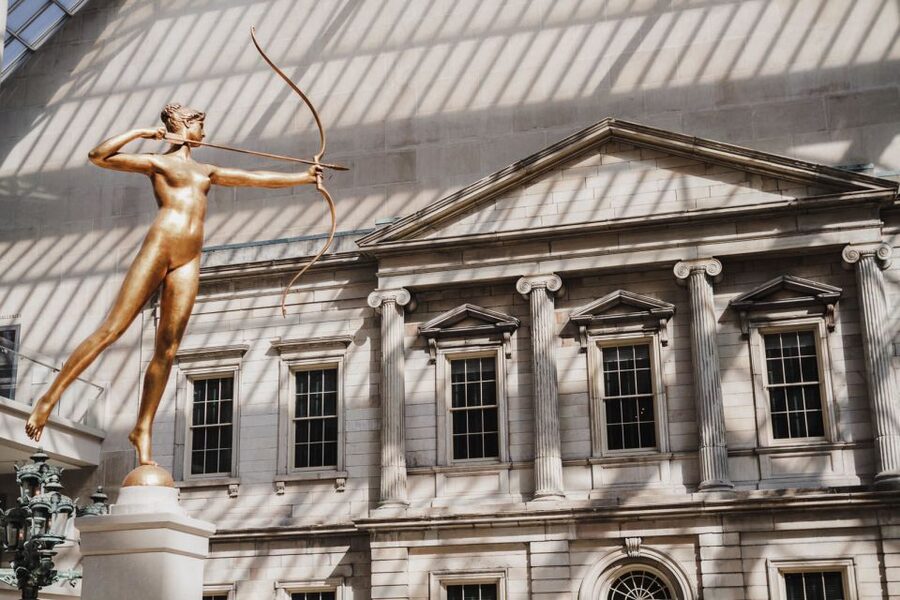
The tour is conducted in English. It is wheelchair accessible, but visitors who need a wheelchair entrance should use the ground-level entrance to the left of the main entrance when facing the building. Tell museum staff that you are meeting a tour group in the main lobby.
The museum’s galleries and individual works can change without warning. A specific painting or room is never guaranteed, so book this for the general experience rather than one single object.
There is no hotel pickup or drop-off. Food and drinks are also not included. The tour ends at the Met, which is convenient if you want to continue looking around, eat nearby, or make your way to another Upper East Side stop.
Who will get the most from this Met tour?
I would recommend it most strongly to:
- First-time Met visitors who do not know where to begin
- Families with children or teens who need a lively route
- Short-stay visitors with only two hours available
- Art lovers who want context, not just famous names
- Older visitors who value a clear route and an audible guide
- Returning visitors who want a fresh selection of major works
I would be more cautious if you need a slow, scholarly study of one collection. The tour covers many departments, and its strength is range. You can always stay afterward, but the guided portion itself will not provide a long examination of every object.
The quality of the experience depends heavily on the guide. That is true of any museum tour, but especially here. The strongest feedback highlights guides who are warm, funny, responsive, and able to explain art without making it feel like homework. Ryan, Katie, Charlie, Kevin, Jett, Rob, and others have received praise for those qualities.
Should you book the two-hour Met highlights tour?
Book it if the Met feels intimidating, your New York schedule is tight, or you want a lively introduction before exploring alone. The Temple of Dendur, Egyptian tombs, Greek sculpture, Van Gogh, Monet, and Rodin give you a strong first look at the museum’s range.
Skip it if you already have a detailed personal plan and dislike being guided at a moderate pace. In that case, independent admission may give you more freedom.
For most first-time visitors, I see this as a useful investment in orientation. You leave with famous works checked off, but also with reasons to return. Just remember that two hours is the beginning of your Met visit, not the whole story.
FAQ
How long does the Met highlights tour last?
The tour lasts two hours, including the guided walking portion inside the Metropolitan Museum of Art.
What does the $69 price include?
The price includes a pre-arranged Metropolitan Museum ticket with the donation included, a live English-speaking guide, and either a shared small-group or private walking tour, depending on the option selected.
Is the tour available in languages other than English?
No. The tour is conducted in English.
Can I use wheelchair access for this experience?
Yes, the tour is wheelchair accessible. Visitors needing wheelchair access should enter through the ground-level entrance to the left of the main entrance while facing the museum. Tell staff that you are meeting a tour group in the main lobby.
Are specific artworks guaranteed to be included?
No. Galleries and artworks may be closed or absent without prior notice. The guide may change the route to match conditions on the day.
Can I cancel the booking?
Yes. You can cancel up to 24 hours in advance for a full refund. A reserve-now, pay-later option is also available.
Just added in New York City
- All Inclusive Airport Arrival Transfer to NYC/ Brooklyn/Queens★ 4.0 · 849 reviews
- All Inclusive Airport Departure Transfer NYC/ Brooklyn/Queens★ 4.0 · 342 reviews
- The Escape Game Brooklyn: Epic 60-Minute Adventures in City Point★ 5.0 · 332 reviews
- Brooklyn Food Walking Tour: Local Eats & Family‑Run Shops★ 5.0 · 592 reviews
- Brooklyn Bridge & DUMBO Food Tour: Local Eats & Landmarks★ 5.0 · 478 reviews
- Harlem: Central Harlem Sunday Gospel with Locals★ 3.9 · 499 reviews
- West Harlem: Gospel Church Service and Sunday Walking Tour★ 4.3 · 411 reviews
- Manhattan: Statue and Skyline Cruise Aboard a Luxury Yacht★ 4.8 · 540 reviews
Museums, compared.

Empire State Building Tickets – Observatory & Museum
Read our review →

9/11 Memorial, Ground Zero Tour with Optional 9/11 Museum Ticket
Read our review →

All-Access 9/11: Ground Zero Tour, Memorial and Museum, One World Observatory
Read our review →
Browse the lists this tour appears in