
Reviewed · MUSEUMS
NYC: Whitney Museum Ticket
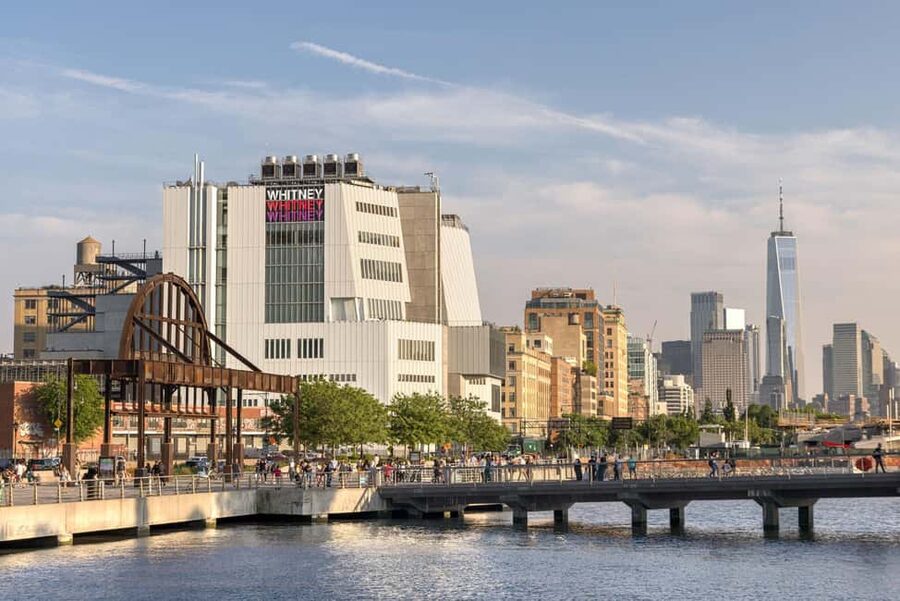
Art looks better with a skyline behind it. The Whitney combines a major American art collection with four levels of outdoor terraces, and I especially like the freedom to set your own pace and the included mobile guide in English or Spanish. The main thing to consider is the price: at $30, this is not a quick, casual museum stop.
The museum’s Renzo Piano building is part of the experience, not just a container for paintings. You can see work by Jackson Pollock, Georgia O’Keeffe, Andy Warhol, Edward Hopper, and many other artists, but the exact mix changes with the temporary exhibitions. If Hopper is your main reason for coming, check the current displays first, since the amount of his work can vary.
In This Review
- Key Points Before You Go
- Why the Whitney Feels Different
- Entering at 99 Gansevoort Street
- Four Floors of Renzo Piano’s Building
- The Permanent Collection: From O’Keeffe to Warhol
- Temporary Exhibitions and the Changing Visit
- Using the Audio Guide at Your Own Speed
- How Much Time Should You Set Aside?
- Is the $30 Ticket Good Value?
- Practical Details That Affect Your Visit
- Who Will Enjoy the Whitney Most?
- Should You Book the Whitney Museum Ticket?
- FAQ
- Where is the Whitney Museum located?
- How much does the Whitney Museum ticket cost?
- How long is the ticket valid?
- What does the ticket include?
- Is an audio guide included?
- Do I need to bring headphones?
- Can I cancel the booking?
- Can I reserve now and pay later?
- Can I bring food, drinks, or large luggage?
Key Points Before You Go

- Four outdoor terrace levels: Pause between galleries for wide views over the High Line, lower Manhattan, and the Hudson area.
- A large American art collection: The permanent collection includes more than 21,000 paintings, sculptures, drawings, prints, photographs, films, videos, and new media.
- Strong focus on modern and living artists: You can move from early 20th-century American work to current art in one visit.
- Self-guided and flexible: Your ticket is valid for one entry on the reserved date, and the museum’s mobile guide lets you choose your own route.
- Temporary exhibitions change often: The Whitney presents about 15 exhibitions a year, including solo shows, group displays, historical surveys, and career retrospectives.
- Plan for at least two hours: The building is spacious, and a quick visit can leave you seeing only a fraction of what is on offer.
Why the Whitney Feels Different

The Whitney Museum of American Art is devoted to American art from the 20th century to the present. That focus gives the museum a clear identity. You are not moving through galleries organized around European masters or ancient civilizations. Instead, you are following the changing ways American artists have pictured work, cities, bodies, politics, nature, and daily life.
I like that the Whitney does not treat modern art as one neat story. You may encounter Abstract Expressionism, Pop Art, Minimalism, Modernism, photography, film, video, and newer forms of art in the same visit. The collection includes more than 3,000 artists, so there is no single style to absorb and no single correct route through the building.
The museum also gives special attention to living artists. That matters because the galleries are not only looking backward. Some rooms may ask what American art meant decades ago, while others ask what artists are saying now. The result can feel less predictable than a museum built only around famous historical names.
More Museum Tours in New York City
- NYC: 9/11 Memorial & Museum Timed-Entry Ticket
★ 4.8 · 31,428 reviews - NYC: Empire State Building Tickets – Observatory & Museum
★ 4.7 · 25,757 reviews - New York City: American Museum of Natural History Ticket
★ 4.5 · 15,447 reviews
Entering at 99 Gansevoort Street
You redeem your voucher at the admissions counter at 99 Gansevoort Street in the Meatpacking District. The ticket provides one entry on the date you reserve, so check your chosen date and the available starting time before you pay.
The museum ticket includes access to the permanent collection and temporary exhibitions. That is important for value. You are not paying only to see a few famous works by Pollock, O’Keeffe, or Warhol. You are also paying for the changing exhibitions, the building, the terraces, and the chance to see a wide selection from a collection that is too large to show all at once.
A free downloadable audio guide is included in English and Spanish. Bring your own headphones, since they are specifically listed as something to bring. On arrival, connect to the museum’s free Wi-Fi to open the guide, map, and other digital material.
The setup is self-directed. You are not tied to a group schedule or a guide who decides how long you spend in each room. That works well if you want to linger over one painting, skip a crowded gallery, or take a break outside.
Four Floors of Renzo Piano’s Building

The Whitney’s building, designed by architect Renzo Piano, is one of the strongest reasons to visit even if you are not a serious art specialist. It uses broad windows, open galleries, stairways, and outdoor balconies to connect the art with the city around it.
The terraces are spread across four stories. From them, you can look toward the High Line and lower Manhattan, with the city arranged almost like another large-scale artwork. The views are especially useful as pauses between galleries. After a room of intense color, crowded figures, or difficult ideas, stepping outside gives you a physical reset.
I would not rush through the terraces. They make the museum feel less enclosed than many large art institutions. You can also use them to get your bearings, since each level offers a different angle over the surrounding streets and buildings.
The architecture receives consistent praise, and it is easy to understand why. Even people who find some contemporary art hard to connect with can appreciate the building’s clean lines and open feeling. The drawback is that the museum’s scale can make a short visit feel incomplete. The building gives you room to roam, but you need time to use it well.
The Permanent Collection: From O’Keeffe to Warhol
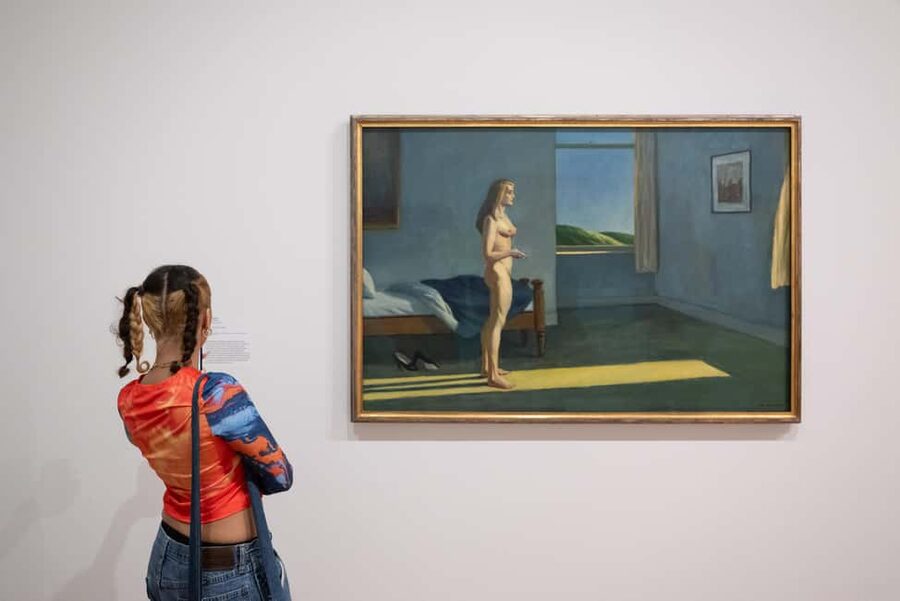
The Whitney’s permanent collection covers a broad stretch of American art. Its holdings include more than 21,000 objects across painting, sculpture, drawing, printmaking, photography, film, video, and new media.
You can expect to encounter major movements such as Modernism, Abstract Expressionism, Pop Art, and Minimalism. The collection is also home to important works by artists including Jackson Pollock, Georgia O’Keeffe, and Andy Warhol. These names provide familiar landmarks, but the museum’s real strength is the wider context around them.
Pollock’s work makes more sense when you can compare his approach with other artists experimenting with gesture, scale, and abstraction. O’Keeffe’s paintings gain another layer when viewed alongside artists exploring the American landscape, flowers, bodies, or urban forms. Warhol’s work opens a path into questions about advertising, celebrity, repetition, and mass culture.
The Whitney also helps you see that American art is not limited to a short list of household names. The collection includes many artists who receive less attention outside museums, and the temporary displays may place famous figures beside artists working in very different ways.
Because the collection is so large, the rooms on view will change. Do not arrive expecting every well-known piece to be displayed. The museum has enough holdings to create different stories over time, and the current presentation may favor a theme, period, or group of artists that is not the one you had in mind.
A different kind of day out entirely:
- NYC: SUMMIT One Vanderbilt Tickets
★ 4.7 · 51,195 reviews - NYC: Empire State Building Observation Deck Tickets
★ 4.7 · 22,072 reviews - NYC: Edge Observation Deck Admission Ticket
★ 4.6 · 20,918 reviews - New York City: Statue of Liberty & Ellis Island with Ferry
★ 4.6 · 18,683 reviews
Temporary Exhibitions and the Changing Visit
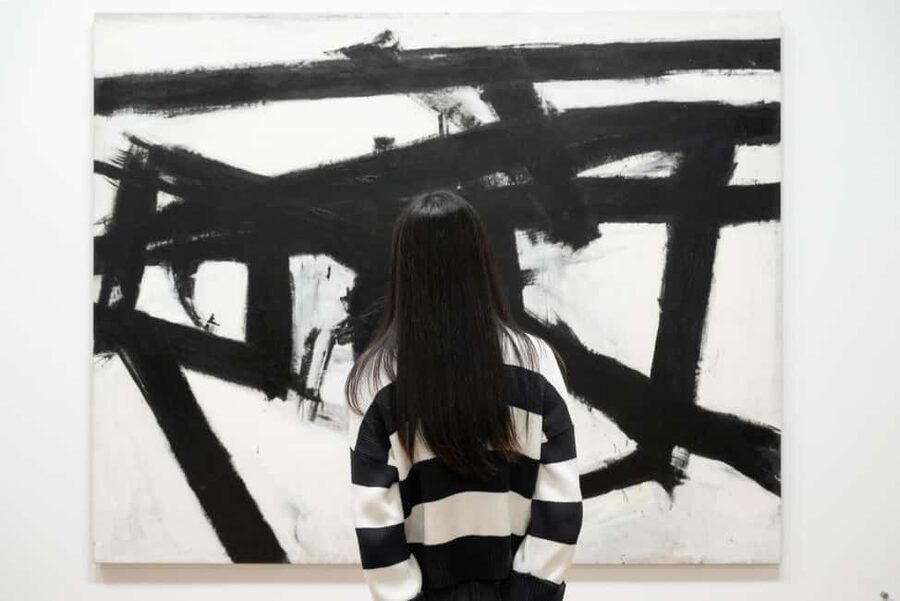
The Whitney presents roughly 15 exhibitions each year. These include single-artist displays, group exhibitions, historical surveys, and lifetime retrospectives.
This schedule gives the museum much of its energy. A temporary show can change your entire visit, especially if it focuses on an artist you know little about. One recent exhibition centered on Henry Taylor, while another presentation included a large selection of Edward Hopper works and explained how Hopper built paintings from earlier sketches and studies.
That Hopper display would be especially useful for anyone interested in how a finished painting develops. Seeing sketches and learning about the artist’s process can make familiar works feel less distant. At the same time, you should not assume that the museum will always have a large Hopper presentation. One visit left a Hopper enthusiast disappointed because only a small number of his works were on view.
This is a good reason to check the exhibition schedule before booking. If a temporary exhibition matches your interests, the $30 ticket may feel well spent. If your preferred artist is not currently featured, the permanent collection and architecture still offer plenty to see, but the visit may not match your original plan.
Using the Audio Guide at Your Own Speed
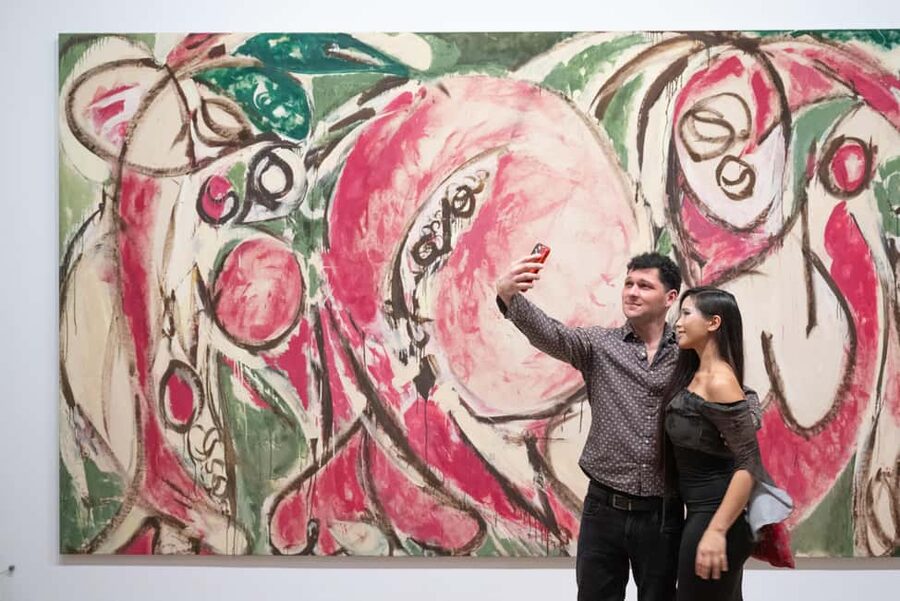
The mobile audio guide is a practical part of the ticket. Once you connect to the museum’s Wi-Fi, you can access the guide, museum map, and other digital content without relying on your own mobile connection.
I like this arrangement because you can use as much or as little explanation as you want. Listen closely to a few works, use the map to plan your route, then move through other rooms without stopping for every entry. The audio guide is available in English and Spanish.
Bring headphones. This small detail matters, since holding a phone to your ear through several galleries is awkward, and speaker audio would disturb other people. The guide also gives you a way to create a visit that suits your interests rather than following a fixed lecture.
The museum may also offer docent-led programs at particular times. One visit included an attempted Hopper tour, but the group was large and the docent did not use a microphone, making it hard to hear. If you find a scheduled tour that interests you, it may be wise to arrive early and stay near the guide.
How Much Time Should You Set Aside?
Give yourself at least two hours. That is enough for a purposeful visit, a look at the main exhibition areas, and time on some of the terraces. It is not enough to study every room carefully.
If you enjoy modern and contemporary art, plan on more time. You may want to listen to sections of the audio guide, read wall labels, revisit a work, or spend a few minutes outside on each level. The building has enough space to support a longer visit without feeling like a rushed checklist.
Crowds can change the experience. A Sunday around noon was described as very crowded, and a large group made one docent-led tour difficult to follow. If you prefer quiet galleries, avoid the busiest period when your schedule allows, though the exact crowd level will depend on the date and exhibitions.
The ticket is valid for one entry on the reserved date. You cannot treat it as a pass for repeated visits throughout your New York stay, so choose a time when you can give the museum proper attention.
Is the $30 Ticket Good Value?
At $30 per person, the Whitney ticket is a considered purchase rather than an automatic bargain. The value depends on how you use it.
I think the price makes sense if you care about American art, want to see a major temporary exhibition, or appreciate architecture and city views as part of a museum visit. Access to both permanent and temporary exhibitions strengthens the deal. The free mobile guide also saves you from paying extra for basic interpretation.
The value is weaker if you only want to pop in for one famous painting or spend less than an hour inside. The museum is too large and too varied for that kind of visit to show its best side.
An older admission experience recorded a lower museum price than the ticket price being offered at that time. Prices and ticket arrangements can change, so it is worth checking the current direct admission price before booking. The convenience of reserving ahead may still matter, particularly if you want a specific date or hope to avoid a longer purchase line.
The flexible booking terms help reduce the risk. You can reserve now and pay later, and cancellation is allowed up to 24 hours in advance for a full refund. Those terms are useful when your New York plans are still shifting.
Practical Details That Affect Your Visit

Bring a passport or identity card, along with headphones. Food and drinks are not allowed, and large bags or luggage cannot enter.
There is currently no coat-check facility. In cold weather, that means you should think about what you want to carry through the galleries before arriving. A small, manageable bag is the safer choice.
The museum has free Wi-Fi for the mobile guide and map. Connect once you are inside, then use the digital material as needed. Since the guide is downloadable, you do not need to arrange a separate paid tour.
The experience is suitable for solo visitors, couples, families with older children who enjoy art, and anyone planning a day around the Meatpacking District or High Line area. It is also a good fit for visitors who dislike fixed group tours and want to decide when to pause.
Older visitors should note that some art descriptions may be printed in small type. One visitor specifically wished for larger explanations beside the works. The audio guide can help, but you should still expect to spend time reading labels at your own pace.
Who Will Enjoy the Whitney Most?
You should book this museum if you want a serious look at American art from the early 20th century through today, with plenty of room for personal choice. The collection is broad, the temporary exhibitions keep the experience changing, and the building gives you memorable views even between gallery visits.
It is a particularly good choice for fans of Pollock, O’Keeffe, Warhol, Hopper, Modernism, Abstract Expressionism, Pop Art, Minimalism, and current American artists. It also suits anyone who likes museums that connect indoor displays with the city outside.
I would be more cautious if your entire plan depends on one artist. Hopper’s presence, for example, may be limited unless a larger exhibition is scheduled. Check the current program first, then decide if the ticket price matches what you expect to see.
Should You Book the Whitney Museum Ticket?
Book it if you can spare at least two hours and want more than a quick photo stop. The art collection, changing exhibitions, and terrace views create a full museum visit, while the audio guide lets you keep the pace relaxed.
Skip it if you are looking only for one specific artist and that artist is not currently featured. For most visitors with an interest in American art, though, the Whitney is a worthwhile New York stop, especially when you combine the galleries with the Renzo Piano building and its views over the High Line and lower Manhattan.
FAQ
Where is the Whitney Museum located?
The museum is at 99 Gansevoort Street in New York’s Meatpacking District.
How much does the Whitney Museum ticket cost?
The listed price is $30 per person.
How long is the ticket valid?
The ticket is valid for one entry on the specified date reserved.
What does the ticket include?
It includes entry to the Whitney Museum of American Art, access to the permanent and temporary exhibitions, a guide, a downloadable audio guide, and Wi-Fi on site.
Is an audio guide included?
Yes. The mobile audio guide is included in English and Spanish.
Do I need to bring headphones?
Yes. Headphones are listed among the items to bring for using the mobile guide.
Can I cancel the booking?
Yes. You can cancel up to 24 hours in advance for a full refund.
Can I reserve now and pay later?
Yes. The booking option allows you to reserve your spot and pay nothing at the time of booking.
Can I bring food, drinks, or large luggage?
No. Food and drinks are not allowed, and luggage or large bags cannot be brought inside. There is currently no coat-check facility.
Just added in New York City
- All Inclusive Airport Arrival Transfer to NYC/ Brooklyn/Queens★ 4.0 · 849 reviews
- All Inclusive Airport Departure Transfer NYC/ Brooklyn/Queens★ 4.0 · 342 reviews
- The Escape Game Brooklyn: Epic 60-Minute Adventures in City Point★ 5.0 · 332 reviews
- Brooklyn Food Walking Tour: Local Eats & Family‑Run Shops★ 5.0 · 592 reviews
- Brooklyn Bridge & DUMBO Food Tour: Local Eats & Landmarks★ 5.0 · 478 reviews
- Harlem: Central Harlem Sunday Gospel with Locals★ 3.9 · 499 reviews
- West Harlem: Gospel Church Service and Sunday Walking Tour★ 4.3 · 411 reviews
- Manhattan: Statue and Skyline Cruise Aboard a Luxury Yacht★ 4.8 · 540 reviews
Museums, compared.
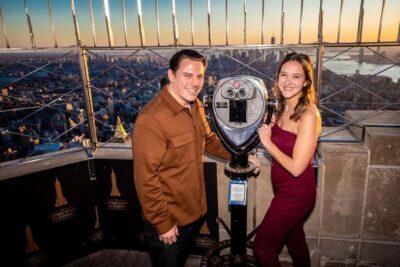
Empire State Building Tickets – Observatory & Museum
Read our review →

9/11 Memorial, Ground Zero Tour with Optional 9/11 Museum Ticket
Read our review →

All-Access 9/11: Ground Zero Tour, Memorial and Museum, One World Observatory
Read our review →
Browse the lists this tour appears in