
Reviewed · MUSEUMS
The Museum of Flight Entrance Ticket
Planes tell stories better than plaques do. At Seattle’s Museum of Flight, you can walk through historic aircraft, inspect early Boeing designs, and get close to the machines that carried people into the sky and space. I especially like the huge range of aircraft and the number of hands-on displays. The museum works for serious aviation fans, curious adults, and families with children.
I also like that your $29 admission covers a very large campus rather than a single exhibit hall. You can see the original Boeing Aircraft factory, board selected aircraft, and cross the T. Evans Wyckoff Memorial Bridge for views toward Seattle-Tacoma International Airport and Mount Rainier. The main drawback is simple: two to three hours may not be enough, and access to the Space Shuttle Trainer deck has reportedly remained closed since the pandemic.
In This Review
- Key things to know before you go
- Why the $29 ticket can be good value
- Start in the original Boeing factory
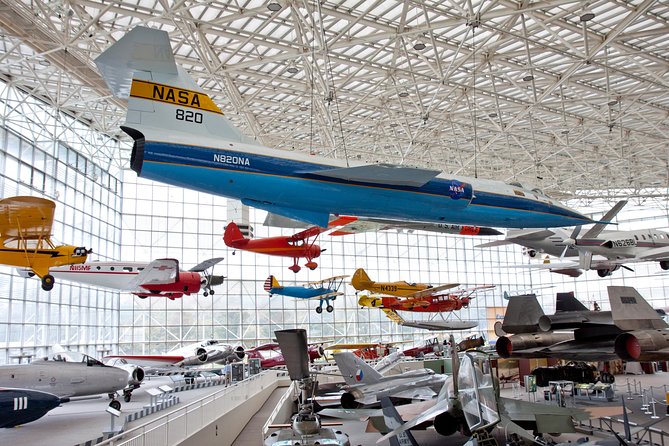
- The Great Gallery puts 43 aircraft overhead
- Walk through Boeing’s jet age
- See the aircraft behind the famous names
- The Space Shuttle Trainer needs a careful reality check
- Hands-on exhibits make the museum family-friendly
- Cross the bridge for airport and Mount Rainier views
- Allow three hours, or make it a full day
- Getting there and handling the ticket
- Who will enjoy this museum most?
- Should you book the Museum of Flight?
- FAQ
- How much does admission to the Museum of Flight cost?
- How long should I plan for the visit?
- Are simulators included in the entrance ticket?
- Is the 3D movie included?
- What are the museum’s opening hours?
- Can I cancel the ticket for a refund?
Key things to know before you go
- The campus is enormous: Six buildings spread across 23 acres hold more than 160 airplanes and spacecraft.
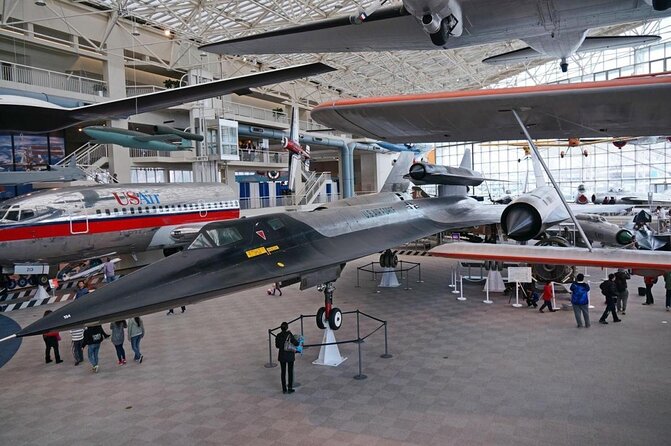
- The Great Gallery is the visual highlight: This six-story glass hall contains 43 aircraft, including spy planes and military jets.
- Several aircraft can be entered: Look for the Boeing 747 cockpit, Concorde, Air Force One, and other historic planes.
- The Space Shuttle Trainer may not be accessible: The full-size trainer is a major attraction, but the trainer deck has reportedly been closed for an extended period.
- Plan for at least three hours: Two hours gives you a brisk look, while aviation fans can easily spend four or five hours.
- Simulators and the 3D movie cost extra: They are not part of the basic entrance ticket and can be purchased or added upon arrival.
Why the $29 ticket can be good value
At $29 per person, this is not a quick museum stop. You are paying for access to a 23-acre air and space center with six buildings and more than 160 aircraft and spacecraft. That makes the ticket a reasonable buy if you can give the museum several hours.
I would not judge the price by the length of a standard museum visit. A fast visit might take two hours, but the displays reward slow reading, cockpit visits, and time with the interactive exhibits. Some people spend three hours and still feel they have not seen everything. Five hours is possible if you read the history panels and explore each building carefully.
The entrance ticket includes the museum itself, but simulators are extra. The flight simulators and full-motion attractions can be tempting, especially with children or anyone who wants more than a look at parked aircraft. The 3D movie theater also charges separately. If you are watching your budget, you can have a full visit without adding these extras.
Advance booking is sensible because the experience is often reserved well ahead of time, with an average booking lead of about 17 days. A prepaid ticket also helps avoid arriving at a popular Seattle attraction and finding yourself unprepared.
More Museum Tours in Seattle:
- NYC: 9/11 Memorial & Museum Timed-Entry Ticket
★ 4.8 · 31,428 reviews - NYC: Empire State Building Tickets – Observatory & Museum
★ 4.7 · 25,757 reviews - New York City: American Museum of Natural History Ticket
★ 4.5 · 15,447 reviews
Start in the original Boeing factory
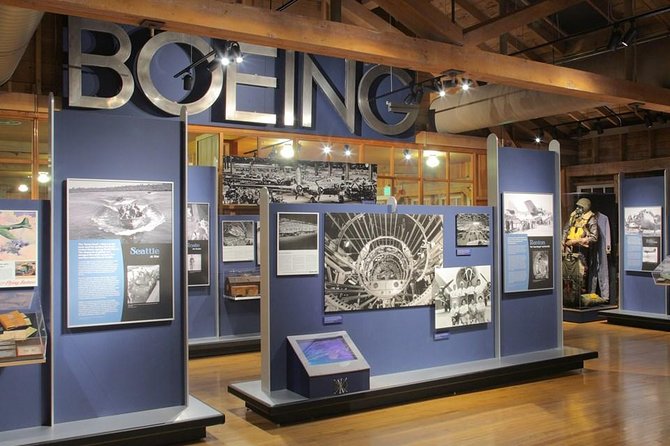
The museum sits at Seattle’s oldest airport, and part of its appeal comes from the setting. The original Boeing Aircraft factory is one of the six buildings on the campus, giving the museum a direct connection to the company that helped shape Seattle’s identity.
The Red Barn is especially useful for understanding Boeing’s early years. It is not just a room filled with aircraft. It helps connect the machines to the beginnings of the company and to the people who built an aviation business before commercial jet travel became ordinary.
You can spend time with exhibits covering World War I and World War II aircraft, early flight, and the development of later Boeing planes. The displays place American aviation beside the work of other countries and wartime opponents, which gives the museum more balance than a simple celebration of one company.
For children, this first section can be a good place to get started. The museum uses interactive displays and activities to keep the visit from becoming a long march past silent airplanes. Still, younger children may tire before you reach the final buildings, so keep the pace flexible.
The Great Gallery puts 43 aircraft overhead
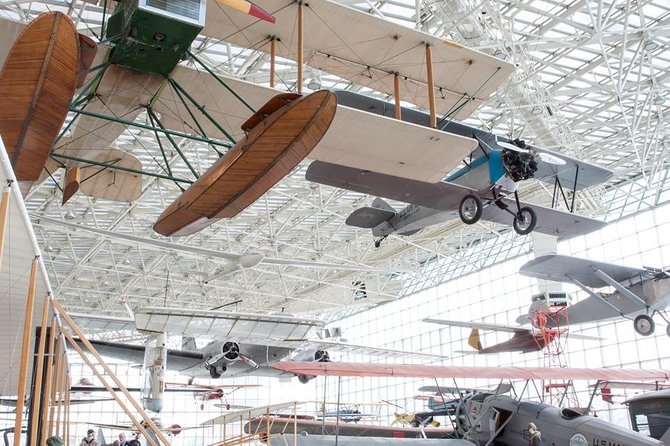
The Great Gallery is the museum’s big visual moment. It is a six-story glass building filled with 43 aircraft from the 1920s to the present. Because many planes hang above the floor, you get views from different levels rather than seeing everything from one flat corridor.
This building includes a rare M-21 Blackbird spy plane and fighter jets connected to the Korean and Vietnam wars. The aircraft are impressive in size, but the nearby information matters just as much. You can see how quickly design changed as aircraft moved from early propeller technology toward high-speed jets.
The gallery also gives you a sense of scale that photographs cannot provide. Wings, engines, landing gear, and cockpits look very different when you are standing beneath them. If you are not an aviation specialist, do not worry. The museum’s layout and labels let you follow the broad story of flight without needing technical knowledge first.
The Great Gallery is also one of the better areas for families. There are interactive features throughout the museum, and the open design gives children room to look upward and move between displays. I would allow more time here than you first expect.
Walk through Boeing’s jet age
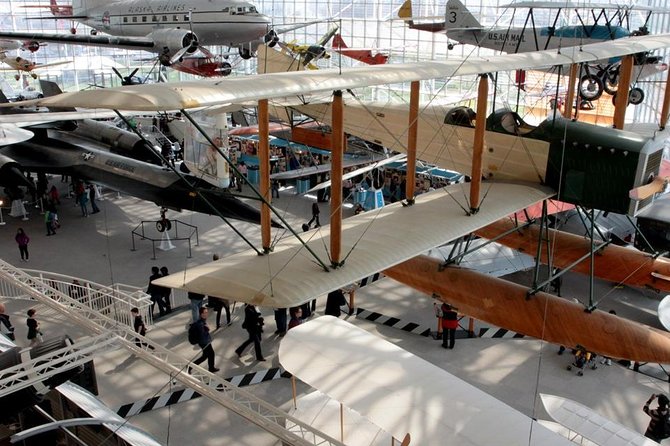
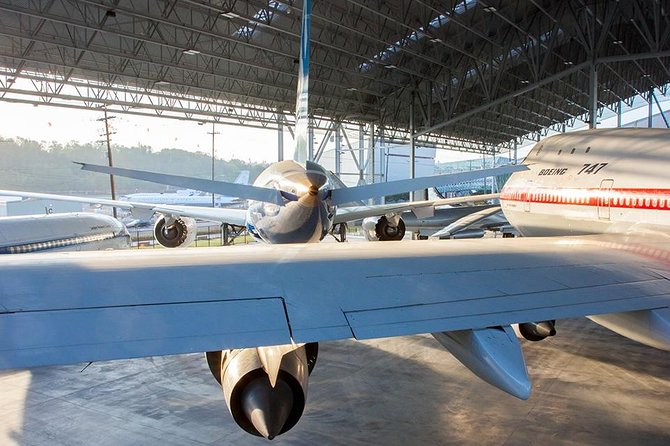
The Boeing aircraft are among the strongest reasons to visit. You can see the first flight-worthy Boeing 747, a development aircraft connected to the 747 program, and a 787 Dreamliner cockpit. These aircraft show more than changing shapes. They show how passenger flight grew from a limited service into a global industry.
Sitting in a Boeing 747 cockpit gives you a close view of the controls and working space used by the flight crew. The 747 itself changed the scale of commercial aviation, and seeing its cockpit beside later aircraft makes the shift in technology easier to grasp.
The museum also includes a Concorde and Air Force One aircraft that you can tour. Walking through these planes gives the visit a more physical quality. You are not only looking at an aircraft from behind a barrier. You can step inside and consider how passengers, pilots, and presidents occupied these spaces.
The historic Air Force One displays are particularly useful for showing how quickly presidential aircraft changed. Earlier planes can look surprisingly basic when compared with modern aircraft, yet they carried some of the most powerful people in the world.
Allow extra time for the 747 and presidential aircraft if these are priorities. They are among the exhibits most likely to slow you down, especially if you are visiting with someone who wants to inspect each cabin and cockpit carefully.
A few more options to weigh up in Seattle
- Beneath The Streets Underground History Tour
★ 4.5 · 8,006 reviews - Chef Guided Food Tour of Pike Place Market
★ 5.0 · 3,733 reviews - Mt. Rainier National Park Highlights Tour
★ 5.0 · 3,156 reviews - Seattle: Guided Underground Walking Tour
★ 4.6 · 2,144 reviews
See the aircraft behind the famous names
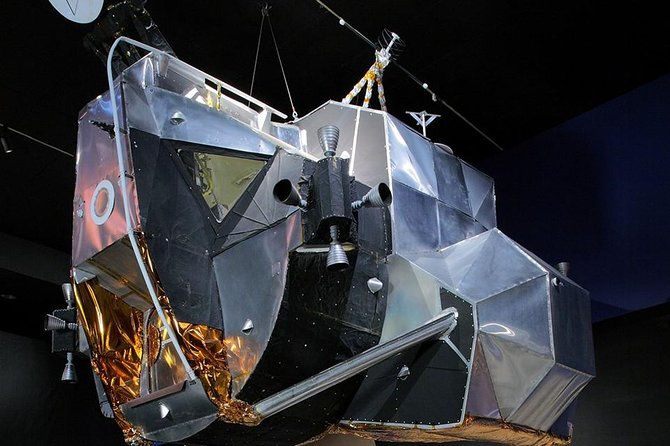
The museum includes a faithful replica of the aircraft associated with Amelia Earhart’s disappearance. This is one of the displays that links technical aviation with a larger human story. The plane matters not only because of its design, but because of the mystery and risk attached to Earhart’s final flight.
Other unusual aircraft broaden the experience. You might find a sailplane, an Aerocar, and the human-powered MacCready Gossamer Albatross II. These are useful reminders that flight is not one single engineering path. Aircraft can be military, commercial, experimental, recreational, or powered by the movement of a human pilot.
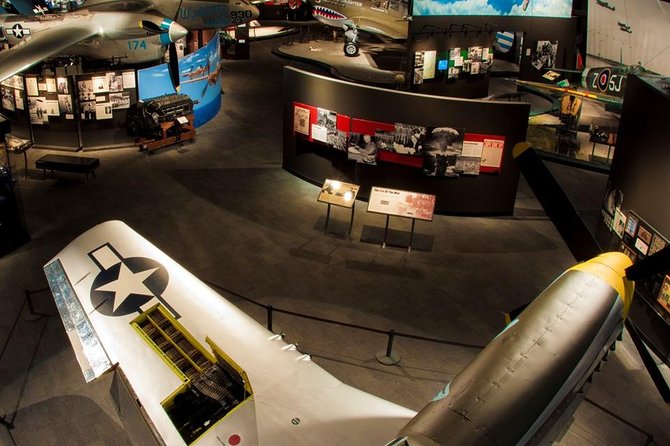
The museum also presents military aircraft from the Korean and Vietnam wars, including a B-52 bomber connected to Vietnam. A display lists the names of those who died, adding a sober human cost to the machinery.
That balance is important. The museum can be thrilling, especially when you are standing beneath a huge aircraft, but its best sections also ask you to think about war, risk, engineering failures, and the people affected by flight.
The Space Shuttle Trainer needs a careful reality check
The full-size Space Shuttle Orbiter Trainer is promoted as a major highlight. It is the kind of full-scale NASA training mockup used to prepare astronauts before missions, and seeing it up close can be a powerful moment for space fans.
However, you should confirm the current access arrangements before building your visit around it. The trainer deck has reportedly been closed since the pandemic and has not been a priority to reopen. The trainer itself may still be visible, but that is not the same as being able to enter every part of it.
This is the clearest gap between the advertised appeal and what you may actually experience. If the shuttle trainer is the main reason you are buying the ticket, contact the museum before your visit or ask about its status when you arrive.
The space exhibits still offer plenty to see. Displays cover space exploration, recovered spacecraft wreckage, and the technology behind human missions. A guided presentation about the Moon landing may also be available, based on the museum’s program offerings, but schedules can change.
Hands-on exhibits make the museum family-friendly
The museum is not only for aircraft specialists. Interactive displays appear across the buildings, and children can take part in activities that explain the basic ideas behind flight and space travel.
That matters because a large collection can become tiring for younger visitors. The hands-on elements break up the reading and give children something to do with their hands and minds. Families have spent about two and a half hours and still had a good day, while others needed three hours to see the main sections.
The simulators are the most obvious add-on. Some offer full-motion experiences, including fighter-jet style movement. They cost extra, so decide before you arrive how much you want to spend beyond admission.
If you are visiting with children, bring snacks and water. The campus is large, and walking between buildings can be tiring, especially on a warm day. Restrooms are available throughout the museum, and the gift center has a broad selection of aviation and space items.
Cross the bridge for airport and Mount Rainier views
Do not treat the T. Evans Wyckoff Memorial Bridge as a simple connection between buildings. On a clear day, it gives you views toward Seattle-Tacoma International Airport and Mount Rainier.
The bridge also helps you understand the museum’s location. You are not viewing aircraft in an isolated warehouse. You are near an active airport, with modern aviation continuing beyond the museum walls.
Weather affects how rewarding this pause will be. In rain, the outdoor parts are less pleasant, but the indoor collection still gives you plenty to do. The experience can be canceled because of poor weather, in which case you are offered another date or a full refund.
Allow three hours, or make it a full day
The official estimate is two to three hours, but I would treat that as the minimum useful visit rather than a fixed schedule. Two hours works if you focus on the major aircraft and skip much of the reading.
Three hours gives you time for the Great Gallery, the Red Barn, the main Boeing displays, military aircraft, and selected space exhibits. If you add a simulator or 3D movie, you will need to extend the visit.
Four or five hours is realistic for aviation enthusiasts and anyone who reads every display. The campus is huge, and the exhibits are spread across several buildings. You may also want to stop at the museum restaurant, which is useful because leaving for lunch would interrupt your visit.
Pack snacks or plan to use the restaurant. A full day is not excessive here, especially if you are visiting with someone who wants to inspect aircraft interiors and read the stories behind each machine.
Getting there and handling the ticket
The Museum of Flight is near public transportation, and most people can take part in the visit. Service animals are allowed. Present your voucher at the museum entrance, then begin exploring the campus.
The museum is listed as open daily from 10 a.m. to 5 p.m. for the 2026 operating period. Since exhibits and access areas can change, check the current details before setting out, especially if the shuttle trainer or a particular aircraft is essential to your plans.
The ticket has free cancellation if you cancel at least 24 hours before the scheduled start time. Cancellations or changes made within 24 hours are not refunded or accepted. Weather-related cancellations offer a different date or a full refund.
Who will enjoy this museum most?
You should book this experience if you enjoy aviation, space exploration, engineering, military history, or hands-on museums. It is also a strong choice for families looking for an indoor Seattle activity that can fill much of a day.
You do not need to know the difference between a turbofan and a propeller engine to enjoy it. The aircraft are large, dramatic, and easy to appreciate at close range. The staff and volunteers are friendly and willing to answer questions, which helps if you want more context than the labels provide.
The museum may be less suitable if you have only an hour in Seattle or dislike walking through large collections. It is not a quick photo stop. Its best qualities appear when you slow down.
Should you book the Museum of Flight?
Yes, if you can give it at least three hours. The $29 admission offers strong value because it covers six buildings, more than 160 aircraft and spacecraft, interactive exhibits, and access to some remarkable aircraft interiors.
Book ahead if your Seattle schedule is firm, but confirm the Space Shuttle Trainer access before you go. If you are an aviation fan, plan for four to five hours, consider adding a simulator, and do not skip the Red Barn, Concorde, Air Force One, 747, or the bridge views.
If you are less interested in airplanes, the museum can still work as a family outing or a rainy-day plan. Just keep your expectations realistic: this is a large, detail-heavy museum, not a short attraction. For most visitors, that size is the reward.
FAQ
How much does admission to the Museum of Flight cost?
The entrance ticket costs $29 per person.
How long should I plan for the visit?
The estimated visit lasts two to three hours, but you should plan for at least three hours if you want to see the main buildings without rushing. Aviation fans may spend four or five hours.
Are simulators included in the entrance ticket?
No. Simulator tickets can be purchased separately when you arrive.
Is the 3D movie included?
No. The flight-themed 3D movie has an additional cost.
What are the museum’s opening hours?
The museum is listed as open Monday through Sunday from 10 a.m. to 5 p.m. during the 2026 operating period.
Can I cancel the ticket for a refund?
Yes. You can cancel up to 24 hours before the experience start time for a full refund. Cancellations within 24 hours are not refunded. If poor weather causes cancellation, you are offered another date or a full refund.
Just added in Seattle
- Seattle Coffee Tour: Capitol Hill Cafes, Tastings & Local Stories★ 5.0 · 489 reviews
- Seattle Delicious Donut Adventure & Walking Food Tour★ 5.0 · 772 reviews
- Mt. Rainier highlights – old forest, falls and glaciers★ 5.0 · 564 reviews
- Seattle Wine & Snoqualmie Falls Highlights Tour★ 4.5 · 1,245 reviews
- The Original Food and Culture Tour of Pike Place Market★ 5.0 · 594 reviews
- Seattle City and Snoqualmie Falls Half-Day Guided Tour★ 5.0 · 1,293 reviews
- Space Needle and Chihuly Garden and Glass Combination Ticket★ 4.5 · 1,551 reviews
- Sinister Sins, Scandal, and Shadows: Seattle Ghost Tour★ 4.5 · 490 reviews
Museums, compared.
Empire State Building Tickets – Observatory & Museum
Read our review →


9/11 Memorial, Ground Zero Tour with Optional 9/11 Museum Ticket
Read our review →

All-Access 9/11: Ground Zero Tour, Memorial and Museum, One World Observatory
Read our review →
Browse the lists this tour appears in