
Reviewed · WHALE WATCHING
Whale Watching Tour from Anacortes
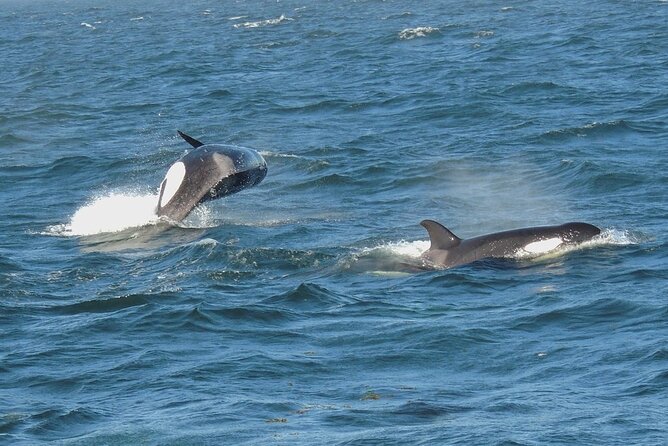
Orcas may appear before you settle in. This Anacortes whale-watching cruise takes you into the San Juan Islands aboard a fast, smaller Blackfish vessel, with naturalist guides explaining the wildlife and scenery as you search for orcas, humpbacks, gray whales, and minke whales. I like the high-speed boats, which cover more water than a slow sightseeing cruise, and I like the crew’s repeated praise for their wildlife knowledge and friendly service. The main drawback is simple: you are outside on cold, windy water, and nature keeps the schedule.
Anacortes is also a practical departure point. You can reach it by car without taking a ferry, in about 90 minutes from Seattle and a shorter drive from Bellingham or Birch Bay. At $119 per person for roughly three to four hours, the price feels fair when you consider the boat, guide, scenery, and strong chance of seeing whales. Still, you should reserve ahead, since this trip is commonly booked about 27 days in advance.
In This Review
- Key things to know before you go
- Why Anacortes is a smart whale-watching base
- What happens after you leave the dock
- Searching the San Juan Islands for orcas
- Humpbacks, gray whales, and minkes
- The supporting cast: seals, sea lions, otters, and birds
- The guides make the difference
- Is $119 a good value?
- Timing, clothing, and family fit
- Booking and cancellation details
- Who should book this Anacortes cruise?
- Should you book it?
- FAQ
- Where does the whale-watching tour depart?
- Where does the tour finish?
- How long does the tour last?
- How much does the tour cost?
- Which whales might I see?
- What other wildlife might I see?
- Are whale sightings guaranteed?
- How far is Anacortes from Seattle?
- Do I need to take a ferry to reach the departure point?
- Is the tour suitable for children and service animals?
- What happens if weather cancels the tour?
- Can I cancel after booking?
Key things to know before you go
- Orca sightings are common: The operator reports whales on 98 percent of trips, with sightings guaranteed from April through early September.
- The boat covers serious ground: Past outings have traveled more than 50 miles around the islands while searching for wildlife.
- You may see far more than whales: Seals, sea lions, porpoises, otters, bald eagles, herons, and other seabirds are all part of the possible show.
- Anacortes avoids the ferry hassle: The marina is about 90 minutes north of Seattle, with no ferry required to reach the departure point.
- Cold-weather clothing matters: Even in October, three layers were not enough for one passenger. Bring windproof outerwear and a raincoat.
- The group can be fairly large: The maximum is 49 people, though the smaller vessels help keep the trip from feeling like a floating auditorium.
Why Anacortes is a smart whale-watching base
Anacortes sits at the northern end of Puget Sound and serves as a gateway to the San Juan Islands. That location matters because the boat can head directly into island channels and surrounding waters rather than spending much of the tour simply getting to the whale country.
From Seattle, the drive takes about an hour and a half, depending on traffic. That is a longer morning than boarding in the city, but you avoid ferry reservations, ferry lines, and the risk of missing a sailing. For many people, especially those staying near Bellingham, Birch Bay, or Mount Vernon, Anacortes is the easier choice.
The meeting point is at 2201 Skyline Way, Anacortes, Washington 98221. The boat returns to the same place after the cruise, so you can leave your daypack and car arrangements simple. One practical tip: curbside parking may help you avoid an additional parking charge, but check the local signs carefully before leaving your car.
The setting is part of the reward. Even if the whales take their time, you are moving through the San Juan Islands and nearby Canadian Gulf islands, an area known for open water, rocky shores, wooded islands, and busy marine channels. Several outings have included views toward Canada, which adds a pleasant international touch to the ride.
More Whale Watching Trips in the USA:
- Juneau Wildlife Whale Watching
★ 5.0 · 7,379 reviews - Juneau Wildlife Whale Watching & Mendenhall Glacier
★ 5.0 · 6,236 reviews - Boston: City Cruises Whale Watching Cruise
★ 4.5 · 4,710 reviews
What happens after you leave the dock
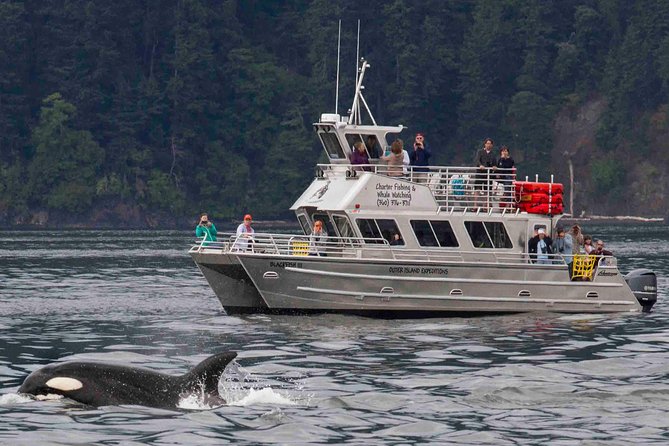
The cruise begins in Anacortes, but the real sightseeing starts as soon as the vessel enters the island waters. The smaller, faster Blackfish boats are designed to search widely, and the crew may cover many miles before locating a pod.
That speed is valuable because whales are not anchored to one scenic viewpoint. Orcas can travel quickly, and humpbacks may surface far apart while feeding. A boat that can move efficiently gives the crew more options. One reported trip covered more than 50 miles and still returned with orca, humpback, sea lion, seals, and a sea otter sightings.
The ride itself can be active. Expect wind, spray, and a noticeable drop in temperature once you are underway. The boat has interior seating, which is useful when the air turns sharp, and you can still find good views from inside. The best strategy is to dress for the outside conditions even if you plan to spend part of the cruise indoors.
Bring a warm jacket, windproof layer, raincoat, sunglasses, and binoculars if you have them. Sunglasses help with glare on bright days, while binoculars are useful when whales surface at a distance. Snacks and drinks may be available on board, but do not treat the boat like a full café. Eat before departure if you know you need a proper meal.
Searching the San Juan Islands for orcas
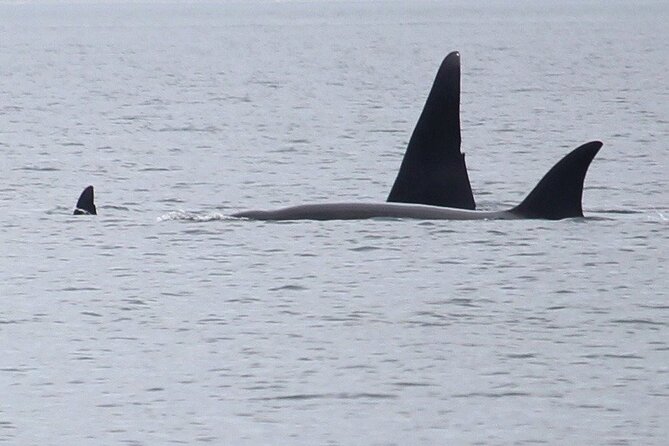
Orcas are the headline act here, and the possible sightings range from a single animal traveling alone to several pods spread across the water. Recent trips have followed pods of five, two large groups, and five separate pods in one especially active outing. Another outing found the T100 group feeding, while others watched the B65 pod.
The guides add meaning to what could otherwise be a quick glimpse of a black fin. They explain pod behavior, feeding patterns, family connections, and the names used to identify local whales. Captains and guides such as Drew, Tiffany, Matt, Brooke, Becca, Sam, Sean, Isabelle, and Trevor have been singled out for their enthusiasm and clear explanations.
You should also know that responsible whale watching means keeping a legal distance. One passenger wished the boat could move closer, but understood why it could not. The crew may give you excellent viewing angles while still respecting the animals and required distance. That is a good trade. A respectful sighting is better than a careless close approach.
Some trips find orcas within minutes. Others require a longer search. The operator reports whales on 98 percent of trips, and sightings are guaranteed from April through early September, but that does not mean you can expect a whale on a specific side of the boat at a specific time. Keep your eyes moving and listen for instructions from the crew.
Humpbacks, gray whales, and minkes
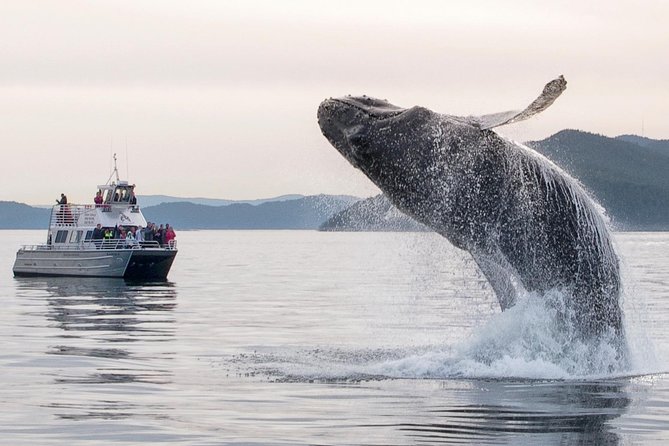
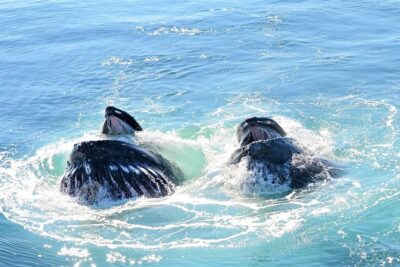
The boat searches not only for resident orcas but also for humpback, gray, and minke whales. Humpbacks can provide especially dramatic moments when they feed near the surface. One outing found two humpbacks in a feeding frenzy, followed by a lone orca on the return trip.
Humpback sightings can also be less predictable than orca sightings. You might see a back, a blow, or a tail before the whale disappears again. The guides help you understand what you are seeing and where to watch next.
Gray and minke whales are also possible, though the supplied trip details do not promise a particular species on any departure. That uncertainty is part of the deal. You are not visiting an aquarium with animals appearing on cue. You are looking for wild mammals in a huge area.
The crew’s patience is one of the strongest parts of the experience. Several outings lasted four hours or a little longer, even though the advertised duration is about three to four hours. Captains have continued searching until passengers found whales, then stayed with the animals long enough for everyone to watch.
A different kind of day out entirely:
- NYC: SUMMIT One Vanderbilt Tickets
★ 4.7 · 51,195 reviews - NYC: 9/11 Memorial & Museum Timed-Entry Ticket
★ 4.8 · 31,428 reviews - NYC: Empire State Building Tickets – Observatory & Museum
★ 4.7 · 25,757 reviews - NYC: Empire State Building Observation Deck Tickets
★ 4.7 · 22,072 reviews
The supporting cast: seals, sea lions, otters, and birds
A whale-watching cruise can succeed even before a whale surfaces. The San Juan waters support a wide range of wildlife, and the boat may encounter harbor seals, enormous sea lions, porpoises, sea otters, bald eagles, herons, and many seabirds.
Sea lions are particularly memorable because of their size and loud presence. Otters offer a different kind of sighting and may be harder to spot, so listen closely when a guide points one out. Porpoises may appear briefly beside the boat, while seals often rest or move through the water near shore.
Birdlife gives you something to watch during longer searches. Bald eagles and herons are among the named possibilities, and a calm stretch of water can reveal several species at once. I appreciate this variety because it keeps the outing from depending on a single animal.
The guides also discuss behavior, not just identification. You may learn what whales are hunting or why sea lions gather in certain places. One especially unusual account described orcas feeding on a porpoise, with lungs left floating afterward. Nature is not always gentle, but seeing it honestly is part of the value.
The guides make the difference
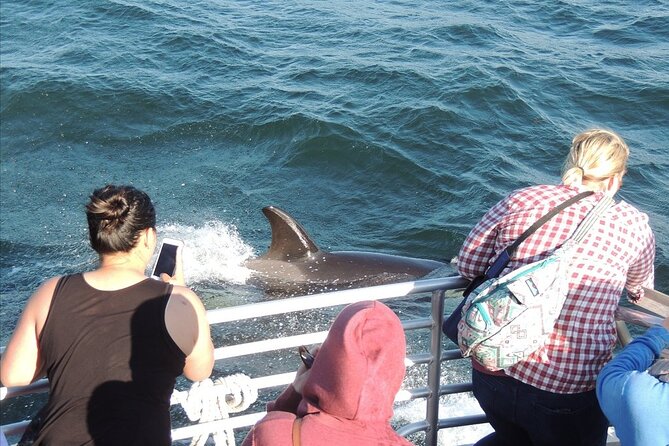
The crew is not there merely to steer the boat and point at fins. The strongest part of the experience is the amount of interpretation they provide about the whales, wildlife, geography, and local waters.
Drew has been praised as captain and guide, while Tiffany, Hannah, Brooke, Becca, Sam, Andy, Matt, Trevor, Bruno, Sean, Isabelle, and others have earned compliments for answering questions and moving around the vessel to help people see. One crew even made a point of learning everyone’s names, a small touch that made the outing feel personal.
Communication may vary with wind and engine noise. One passenger suggested using microphones so everyone could hear the naturalist clearly. If you are seated away from the guide, you may miss a few comments, so move around when it is safe and ask questions directly.
The trip has received a 4.8 rating from 681 reviews, with 96 percent recommending it. Those numbers match the clearest pattern in the feedback: the crew is repeatedly praised for being friendly, enthusiastic, and well informed. That consistency matters more than one lucky whale sighting.
Is $119 a good value?
The fare is $119 per person, including Washington’s 8.5 percent sales tax and applicable fees. For a three to four hour cruise on a high-speed vessel with professional guides, that is a reasonable price for a full marine wildlife outing.
You are paying for more than time on the water. The fee covers the boat, fuel, crew, wildlife interpretation, and the chance to travel through a broad stretch of the San Juan Islands. If you see multiple orca pods, humpbacks, and other animals, the value is obvious.
The price may feel less satisfying if the water is rough, the weather turns cold, or whales remain distant. That is not a flaw unique to this company. Wild whale watching always involves uncertainty. The operator’s reported 98 percent whale-sighting rate helps, and the April through early September guarantee adds useful protection during the main season.
The maximum group size is 49. That is not a private cruise, but it is smaller than many large whale-watching boats. The faster vessels also help prevent the trip from feeling like a slow parade between sightings.
Private charters are available as well. The provider can add fishing, kayaking, island hopping, and other activities, but those options are separate arrangements and are not part of the $119 standard tour.
Timing, clothing, and family fit
Children must be accompanied by an adult, and most people can participate. Service animals are allowed. The tour is best for anyone comfortable spending several hours on a moving boat in changing weather.
Families should prepare children for waiting. The boat may find whales quickly, or the search may take time. A child who enjoys animals, boats, and outdoor scenery will likely get more from this than a child expecting a guaranteed close-up performance.
Older adults should take the cold seriously. One October outing felt cold even with three layers, so pack warmer clothing than the forecast alone suggests. A raincoat is sensible at any time of year, and a windproof outer layer is especially useful.
If you are connecting this cruise with a ferry, leave plenty of time. One passenger nearly missed the return ferry after the tour and noted that food options on the far side were limited. If your day depends on a particular sailing, make the reservation and arrive well before departure. Better yet, plan a relaxed buffer rather than squeezing the cruise between fixed connections.
The tour normally lasts three to four hours, but some trips have run to four or four and a half hours. That extra time can be wonderful when whales are nearby, but it matters if you have dinner plans or another reservation.
Booking and cancellation details
Confirmation is provided when you book, and the ticket is mobile, so you can keep it on your phone. Since the tour is often reserved about 27 days ahead, book early if your dates are fixed, especially in summer.
The experience is non-refundable and cannot be changed for any reason after booking. The provider can offer another date or a full refund if poor weather cancels the trip, or if the minimum number of participants is not reached.
That policy makes travel insurance or a flexible itinerary worth considering if your plans are uncertain. Choose your date carefully, then avoid stacking important activities immediately afterward.
Who should book this Anacortes cruise?
I would choose this trip if you want a serious wildlife outing rather than a short harbor ride. The high-speed boat, wide search area, and strong guide presence make it a good fit for couples, families, solo visitors, and friends who are willing to dress warmly and stay alert.
It is especially practical if you are coming from Bellingham, Birch Bay, or the Seattle area and want to avoid a ferry. It also suits anyone who values the whole setting, since the San Juan Islands are worth seeing even when the whales are playing hard to find.
I would hesitate only if you dislike cold, wind, boat motion, or uncertain timing. You should also think twice if a non-refundable booking would put pressure on your schedule.
Should you book it?
Yes, if seeing wild whales ranks high on your Pacific Northwest list. The combination of a 98 percent reported whale-sighting rate, experienced guides, fast boats, and a reasonable three to four hour duration gives this tour strong value at $119.
Book it with realistic expectations. You may see orcas within minutes, follow a pod for hours, or spend much of the trip scanning the water before a humpback appears. Wear more layers than you think you need, bring binoculars and sunglasses, and leave room in your schedule for a tour that may run long when the wildlife cooperates.
FAQ
Where does the whale-watching tour depart?
The tour departs from 2201 Skyline Way, Anacortes, WA 98221, USA.
Where does the tour finish?
The cruise returns to the same meeting point in Anacortes.
How long does the tour last?
The tour lasts approximately three hours, with the included duration listed as three to four hours. Some outings have lasted four to four and a half hours.
How much does the tour cost?
The listed price is $119 per person. Washington’s 8.5 percent sales tax and applicable fees are included.
Which whales might I see?
The boat searches for orcas, humpback whales, gray whales, and minke whales.
What other wildlife might I see?
Possible sightings include porpoises, seals, sea lions, sea otters, bald eagles, herons, and other seabirds.
Are whale sightings guaranteed?
Sightings are guaranteed from April through early September. The operator also reports seeing whales on 98 percent of trips.
How far is Anacortes from Seattle?
Anacortes is about 90 minutes north of Seattle by car, depending on traffic.
Do I need to take a ferry to reach the departure point?
No. The tour departs directly from Anacortes, and no ferry is needed to reach the meeting point.
Is the tour suitable for children and service animals?
Children must be accompanied by an adult. Service animals are allowed, and most people can participate.
What happens if weather cancels the tour?
If poor weather causes a cancellation, you will be offered another date or a full refund. The same options apply if the minimum number of participants is not reached.
Can I cancel after booking?
The experience is non-refundable and cannot be changed for any reason. If you cancel or request an amendment, your payment will not be refunded.
Just added in the USA
- Atlanta: Zoo Atlanta General Admission Ticket★ 4.5 · 712 reviews
- NYC: Woodbury Common Premium Outlets Shopping Trip★ 4.2 · 761 reviews
- Wynwood Art District 1-Hour Street Art Tour by Golf Cart★ 4.9 · 492 reviews
- Zoo Miami: General Admission Ticket★ 4.5 · 868 reviews
- Willow Beach: Black Canyon Kayak Half Day Tour-No Shuttle★ 4.9 · 323 reviews
- From San Francisco: Napa & Sonoma Valley Full-Day Wine Tour★ 4.5 · 513 reviews
- Newport Beach: 2-Hour Whale Watching Tour★ 4.2 · 1,375 reviews
- New York City: Private Walking Tour with a Local★ 4.6 · 771 reviews
Whale Watching, compared.
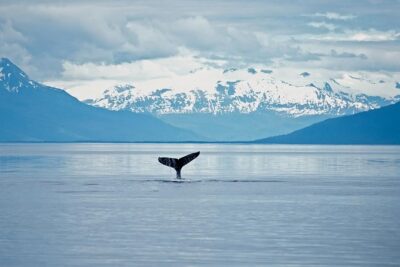
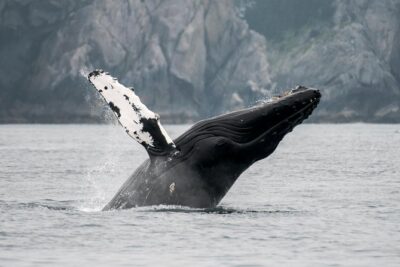
Juneau Wildlife Whale Watching & Mendenhall Glacier
Read our review →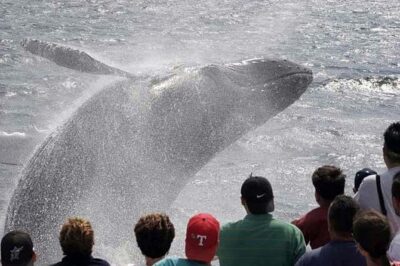
City Cruises Boston Whale Watching Cruise by High-Speed Boat
Read our review →
Whale Watching Trips to Stellwagen Bank Marine Sanctuary. Guaranteed sightings!
Read our review →
2-Hour Oahu Whale Watch from Ala Wai Harbor, Waikiki
Read our review →Browse the lists this tour appears in