
Reviewed · MUSEUMS
African American History Tour with Museum of African American History Ticket
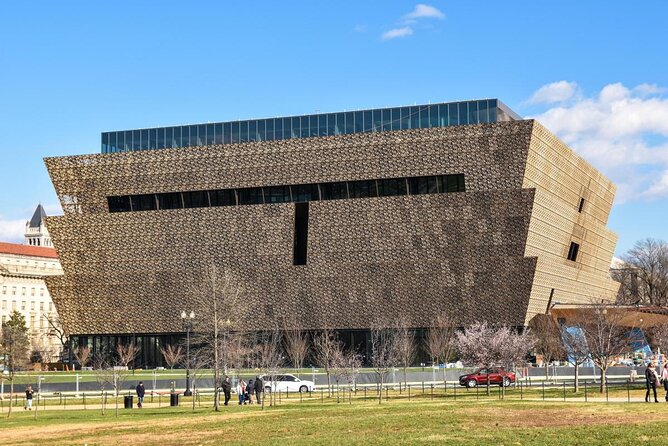
Washington tells its story in layers. This 3.5-hour small-group tour connects major landmarks with African American leaders, neighborhoods, music, military service, and civil rights. I especially like the personal storytelling from guides such as Kenny and the route through places many standard city tours skip. I also like that the tour ends at the National Museum of African American History and Culture with same-day admission.
The main thing to watch is the changing schedule for historic homes. The Frederick Douglass house is available Tuesday, Wednesday, and Saturday, while the Mary McLeod Bethune Council House is visited Thursday through Saturday when time allows. Some stops are drive-bys, so this is best for a broad introduction rather than a slow, full visit to every site.
In This Review
- Key points to know before booking
- Why this tour works as a first look at Black Washington
- The Capitol and White House: power built by many hands
- Constitution Hall and Marian Anderson’s defining concert
- The Lincoln Memorial and Martin Luther King Jr. Memorial
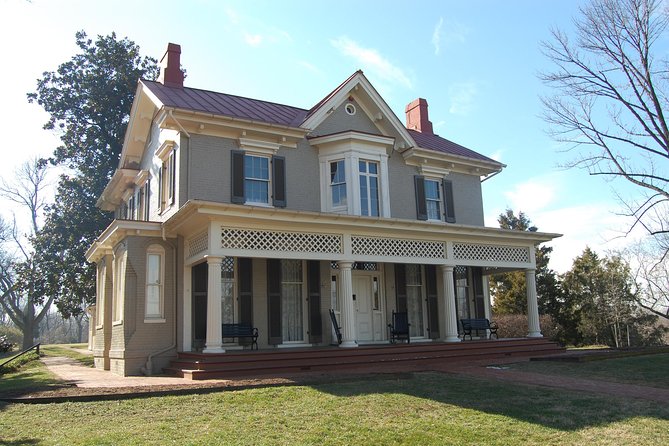
- Frederick Douglass and the homes that hold the story
- LeDroit Park and Black Broadway
- Howard Theatre, Howard University, and Carter G. Woodson
- The African American Civil War Memorial
- Finishing at the National Museum of African American History and Culture
- Price, group size, and practical planning
- Who should book this Washington tour?
- FAQ
- How long does the tour last?
- What time and where does the tour begin?
- Where does the tour end?
- Is museum admission included?
- Can I stay at the museum after the guided tour ends?
- Is the Frederick Douglass house visited inside?
- Is the Mary McLeod Bethune Council House visited inside?
- How many people can join the tour?
- What is included besides the museum ticket?
- What happens if I cancel?
Key points to know before booking
- A half-day route with a strong focus: You see the Capitol, White House, Lincoln Memorial, Martin Luther King Jr. Memorial, Civil War Memorial, Howard University, LeDroit Park, and more.
- Kenny brings the history to life: The guide is praised for warmth, humor, personal attention, and clear storytelling.
- The museum ticket is a valuable finish: You receive same-day admission to the National Museum of African American History and Culture after the vehicle tour.
- Historic homes depend on the day: The Frederick Douglass house is open Tuesday, Wednesday, and Saturday. The Bethune house is visited Thursday through Saturday, time permitting.
- Expect some walking and stairs: The Douglass house includes steps, and several memorial stops require walking outdoors.
- A small group keeps things personal: The maximum group size is 21, with transportation in an air-conditioned vehicle.
Why this tour works as a first look at Black Washington
Washington, DC, is often presented through presidents, wars, and grand government buildings. This tour asks you to look again. The Capitol becomes a place built partly by enslaved labor. The White House becomes part of a much longer story that reaches from enslaved workers to Barack Obama. Memorials become places where African American citizens demanded to be heard, not simply monuments for photographs.
That change in perspective is the tour’s greatest strength. You are not only checking off famous sights. You are learning how African Americans helped build the capital, fought for the country, created institutions, shaped music, and pushed the nation toward its stated ideals.
The tour begins at 9:30 a.m. at the U.S. Navy Memorial Plaza on Pennsylvania Avenue. From there, you travel by air-conditioned vehicle, with short walks and outdoor stops along the way. The route covers a lot of ground in a short time, so you should expect an overview rather than long museum-style talks at every location.
The guide makes a major difference. Kenny is repeatedly described as personable, funny, patient, and exceptionally well informed about Washington’s Black communities. His style appears to lean toward stories and connections rather than a dry list of dates. That is useful here, because stories about Marian Anderson, Mary McLeod Bethune, Frederick Douglass, and Duke Ellington are easier to remember than a string of statistics.
More Museum Tours in Washington DC:
- Guided African American History Tour with Reserved Museum Entry
★ 4.5 · 1,180 reviews - Smithsonian Museum of Natural History – Exclusive Guided Tour
★ 5.0 · 446 reviews - National Mall Tour with 10 Stops & U.S. Capitol or Museum Entry
★ 4.5 · 331 reviews
The Capitol and White House: power built by many hands
The first major stop is the U.S. Capitol, where you have about 20 minutes. You can stand near the setting associated with Barack Obama’s inauguration while hearing about the enslaved people who helped build the Capitol and White House.
The tour also connects the Capitol to the Supreme Court, which once met inside the building. That gives the guide a natural opening to discuss court decisions that affected people of color for generations. You will not tour the Capitol interior on this portion of the experience, but the stop gives important context before the route moves to the memorials.
At the White House, the visit lasts about 15 minutes. The building is viewed from outside, and admission is not included. The value here comes from the interpretation. You hear about the African Americans who worked on the original construction and about the role of Black Americans in the modern White House, including the presidency of Barack Obama.
These are short stops, but that is part of the design. You get time for photos and a focused explanation, then return to the vehicle. If you want extensive time at the Capitol or White House, plan a separate visit.
Constitution Hall and Marian Anderson’s defining concert
The route also passes Constitution Hall, an important site in the story of racial discrimination in American cultural life.
In 1939, the Daughters of the American Revolution, which owned Constitution Hall, refused to allow Marian Anderson to perform there because she was Black. First Lady Eleanor Roosevelt helped support an alternative, and Anderson eventually sang on the steps of the Lincoln Memorial before a crowd of about 75,000 people.
You may not spend a long time outside Constitution Hall, but the story prepares you for the Lincoln Memorial. It shows how a denied performance became a national civil rights moment. The episode also gives the tour a welcome connection between music, politics, public protest, and the use of Washington’s monumental spaces.
The Lincoln Memorial and Martin Luther King Jr. Memorial
The Lincoln Memorial receives about 30 minutes, one of the longer outdoor stops. Here, the guide discusses the memorial itself and the African American events tied to it, including the 1939 Marian Anderson concert and the March on Washington.
The tour also covers Robert Moten’s dedication speech at the opening of the Lincoln Memorial. This detail helps you see the site as more than a tribute to Lincoln. It became a gathering place where African Americans publicly challenged the country to live up to the promise of freedom.
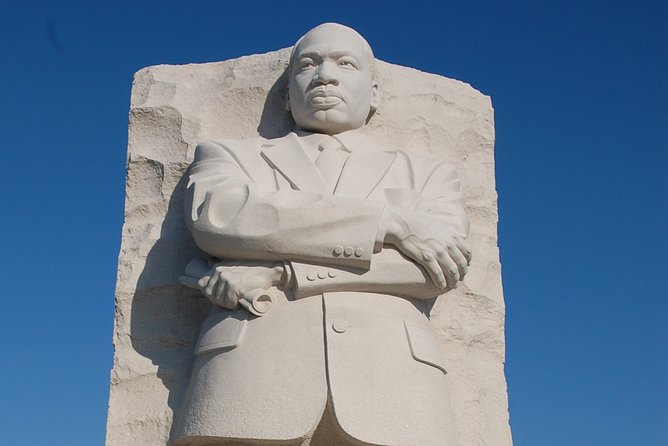
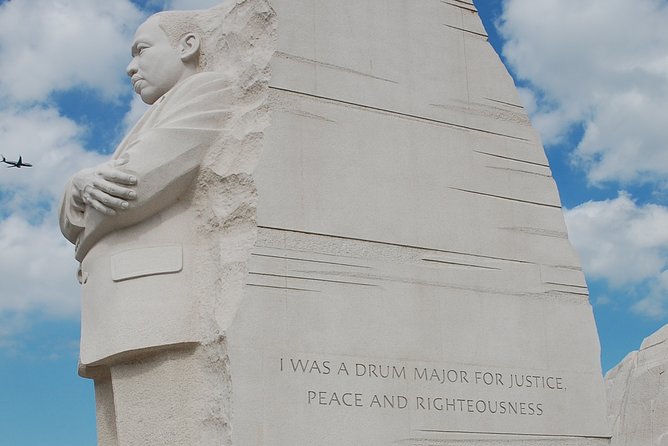
At the Martin Luther King Jr. Memorial, you have about 15 minutes. The guide explains the inscription wall, the 14 quotations and statements, the Mountain of Despair, and the Stone of Hope. You also hear about the making of the memorial.
This is one of the tour’s most powerful stops. The design turns King’s words and image into a physical journey from struggle toward hope. The memorial is outdoors, so the experience can vary with heat, rain, or cold. Bring water and comfortable shoes, even though bottled water is included.
More History Tours in Washington DC:
- DC Monuments & History Guided E-Cart Tour-Blankets
★ 4.5 · 450 reviews - Historic Georgetown: History, Gossip, & Architecture Walking Tour
★ 5.0 · 321 reviews - Washington, DC: African American History Tour & Museum Entry
★ 4.9 · 312 reviews - New York City: American Museum of Natural History Ticket
★ 4.5 · 15,447 reviews
Frederick Douglass and the homes that hold the story
The Frederick Douglass National Historic Site is a highlight for many people, but the exact experience depends on the day.
On Tuesday, Wednesday, and Saturday, the tour includes a walking visit inside Douglass’s home. On other days, the vehicle passes the house and the guide explains its history. The home visit includes stairs, which can be challenging for some people, so keep that in mind when deciding how much walking and climbing suits you.
Frederick Douglass was one of the most important African American voices of the nineteenth century. Seeing the house adds a physical sense of his life and success that a roadside explanation cannot match. If this stop is your priority, book for one of the days when the interior visit is scheduled.
The Mary McLeod Bethune Council House is another important part of the route. Bethune bought the French Second Empire-style house in 1943, and the building became connected with her work through the National Council of Negro Women. The tour passes the house and stops for a visit Thursday through Saturday when time allows.
The National Council of Negro Women was founded in 1935 by Mary McLeod Bethune to promote the rights and welfare of African American women and their families. Its headquarters at 633 Pennsylvania Avenue has been used by the organization since 1953 and is a National Historic Landmark.
These homes give the tour a welcome change of scale. The memorials speak in national terms. The homes show how individual leaders organized, educated, negotiated, and built institutions from offices and living rooms.
LeDroit Park and Black Broadway
One of the most useful parts of the tour is the drive through LeDroit Park. The neighborhood was first built for white professors connected with Howard University, then sold to both Black and white buyers. It became one of Washington’s early integrated neighborhoods.
LeDroit Park also became home to major African American figures, including Mary Church Terrell, the first president of the National Association of Colored Women, and Duke Ellington. In the early twentieth century, the area was known as Black Broadway because of its clubs, theaters, and music venues.
This is the kind of stop that makes a city tour feel more complete. You are not confined to the National Mall. You see a neighborhood tied to education, culture, housing, and entertainment. Much of the visit is from the vehicle, so do not expect an extended architectural walk, but the guide’s explanation gives the streets meaning.
Howard Theatre, Howard University, and Carter G. Woodson
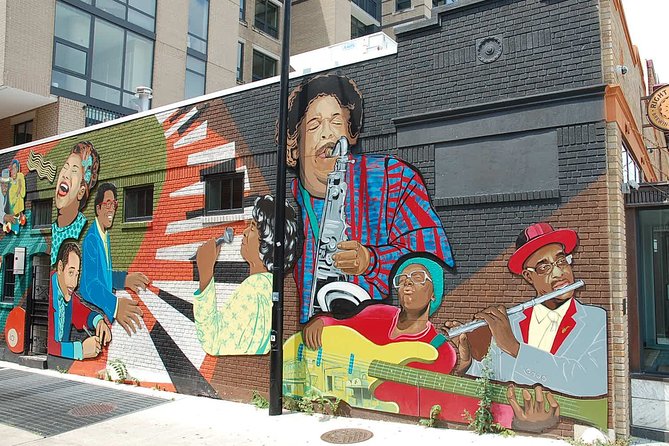
The Howard Theatre opened in 1910 and was one of the first theaters in the country designed and operated by African Americans. During segregation, it welcomed Black performers and audiences and became an important stop on the Chitlin’ Circuit.
The theater hosted Duke Ellington, Billie Holiday, Ella Fitzgerald, Marvin Gaye, and many other performers. A drive past the building works best when the guide connects it to the music and comedy scenes that flourished when many mainstream venues excluded African Americans.
You also pass Howard University, founded in 1867. The university now has 13 schools and counts figures such as Supreme Court Justice Thurgood Marshall, Elijah Cummings, Taraji P. Henson, and Toni Morrison among its graduates.
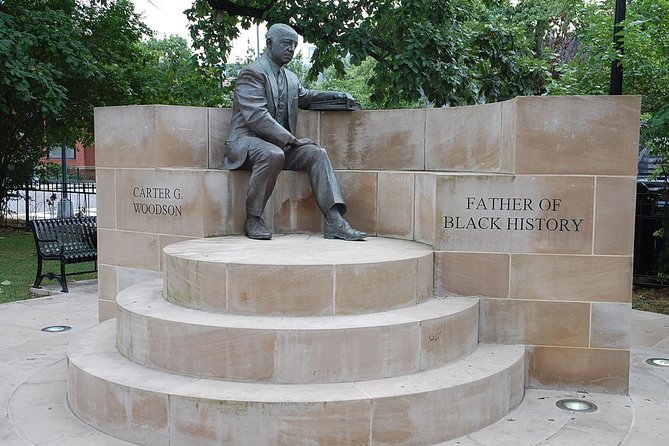
Another drive-by is the Carter G. Woodson House. Woodson is known as the Father of Black History and is credited with creating Black History Month. These stops are brief, but together they show how Washington’s African American story was shaped by schools, scholarship, theater, music, and organized civic work.
The African American Civil War Memorial
The African American Civil War Memorial is a short stop of about 10 minutes. It honors the 209,000 African American troops and sailors who served during the Civil War.
You can read plaques listing the names of United States Colored Troops from 166 regiments and see the Spirit of Freedom statue by sculptor Ed Hamilton. The memorial was dedicated in 1998.
The time here is limited, but the memorial carries a large subject. African American military service was central to the Union war effort and to the broader fight over citizenship and freedom. A guide can help you understand what the names and regiments represent, especially if you have not studied the United States Colored Troops before.
Finishing at the National Museum of African American History and Culture
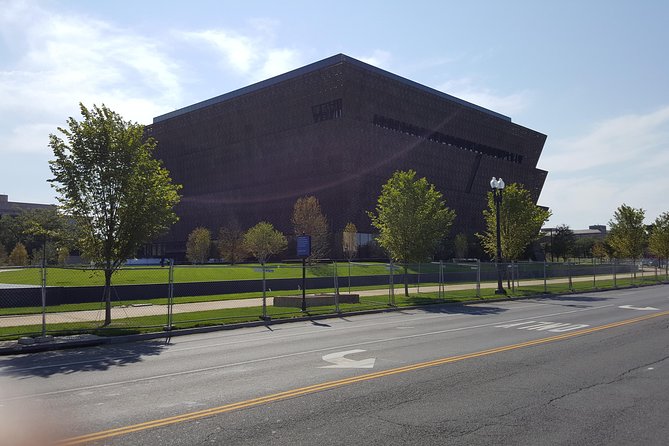
The tour ends at the National Museum of African American History and Culture at 1400 Constitution Avenue. You receive same-day admission, and the tour itself ends when you arrive.
The included museum visit is listed as about one hour, but your ticket allows you to stay until the museum closes at 5:30 p.m. That distinction matters. The museum is large, and one hour is enough for an introduction, not a full visit. One guide specifically advises starting on the lowest floor and working upward, a sensible plan because the exhibits build from slavery and emancipation through later periods of African American life and achievement.
This museum ticket adds real value to the $90 price. You are paying for transportation, a guide, a tightly planned route, and admission to one of Washington’s major museums. If you tried to see every stop independently, you would need to manage several neighborhoods and figure out how to connect them by public transportation.
The tradeoff is time. The museum deserves several hours, yet the guided portion gives you only a short orientation before you continue on your own. If you have the rest of the afternoon free, the ending works very well. If you have a flight, dinner reservation, or another fixed plan, remember that you may want to stay beyond the stated one-hour museum portion.
Price, group size, and practical planning
At $90 per person, this is not the cheapest way to see Washington’s monuments. It offers good value if you want interpretation, transportation, and the museum ticket bundled together. The price is harder to justify if you mainly want quick photo stops and already know the city well.
The maximum group size is 21. That is small enough for a more personal experience than a large coach tour, though the group may still feel full in the vehicle. Bottled water and air conditioning are included.
Plan for walking at the memorials and possible stairs at the Douglass house. The tour operates in English, uses a mobile ticket, and allows service animals. Most people can participate, but outdoor heat, rain, and the pace between stops are worth considering.
The schedule deserves careful attention. The Douglass house is offered Tuesday, Wednesday, and Saturday. The Bethune house is visited Thursday through Saturday, time permitting, and both homes are closed Sunday and Monday according to the supplied schedule. Start times can occasionally change when a historic site reservation requires an earlier departure, so check your messages before the morning of the tour.
Free cancellation is available up to 24 hours before the start time. Inside that period, changes and refunds are not accepted. Poor weather or failure to meet the minimum number of participants can lead to a new date or a full refund.
Who should book this Washington tour?
I would choose this tour if you want to understand Washington through African American people and institutions, not only through presidents and monuments. It suits first-time visitors, families with older children, and anyone who wants a guide to connect sites that are spread across the city.
It is also a good choice if you want to visit the museum but would benefit from an introduction first. Kenny’s humor and storytelling are frequently praised, and the tour appears particularly strong for people who prefer personal stories to a formal lecture.
I would look elsewhere if you want long visits at every stop, a quiet museum day, or a guaranteed interior visit to both historic homes. The route is ambitious, and several places are viewed from the vehicle. Choose your day carefully if the Frederick Douglass house matters most.
For $90, the experience offers a useful mix of major landmarks, neighborhood history, transportation, and museum admission. Book it for context and connection, not simply for a checklist of monuments. Then keep the afternoon free for the museum, because one hour will only scratch the surface.
FAQ
How long does the tour last?
The guided tour lasts approximately 3 hours and 30 minutes.
What time and where does the tour begin?
It begins at 9:30 a.m. at U.S. Navy Memorial Plaza, 701 Pennsylvania Avenue NW, Washington, DC.
Where does the tour end?
The tour ends at the National Museum of African American History and Culture, 1400 Constitution Avenue NW.
Is museum admission included?
Yes. You receive same-day tickets to the National Museum of African American History and Culture.
Can I stay at the museum after the guided tour ends?
Yes. Once you arrive at the museum, the guided tour is over, but you may stay until the museum closes at 5:30 p.m.
Is the Frederick Douglass house visited inside?
An interior walking tour is offered Tuesday, Wednesday, and Saturday. On other days, the tour drives past the house and explains its history.
Is the Mary McLeod Bethune Council House visited inside?
The tour passes the house and may stop for an interior visit Thursday through Saturday, when time permits.
How many people can join the tour?
The maximum group size is 21 participants.
What is included besides the museum ticket?
Bottled water and transportation in an air-conditioned vehicle are included.
What happens if I cancel?
You receive a full refund if you cancel at least 24 hours before the start time. Cancellations or changes made within 24 hours are not refunded or accepted.
Just added in Washington DC
- Washington DC: Monuments and Memorials Bike Tour★ 4.8 · 399 reviews
- Washington DC: Sightseeing Tour with Potomac River Cruise★ 4.7 · 311 reviews
- DC: Capitol Hill and Library of Congress Tour with Tickets★ 4.7 · 1,125 reviews
- No-Wait Washington Monument Direct Entry Tickets & Guidebook★ 4.5 · 465 reviews
- Washington DC Sites at Night Guided Bicycle Tour★ 4.5 · 536 reviews
- Washington DC Night-Time City Tour★ 4.5 · 435 reviews
- City Cruises DC: Scenic Buffet Lunch Cruise★ 4.0 · 418 reviews
- Hop-On Hop-Off 21 Stop Trolley Tour + Arlington Cemetery Tour★ 4.0 · 369 reviews
Museums, compared.
Empire State Building Tickets – Observatory & Museum
Read our review →

9/11 Memorial, Ground Zero Tour with Optional 9/11 Museum Ticket
Read our review →

All-Access 9/11: Ground Zero Tour, Memorial and Museum, One World Observatory
Read our review →
Browse the lists this tour appears in