
Reviewed · MUSEUMS
Smithsonian Museum of Natural History – Exclusive Guided Tour
The museum is too big for a casual wander.
The Smithsonian National Museum of Natural History packs 126.5 million artifacts into a building covering roughly 18 football fields, so a guide can save you from spending two hours simply finding the exhibits. I especially like the focused route through the Hope Diamond, Egyptian mummies, dinosaurs, mammals, and Ocean Hall. I also like the storytelling: guides such as Leigh, Meghan, Christopher, Rebecca, Amanda, and Donna have been praised for making complicated science easy to follow and for keeping children involved. The main drawback is the price, $89.67 per person for about two hours, which can feel steep if your group prefers to wander at its own pace.
This is best viewed as an efficient first visit rather than a complete museum day. You get a guided introduction, then you can return to favorite galleries on your own. The morning and afternoon start times help with scheduling, while the private format means the guide can respond to your questions and adjust the pace, assuming you do not choose the lower-priced semi-private option.
In This Review
- Key points to know before booking
- Why a guide helps in an 18-football-field museum
- Starting with the Hope Diamond and the mineral galleries
- Ancient Egypt, mummies, and the meaning of preservation
- Mammals, Henry the elephant, and the animal displays
- Dinosaurs, birds, and the Megalodon
- Ocean Hall, Phoenix, and the live coral reef
- What the two-hour format feels like
- Price, group value, and what you are really buying
- Practical details that can make or break the visit
- Who should book this Smithsonian tour?
- Should you book the exclusive guided tour?
- FAQ
- How long is the Smithsonian Natural History Museum guided tour?
- How much does the tour cost?
- Is the tour private?
- Is museum admission included?
- Where does the tour begin and end?
- Is the tour wheelchair friendly?
- Can I cancel for a refund?
Key points to know before booking
- The Hope Diamond begins a fast tour through major collections: You will see the famous 46-karat blue diamond, along with other striking minerals and jewels.
- The route covers far more than dinosaurs: Expect Egyptian mummies, mammals, ocean life, a live coral reef display, and the 45-ton whale replica Phoenix.
- Personal guiding is the main value: A good guide helps you find the major exhibits and adds stories you would likely miss alone.
- The museum is enormous: Two hours gives you a carefully chosen introduction, not enough time to see all of the galleries.
- Children can benefit from the structure: Guides including Amanda and Donna have been praised for holding young visitors attention and matching stops to family interests.
- Small bags matter: Large bags and suitcases are not allowed inside. Only handbags or small, thin backpacks can pass through security.
Why a guide helps in an 18-football-field museum
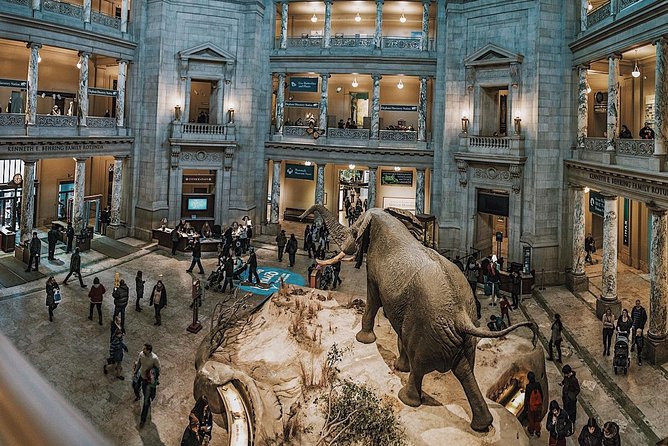
The Natural History Museum can overwhelm you before you reach the first exhibit. Its collection contains 126.5 million artifacts, and the building itself covers an enormous footprint. Even if you arrive with a short list of priorities, the sheer number of rooms can make it hard to decide what deserves your time.
A two-hour guide gives your visit a spine. Instead of reading every panel and trying to make sense of the floor plan, you move from one major subject to the next. The route connects geology, ancient cultures, animals, dinosaurs, and marine life. That order makes sense for a first visit because it shows the museum as a story about Earth and life, rather than a pile of unrelated displays.
I like this format for anyone who wants context without spending an entire day indoors. Guides have been praised for pointing out details that are easy to walk past, explaining the exhibits in plain language, and keeping the group moving when the museum is crowded.
The private setup adds another advantage. Your group can ask questions without worrying about slowing down strangers, and the guide can spend more time on the topics that interest you. If your children care about animals but not minerals, or you are fascinated by ancient Egypt rather than dinosaurs, say so early.
Keep your expectations sensible. You cannot properly examine every collection in two hours. The guide shows you the main attractions and gives you a useful map in your head. Afterward, you may want to stay and explore independently.
More Museum Tours in Washington DC:
- Guided African American History Tour with Reserved Museum Entry
★ 4.5 · 1,180 reviews - African American History Tour with Museum of African American History Ticket
★ 4.5 · 390 reviews - National Mall Tour with 10 Stops & U.S. Capitol or Museum Entry
★ 4.5 · 331 reviews
Starting with the Hope Diamond and the mineral galleries
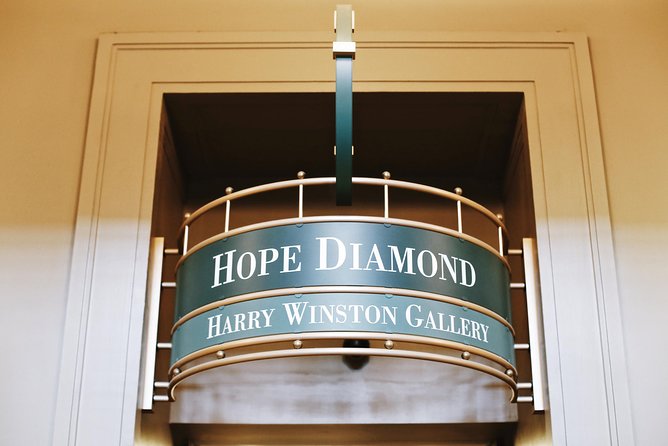
The tour begins with one of the museum’s biggest crowd-pullers, the Hope Diamond. This famous blue stone weighs 46 karats, an unusually imposing size for a diamond, and its former ownership by Marie Antoinette adds a royal and slightly dark edge to the story.
The value of this stop is not just the diamond itself. A guide can explain why the stone attracts so much attention and place it among the museum’s wider displays of gems and minerals. Without help, it is easy to focus on the largest or brightest object and move on. With a guide, the mineral collection becomes a lesson in color, formation, scale, and human fascination.
The Dom Pedro Aquamarine is another major highlight. It is described as the largest gem of its type in the world, and its internal glow makes it a strong visual counterpoint to the blue Hope Diamond. These exhibits work well at the start because they offer immediate drama, even if you do not know much about geology.
This section is also a good test of the tour’s pace. If you love stones and minerals, two hours may leave you wanting more. One family used the guided visit as an introduction, then returned to the gems and minerals afterward because there was still much more to see. That is a sensible plan. Let the guide give you the big picture, then come back for a slower look.
Ancient Egypt, mummies, and the meaning of preservation
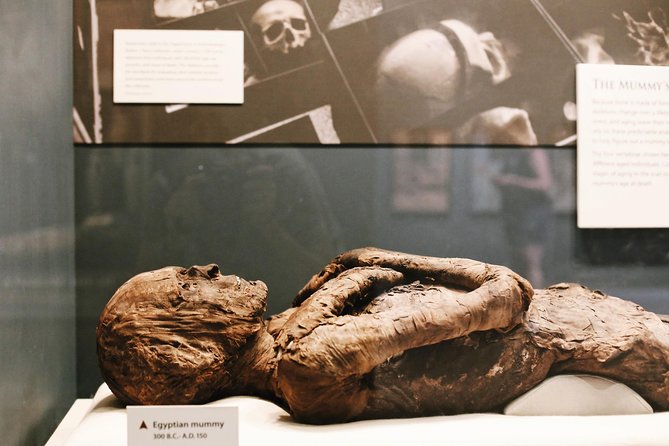
The Egyptian displays shift the tour from natural materials to human belief. You will see real mummies and learn about death rituals in Ancient Egypt, where preserving the body was tied to the soul’s journey after death.
This stop benefits greatly from explanation. A mummy can look like a silent object behind glass, but the surrounding ideas about burial, the body, and the afterlife give it human meaning. The tour presents Egypt as a civilization that lasted more than 3,000 years, not simply as pyramids and wrapped bodies.
Guides have also used this section to explain why preservation mattered so much. That kind of context helps you look beyond the physical remains and think about the people who prepared them, the beliefs that shaped their actions, and the role of ritual in society.
The museum has quiet or restricted-speaking areas in some rooms. Your guide will explain those rules before you enter, so you may need to listen closely and hold questions until you move on. That is a small point, but it matters in a museum where the atmosphere can change from noisy public hall to carefully controlled gallery.
Mammals, Henry the elephant, and the animal displays
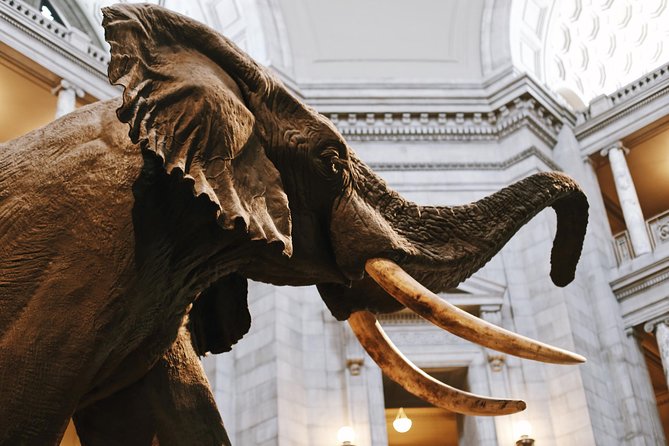
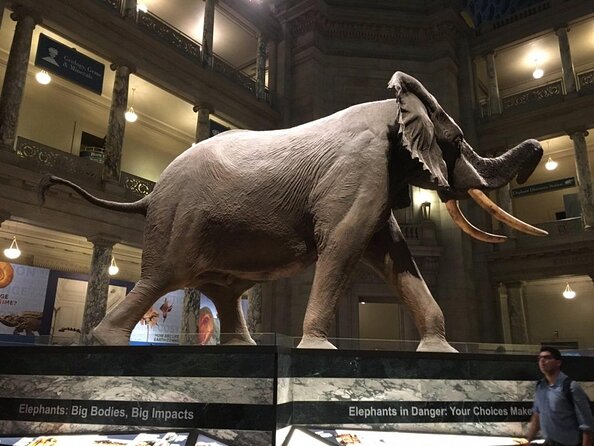
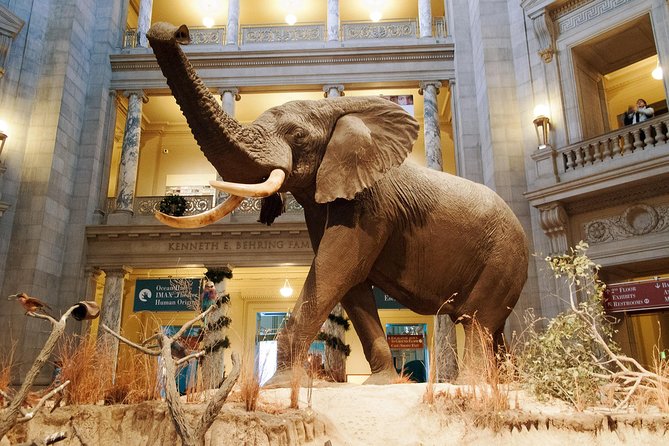
After the ancient world, the route moves into the living world. You may see polar bears, elephants, and giraffes, along with other mammals arranged to show the variety of life across Earth.
Henry the elephant is a particular favorite. Large animal displays give children an immediate point of connection, while the guide can add information about the animal rather than leaving you with a label and a pose. Families have praised guides for making these sections lively and for asking children what they want to know.
This part of the tour also works well for mixed-age groups. Younger children can focus on size, shape, and the familiar animals. Adults may appreciate the broader explanation of how the displays fit into the museum’s study of life on Earth.
The drawback is that popular animal exhibits can become crowded. A guide helps you navigate the people around you, but no tour can remove the museum’s other visitors. Stay close enough to hear, and do not expect to stop for long at every display.
For families, the two-hour length can be useful. One guide, Donna, was praised for asking what children found interesting and keeping teenagers involved for the full visit. Another guide, Rebecca, helped a seven-year-old absorb a surprising amount of information while keeping the visit moving. If your children tire quickly, two focused hours may be more productive than an unplanned full-day visit.
More History Tours in Washington DC:
- DC Monuments & History Guided E-Cart Tour-Blankets
★ 4.5 · 450 reviews - Historic Georgetown: History, Gossip, & Architecture Walking Tour
★ 5.0 · 321 reviews - Washington, DC: African American History Tour & Museum Entry
★ 4.9 · 312 reviews - New York City: American Museum of Natural History Ticket
★ 4.5 · 15,447 reviews
Dinosaurs, birds, and the Megalodon
The dinosaur material gives the tour some of its biggest facts and strongest storytelling. The guide may explain that Tyrannosaurus rex lived during the late Cretaceous period, making it closer in time to modern people than to the Jurassic dinosaurs often placed beside it in popular culture.
You may also hear the modern scientific view that dinosaurs did not simply vanish as a group. Modern birds are their descendants, which makes the familiar birds outside the museum part of the dinosaur story. This is a simple idea, but it can change the way you look at the displays.
The account of the asteroid impact 66 million years ago adds another striking point. The impact caused a mass extinction that wiped out 75 percent of life on Earth within about three weeks. A good guide uses facts like this to connect a fossil display to a larger question: how quickly can the world change?
The Megalodon is another crowd favorite. The giant prehistoric shark gives the tour a dramatic marine finale or near-finale, depending on the route and the guide. Christopher and Tim have been praised for bringing major exhibits such as the Megalodon to life with clear explanations and engaging stories.
This section is especially useful if you already know the basic dinosaur attractions. You are likely to gain more from the connections between species, extinction, and evolution than from simply seeing another large skeleton.
Ocean Hall, Phoenix, and the live coral reef
The route then heads into Ocean Hall, where the subject changes from land animals to the sea. The display includes a live coral reef exhibit and Phoenix, a 45-ton whale replica based on a real living whale tracked by the museum.
Phoenix gives the room a strong sense of scale. A whale replica that large makes the size of marine life hard to ignore, and the connection to a real whale adds a current research angle. You are not only looking at a model from the past. You are also seeing how the museum follows living animals.
The coral reef display provides a useful contrast. The whale is massive and immediately dramatic, while a live reef asks you to pay attention to smaller forms of life and the structure of an underwater community. Together, the exhibits show why Ocean Hall is more than a room of large sea creatures.
This is another place where a guide adds value by directing your attention. In a museum this large, you might spend all your time looking at Phoenix and overlook the reef. The guide can help balance the famous object with the less obvious display.
What the two-hour format feels like
Two hours is long enough to build a clear first impression, but short enough to fit into a busy Washington DC day. You can book a morning or afternoon start, which makes it easier to combine the museum with other sightseeing.
The pace is purposeful. You move through several major collections rather than settling into one room. If you enjoy reading every panel, taking photographs, or making detailed notes, the tour may feel rushed. If you want someone to choose the essential stops, it should feel efficient.
Guides have been praised for being funny, friendly, and easy to communicate with. Meghan, in particular, has been described as an entertaining guide who stayed focused on her group even when other people asked questions. Leigh has been praised for linking gemstones, Egypt, insects, dinosaurs, and extinction into one connected story rather than delivering a string of disconnected facts.
Those differences matter. The basic route is important, but the guide’s ability to tell a story shapes the experience. Names praised for warmth and strong presentation include Leigh, Meghan, Christopher, Rebecca, Amanda, Donna, Tim, Brenda, Lynn, Ryan, and Meaghan.
The tour is listed as private, meaning only your group participates. However, the included personal guide and wheelchair-friendly access do not apply to the SAVE! BOOK SEMI-PRIVATE option. Check which version you are selecting before paying, especially if privacy or mobility access is important.
Price, group value, and what you are really buying
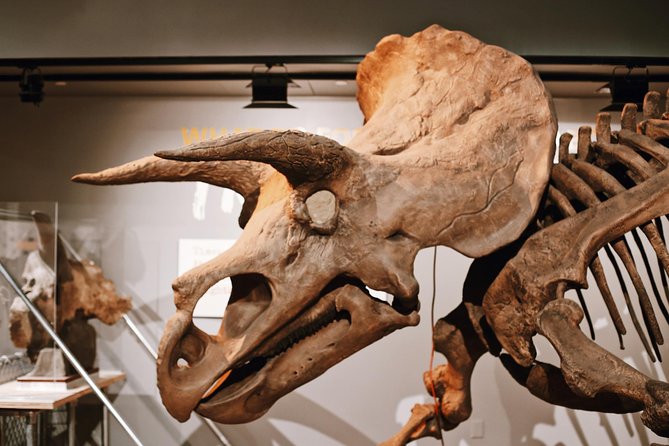
At $89.67 per person, this is not a bargain museum stop. The Smithsonian museum itself has free admission, so the charge is mainly for the guide, planning, pacing, and personal attention.
The value improves when you have several people sharing a private guide. Group discounts are available, and a private visit can be worthwhile for families or friends who want one person to keep everyone together. It is less compelling for a solo visitor who enjoys reading independently and has plenty of time.
The strongest reason to pay is not skip-the-line access. Security lines can still form, even when a tour advertises quick entry, and the museum may be busy. The real purchase is a smart route through a huge collection.
The price can also feel harder to justify if someone in your party becomes ill and cannot attend. One family found the cost painful in that situation, but still felt the guide had organized the visit so well that the money was worthwhile. That is a fair assessment: the tour saves time and confusion, but it cannot guarantee a quiet museum or an unlimited look at every exhibit.
Practical details that can make or break the visit
The meeting point is 1010 Madison Drive NW, Washington, DC 20004. The tour ends back at the meeting point, and the location is near public transportation.
Provide a mobile phone number with the country code when booking. This is important because the guide may need to reach you, and one guide was praised for sending a map link showing the exact meeting point and explaining how to recognize her.
Wear suitable clothing for museum entry and expect security checks. Large bags and suitcases are not allowed. Bring only a handbag or a small, thin backpack.
A moderate level of physical fitness is recommended. You will be walking through a large building and standing at exhibits, so comfortable footwear makes sense. The tour is wheelchair friendly in the private version, but not in the SAVE! BOOK SEMI-PRIVATE option.
Museum rooms and collections can change during the year. Occasional closures may happen without warning, and the operator says an alternative will be provided if opening is delayed by more than one hour. Refunds or discounts are not provided in those circumstances.
You can cancel for a full refund if you do so at least 24 hours before the start time. Changes or cancellations inside that window are not accepted for a refund.
Who should book this Smithsonian tour?
I would choose this tour for a first visit, a family with limited time, or anyone who finds large museums tiring to plan. It is also a good fit if you like asking questions and prefer a human explanation to reading wall panels.
Families have a particularly strong case. Guides have been praised for involving children, adjusting stops to their interests, and keeping teenagers attentive. The private format also makes it easier to pause for questions without worrying about a larger group.
I would hesitate if you have already seen the museum several times or want to spend an entire morning in one collection. You may get more from a free self-guided visit, especially if gems, Egypt, or dinosaurs are your only goal.
The best plan is to treat the guided tour as your orientation. After the two hours, stay in the museum and return to the displays that caught your attention. That approach turns a short guided visit into a fuller museum day without asking the guide to cover an impossible amount of material.
Should you book the exclusive guided tour?
Book it if you want the major highlights, clear explanations, and a sensible path through a vast museum. The best guides turn the exhibits into a connected story, and the private format gives your group room to ask questions and set the pace.
Skip it if you prefer total freedom, detailed reading, or a long slow look at a single gallery. At $89.67 per person, the cost requires you to value time and personal guidance.
For most first-time visitors with only a few hours, I think the tour earns its price, especially for families and small groups. Arrive ready to listen, carry a small bag, and plan to explore independently afterward.
FAQ
How long is the Smithsonian Natural History Museum guided tour?
The tour lasts approximately two hours.
How much does the tour cost?
The listed price is $89.67 per person.
Is the tour private?
Yes, the activity is described as private, and only your group participates. The exclusive personal guide does not apply if you select the SAVE! BOOK SEMI-PRIVATE option.
Is museum admission included?
The experience information lists admission as a free ticket. The tour price covers the guided museum tour.
Where does the tour begin and end?
It begins at 1010 Madison Drive NW, Washington, DC 20004, USA, and ends back at the meeting point.
Is the tour wheelchair friendly?
The private version is wheelchair friendly. This does not apply to the SAVE! BOOK SEMI-PRIVATE option.
Can I cancel for a refund?
You can cancel at least 24 hours before the start time for a full refund. Cancellations or changes made less than 24 hours before the start time are not accepted for a refund.
Just added in Washington DC
- Washington DC: Sightseeing Tour with Potomac River Cruise★ 4.7 · 311 reviews
- Washington DC: Monuments and Memorials Bike Tour★ 4.8 · 399 reviews
- DC: Capitol Hill and Library of Congress Tour with Tickets★ 4.7 · 1,125 reviews
- No-Wait Washington Monument Direct Entry Tickets & Guidebook★ 4.5 · 465 reviews
- Washington DC Sites at Night Guided Bicycle Tour★ 4.5 · 536 reviews
- Washington DC Night-Time City Tour★ 4.5 · 435 reviews
- Hop-On Hop-Off 21 Stop Trolley Tour + Arlington Cemetery Tour★ 4.0 · 369 reviews
- City Cruises DC: Scenic Buffet Lunch Cruise★ 4.0 · 418 reviews
Museums, compared.

Empire State Building Tickets – Observatory & Museum
Read our review →

9/11 Memorial, Ground Zero Tour with Optional 9/11 Museum Ticket
Read our review →

All-Access 9/11: Ground Zero Tour, Memorial and Museum, One World Observatory
Read our review →
Browse the lists this tour appears in