
Reviewed · HISTORICAL TOURS
Boston: Freedom Trail History Small Group Walking Tour
Boston’s past is under your feet. This 150-minute walk follows the Freedom Trail from Boston Common to Copp’s Hill Terrace, linking churches, meeting houses, burial grounds, and Revolution-era sites in a clear story about loyalty, protest, and rebellion. I especially like the 15-person group limit, which makes it easier to hear the guide on narrow sidewalks, and the strong focus on context rather than a parade of dates.
I also like that the walk covers the full set of 16 official Freedom Trail landmarks, at least from the outside, and ends with views toward the USS Constitution and Bunker Hill Monument. The main drawback is simple: you walk about 2 miles, often on busy city streets, and admission inside museums is not included.
In This Review
- Key points at a glance
- Why this Freedom Trail walk works
- Starting at Boston Common
- The first landmarks: State House to Granary Burying Ground
- Kings Chapel and Boston’s early public life
- Old Corner Book Store and Old South Meeting House
- The Old State House and Boston Massacre Site
- Faneuil Hall and the short Quincy Market break
- Paul Revere’s house and Hanover Street
- Paul Revere’s statue and Old North Church
- Copp’s Hill and the final viewpoint
- What the $35 price really includes
- Group size, pace, and weather
- Who should book this tour
- Should you book the Boston Freedom Trail tour?
- FAQ
- How long is the Boston Freedom Trail walking tour?
- How far do you walk?
- How many people are in each group?
- Where does the tour begin?
- Where does the tour finish?
- Does the tour visit all Freedom Trail landmarks?
- Does the tour visit Charlestown?
- Is the tour wheelchair accessible?
Key points at a glance
- The story unfolds in chronological order: You follow Boston’s tense 15-year path toward the American Revolution rather than hearing disconnected facts.
- A small group makes a real difference: With no more than 15 people, you can generally stay close to the guide and ask questions.
- You see all 16 official Freedom Trail landmarks: The route includes Boston Common, Granary Burying Ground, Old South Meeting House, the Old State House, Paul Revere House, Old North Church, and more.
- The burial grounds are major stops: You visit the final resting places of Paul Revere, Samuel Adams, and other important figures.
- The North End finish is useful: Copp’s Hill Terrace puts you near Hanover Street, Italian restaurants, Old North Church, and views across the harbor.
- The best guide style is lively and balanced: Guides such as Maura, Nick, Alejandro, Cyrus, Toby, and Mark have been praised for turning complex events into memorable stories.
Why this Freedom Trail walk works
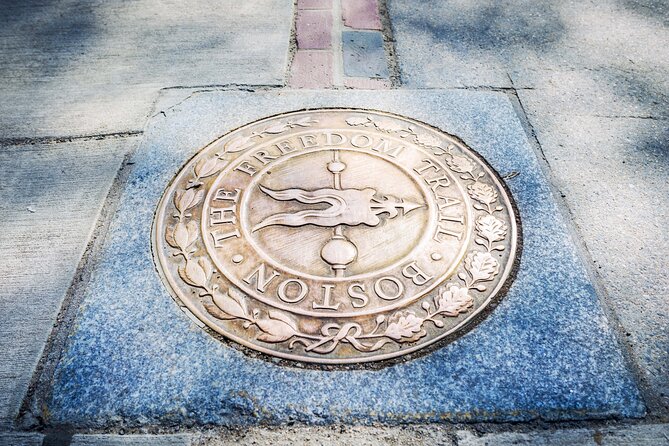
Boston’s Freedom Trail is easy to follow on your own. A red brick line leads through downtown and the North End, and many landmarks are visible from the street. The challenge is understanding how the places connect.
That is where this tour earns its $35 price. Instead of simply pointing to buildings, the guide explains how disputes over taxes, military power, loyalty, and local control grew into open resistance. You hear about Colonial Bostonians facing a hard choice: remain loyal to the Crown or support rebellion.
I like this approach because Boston’s Revolution story can become a string of familiar legends. Paul Revere rode at midnight. Tea was dumped into the harbor. British soldiers fired at civilians. All true in broad outline, but each event has more to it. Guides on this tour have been praised for correcting popular myths and presenting several sides of the story, including the complicated circumstances surrounding the Boston Massacre.
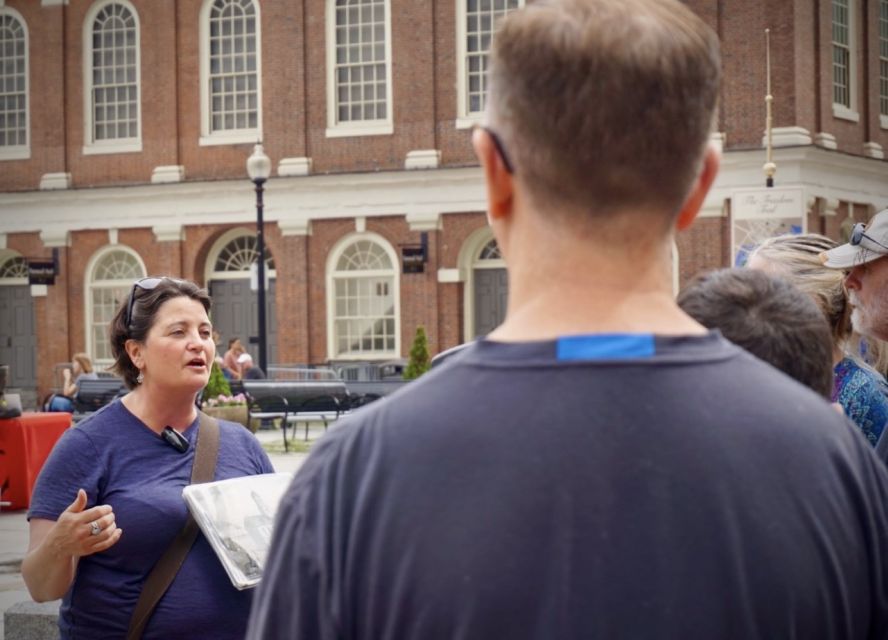
The tone is usually lively rather than academic. Toby has been praised for making the material easy to remember without overwhelming the group. Maura is especially well regarded for mixing historical context with personal stories and local suggestions. Nick has also been praised for explaining disputed events in a balanced way. Your guide will vary, but the strongest part of the experience is the human storytelling.
More History Tours in Boston
- Boston: Freedom Trail History Small Group Walking Tour
★ 5.0 · 6,450 reviews - Tour of Historic Fenway Park, America’s Most Beloved Ballpark
★ 4.5 · 3,013 reviews - Boston Food & History: Pizza, North End & Freedom Trail
★ 5.0 · 1,772 reviews
Starting at Boston Common
Meet inside Boston Common at the Boston Foundation Monument, on the park’s northern edge opposite 50 Beacon Street. Look for the granite memorial with a bronze relief showing two men shaking hands, linked to the arrival of the Puritans in 1630.
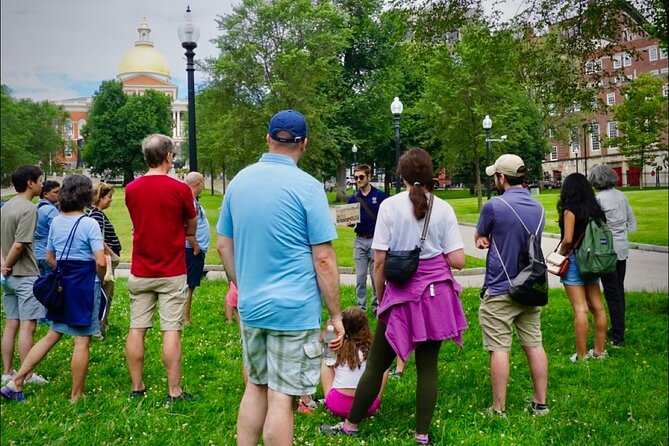
This is a sensible starting point. Boston Common is not just a green space to cross on the way to the trail. It is the oldest public park in the United States, and it gives the guide room to introduce Boston’s early settlement and the political pressures that shaped the city.
The opening stop lasts about 15 minutes. You then move toward the Massachusetts State House, Park Street Church, and the older streets around Beacon Hill and downtown. Bring good shoes. The walk is not a hike, but two miles of pavement, uneven surfaces, stops, and city traffic can feel tiring if you are not used to walking.
The first landmarks: State House to Granary Burying Ground
The Massachusetts State House is one of the first major sights. Its present building is later than the main Revolutionary period, but the location helps place Boston’s civic life within the tour’s wider story.
Park Street Church follows. You will hear how religious and public life overlapped in early Boston. The guide uses these first stops to establish the city as a place where sermons, meetings, political arguments, and street protests could quickly influence one another.
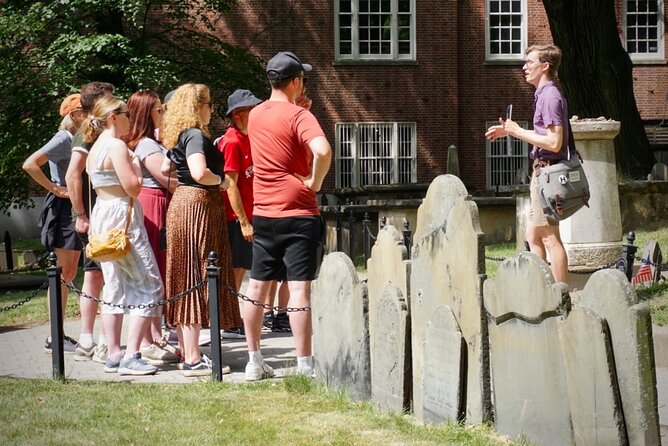
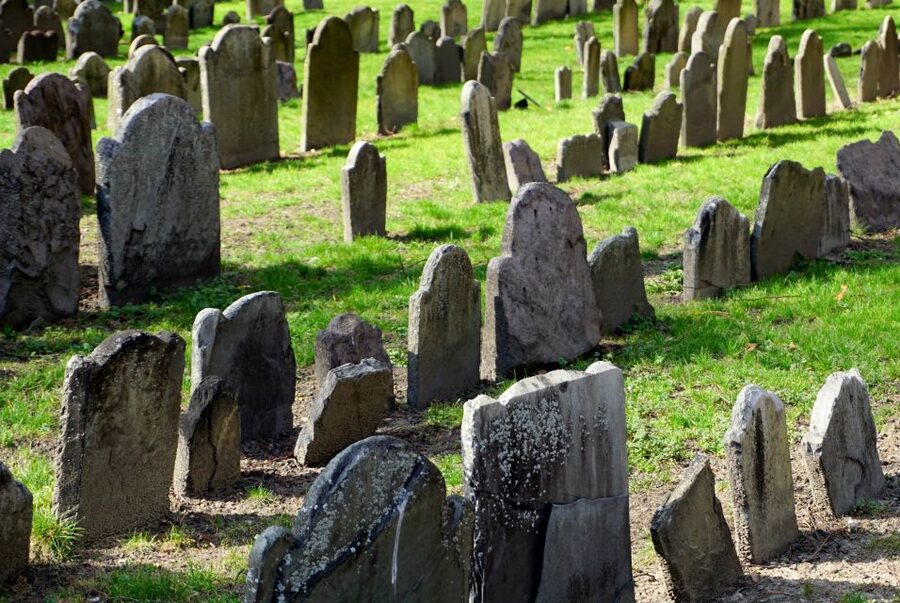
Granary Burying Ground is one of the most important stops on the route. Allow about 25 minutes here. The old gravestones and compact layout make the political story personal, especially when the guide points out the graves of Samuel Adams, Paul Revere, John Hancock, and other major figures.
I find burial grounds more effective than grand monuments because they put names and lives behind the Revolution. At the same time, this is an outdoor stop, so winter weather can be sharp. February departures have gone ahead in snow and freezing temperatures, with guides such as Mark and Amir keeping the history moving despite the conditions. You should still dress for the forecast rather than rely on enthusiasm to keep you warm.
Kings Chapel and Boston’s early public life
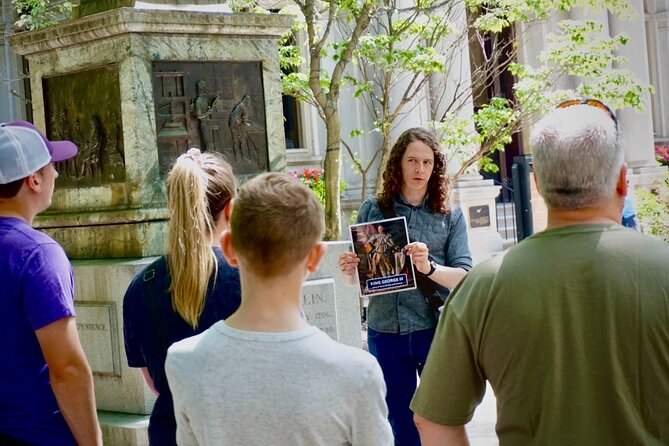
King’s Chapel brings a different note. The building and burial ground help show that Colonial Boston was not politically or religiously uniform.
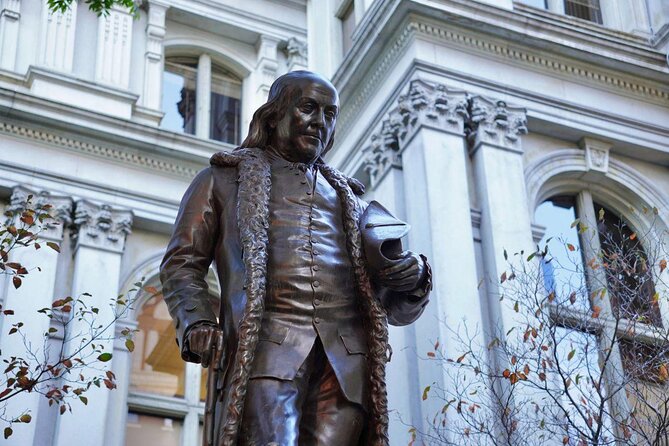
The route then passes the Boston Latin School site and the Benjamin Franklin statue, followed by Old City Hall. You will not spend equal time at every location. Some are short street-side explanations, while others receive a longer talk. That pacing is necessary if the group is to reach the North End within roughly two and a half hours.
The Boston Latin School stop is tied to the city’s early education tradition and Franklin’s connection to Boston. The nearby statue gives the guide a chance to discuss how later Americans remembered the Revolutionary generation. Old City Hall adds an architectural pause before the route moves toward the heart of the protest story.
More Walking Tours in Boston
- Cambridge: Harvard University Student-Guided Walking Tour
★ 4.6 · 3,931 reviews - Harvard University Campus Guided Walking Tour
★ 4.5 · 3,632 reviews - Boston Freedom Trail Walking Tour with Costumed Guide
★ 4.5 · 2,531 reviews - The Full Revolutionary Story Epic Small Group Boston Walking Tour
★ 5.0 · 2,356 reviews
Old Corner Book Store and Old South Meeting House
The Old Corner Book Store is a quick but worthwhile stop. It helps you see how this part of Boston changed from Colonial commerce to a center of publishing and public debate.
Old South Meeting House receives about 10 minutes. This is one of the tour’s key political settings. The meeting house was large enough to hold crowds, making it a natural place for public arguments and gatherings during the crisis with Britain.
The guide connects this stop to the Boston Tea Party without reducing the event to a simple schoolbook anecdote. You may hear the useful correction that the tea tax was not quite the blunt punishment many people imagine, since the tax on tea had been reduced even as Parliament maintained its right to tax the colonies. Details like this give the tour more bite.
There is a practical limitation here. The tour does not include admission inside museums or historic buildings. You will see the landmarks and hear their stories, but if you want interior exhibits, you must return separately and pay any admission fee.
The Old State House and Boston Massacre Site
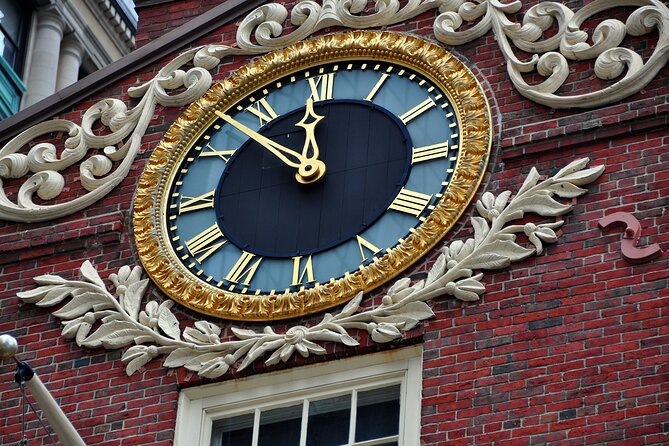
The Old State House is one of the strongest architectural and historical stops. It represents the center of British government in Boston, while the street outside became the site of the Boston Massacre.
The Boston Massacre Site receives about 15 minutes. The guide explains the confrontation between townspeople and British soldiers, the shots that killed civilians, and the way the event was used by colonial leaders to build opposition to British rule.
This is a good point in the tour to listen for careful wording. The name Boston Massacre was politically powerful, but the incident was also argued in court as a chaotic confrontation in which the soldiers claimed self-defense. One guide, Nick, has been praised for putting that debate into context instead of handing the group a neat hero-and-villain story.
That balance is valuable even if you already know the basic event. The tour is at its best when it shows how history is shaped by what happened and by how people described what happened afterward.
Faneuil Hall and the short Quincy Market break
Faneuil Hall is another central stop. The guide explains its role as a meeting place and political forum, with only about five minutes scheduled there. That may feel brief, but the tour has many stops still ahead.
Next comes Quincy Market, where you get a roughly 10-minute break. Use it wisely. This is the best chance to get a drink, use the bathroom, or grab a quick snack before entering the North End.
The break is short, not a meal stop. You should not plan to sit down for lunch here and expect the tour to wait. If you need more time, the North End at the finish offers a better chance for a relaxed meal.
The pause also divides the tour well. The first section centers on government, protest, and public debate. After Quincy Market, the route becomes more personal, moving through Paul Revere’s neighborhood and toward the churches and burial ground of the North End.
Paul Revere’s house and Hanover Street
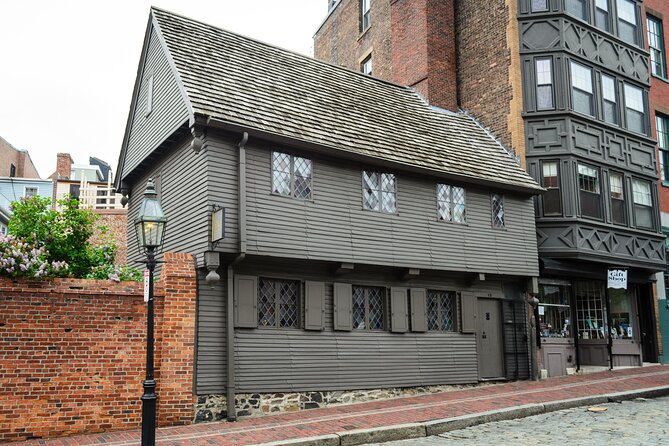
Paul Revere House is one of the tour’s most anticipated stops. The guide explains Revere’s place in Boston’s revolutionary network and helps separate the real man from the polished legend.
You will likely hear the important correction that Paul Revere did not complete the entire midnight ride. That does not make his role unimportant. It shows that the warning system depended on several riders and local networks, not just one famous figure.
The house sits in Boston’s North End, where the walk becomes more intimate. Hanover Street adds the modern neighborhood around the old buildings, and this is where the tour’s historic setting meets the practical Boston of today.
You may also receive restaurant suggestions here. Guides have recommended North End places such as Limoncello, and several have been praised for useful local advice. Treat those tips as a bonus, not a guarantee of availability or a substitute for checking opening hours.
Paul Revere’s statue and Old North Church
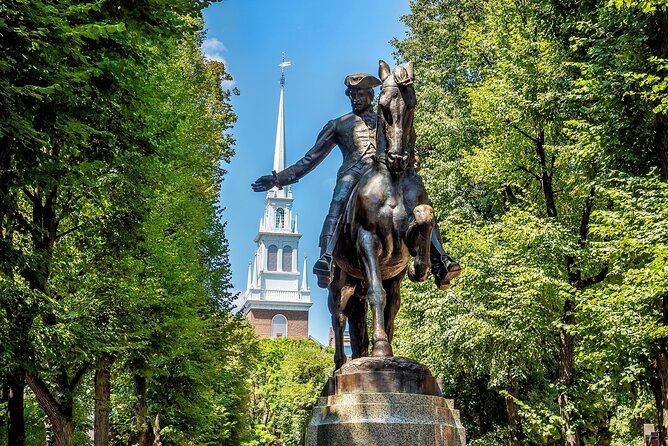
The Paul Revere statue is a natural follow-up to the house. The guide can connect Revere’s work as a messenger, craftsman, and organizer with the later legend built around him.
Old North Church is one of the most recognizable landmarks on the Freedom Trail. The tour spends about 10 minutes here, explaining its part in the warning signal associated with the approach of British forces. The story is memorable because it links a simple signal to a wider system of communication and resistance.
You should expect an exterior-focused tour. The itinerary includes guided explanations at the landmarks, but museum entry and interior admission are not part of the $35 fee. If stepping inside Old North Church or Paul Revere House matters to you, plan another visit.
Copp’s Hill and the final viewpoint
Copp’s Hill Burying Ground provides the final major historic setting. Like Granary Burying Ground, it is more than a collection of old stones. The guide uses it to discuss the people, neighborhoods, and military events tied to Boston’s early story.
The walk ends at Copp’s Hill Terrace, about 10 minutes from the final viewpoint. From here, you can see toward the USS Constitution and Bunker Hill Monument in Charlestown.
This is a smart ending because it gives you a visual sense of the wider harbor area without taking the group across to Charlestown. The tour does not include the Charlestown neighborhood, so you will see those landmarks from a distance rather than visit them directly.
The finish is also practical. Old North Church and Hanover Street are close by, and the North End is a convenient place to continue your afternoon or evening. You can stop for Italian food, return to a landmark for an interior visit, or walk onward at your own pace.
What the $35 price really includes
At $35 per person, this is a reasonable price for a live, small-group introduction to central Boston. The fee covers a 150-minute guided route, the full sequence of 16 official Freedom Trail landmarks, and the guide’s interpretation of the city’s Revolutionary period.
The value is strongest if this is your first visit to Boston or your first serious look at the Freedom Trail. You get orientation, historical connections, and a route that would take more effort to organize on your own.
The price is less attractive if you mainly want to enter historic buildings. Museum admission is extra, and the tour does not include Charlestown. You are paying for the walk and the storytelling, not a package of indoor visits.
Gratuity is optional. I would treat it as a way to recognize a guide who keeps the group engaged, handles questions well, and makes the long sequence of names and events easy to follow.
Group size, pace, and weather
The maximum group size is 15. That is small enough to make a real difference, especially around the Old State House, Faneuil Hall, and narrow North End sidewalks. Large groups are common on the Freedom Trail, and a smaller group should feel easier to hear and manage.
The stated route is about 2 miles, or 3.2 kilometers. The advertised duration is 150 minutes, though the full experience can run closer to three hours depending on the group and conditions.
The route is listed as wheelchair accessible, but the same information says it is not suitable for people with mobility impairments or low fitness. That is a warning worth taking seriously. Ask the operator about current route conditions if you use a wheelchair or have difficulty walking, and expect a sustained city walk with outdoor standing.
Children under six are not suitable for this tour. For older children, the guide’s energy matters. Guides such as Maura and Toby have been praised for keeping families and children interested, but two and a half hours is still a long time for a young child.
Do not bring luggage or large bags. Video recording is not allowed. Wear comfortable shoes and clothing suited to the weather. Boston in winter can be bitter, and rain can change the feel of an otherwise manageable walk.
Who should book this tour
I would choose this tour if you want a clear introduction to Boston’s Revolutionary story without spending a whole day in museums. It suits first-time visitors, American history fans, families with older children, and anyone who prefers stories delivered in person.
It is also a good first activity in Boston. The route gives you a practical sense of downtown, the North End, the Freedom Trail, and the places you may want to revisit. Guides often add useful food suggestions, which makes the North End finish especially convenient.
I would skip it if you dislike walking, need long indoor breaks, or want extensive time inside every landmark. You will see a lot in 150 minutes, but the pace requires attention. Richard’s useful suggestion was a simple checklist of the trail stops, because there is so much happening that it can be easy to lose track. Bring your own notes or mark the landmarks on your phone as you go.
Should you book the Boston Freedom Trail tour?
Book it if you want the Freedom Trail to make sense, not just appear as a line on the pavement. The small group, strong guides, burial grounds, and final harbor views give the tour good value at $35.
Choose a start time that leaves room for lunch or dinner in the North End afterward. Wear serious walking shoes, check the weather, and remember that indoor admissions are separate. If you want a lively, thoughtful introduction to Boston’s Revolution-era landmarks, this is a solid choice.
FAQ
How long is the Boston Freedom Trail walking tour?
The tour lasts 150 minutes, though the total time can vary and may be as long as three hours.
How far do you walk?
The accessible route covers approximately 2 miles, or 3.2 kilometers.
How many people are in each group?
Groups are limited to a maximum of 15 guests.
Where does the tour begin?
The meeting point is inside Boston Common at the Boston Foundation Monument, on the northern boundary of the park opposite 50 Beacon Street.
Where does the tour finish?
The tour ends at Copp’s Hill Terrace in Boston’s North End, near Old North Church and Hanover Street.
Does the tour visit all Freedom Trail landmarks?
The tour covers all 16 official Freedom Trail landmarks. The route includes guided explanations, but admission inside museums and historic buildings is not included.
Does the tour visit Charlestown?
No. The tour offers scenic views toward the USS Constitution and Bunker Hill Monument but does not include the Charlestown neighborhood.
Is the tour wheelchair accessible?
An accessible route is available, but the activity is not considered suitable for people with mobility impairments or low fitness. Contact the operator before booking if you need specific accessibility information.
Just added in Boston
- View Boston Observation Deck Admission Tickets★ 4.5 · 314 reviews
- Delicious Donuts of Boston: A Sweet History Walking Tour★ 5.0 · 1,038 reviews
- Boston’s Freedom Trail: A Revolutionary Walking Tour★ 5.0 · 1,343 reviews
- Freedom Trail Walking Tour 250★ 4.5 · 1,118 reviews
- Sunset Sailing Cruise on a Tall Ship in Boston Harbor★ 4.5 · 414 reviews
- Narrated Sunset Cruise of Boston Harbor★ 4.0 · 532 reviews
- City Cruises Salem High Speed Ferry to/from Boston★ 4.5 · 727 reviews
- Boston’s North End Food and History Walking Tour★ 5.0 · 459 reviews
Historical Tours, compared.

History and Hauntings of Salem Guided Walking Tour
Read our review →
Charleston’s Old South Carriage Historic Horse & Carriage Tour
Read our review →

Big Island in a Day: Volcanoes Waterfalls Sightseeing and History
Read our review →
Freedom Trail History Small Group Walking Tour
Read our review →
Historic Charleston Guided Sightseeing Walking Tour
Read our review →
Starship Landmark 90 Minute Sightseeing Cruise
Read our review →Browse the lists this tour appears in