
Reviewed · MUSEUMS
Country Music Hall of Fame and Museum Admission
Music history gets a Nashville-sized home. The Country Music Hall of Fame and Museum traces the music from folk roots to current stars, using costumes, instruments, cars, films, recordings, and personal stories. I especially like the clear timeline and the mix of legends such as Hank Williams and Johnny Cash with newer artists including Taylor Swift, Lainey Wilson, and Carrie Underwood. The main drawback is that the museum is mostly self-guided, and some people may expect more hands-on exhibits or more recorded music for the price.
I also like the museum’s central downtown location and the sheer range of material packed into its two gallery floors. You can spend 90 minutes here if you move briskly, but two leisurely hours gives you time for films, reading, and interactive stations. Parking can be expensive, and the building has felt too warm for some people, so plan your visit with both comfort and cost in mind.
In This Review
- Key points to know before you go
- Entering Nashville’s Country Music Museum
- Starting with folk roots and early country music
- Continuing from the 1960s to modern Nashville
- Costumes, instruments, cars, and personal objects
- Films, sound, and interactive stations
- Live music and extra experiences inside the museum
- How much time should you allow?
- Is the $31.95 admission good value?
- Shops and places to eat after the galleries
- Who will enjoy this museum most?
- Should you book the Country Music Hall of Fame?
- FAQ
- How much does admission cost?
- How long does a visit take?
- Is the museum self-guided?
- What are the museum’s opening hours?
- Is the experience offered in English?
- Does the ticket include the Studio B tour or live performances?
- Can I cancel for a refund?
Key points to know before you go

- Follow country music’s full timeline: The exhibits move from folk traditions and early performers through the 1960s and into modern Nashville.
- See more than costumes: Gold records, instruments, cars, handwritten material, films, and multimedia displays add texture to the stories.
- Plan for a self-guided visit: You set your own pace, with audio material, films, and interactive stations available along the way.
- Arrive early: The museum opens at 9 a.m., and an early start can help you avoid the heavier crowds that build later.
- Budget for extras: The museum has shops, restaurants, special programs, and additional experiences that may cost more than basic admission.
- Best for music fans and curious newcomers: You do not need to know every artist, but a little interest in American music will make the visit more rewarding.
Entering Nashville’s Country Music Museum
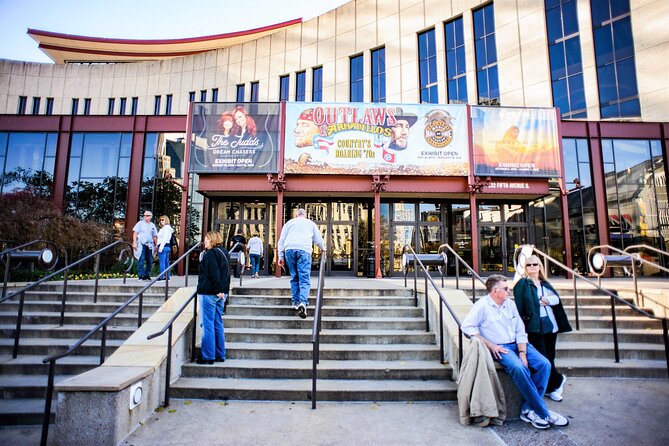
The Country Music Hall of Fame and Museum sits in the middle of downtown Nashville, making it easy to add to a day of sightseeing. Its modern building contains two large floors of gallery space, plus shops, restaurants, educational rooms, archival storage, and event areas.
Your admission is for the museum itself. The experience is self-guided, so you are not tied to a guide or fixed group schedule. The listed maximum of 10 people matters less here than it would on a walking tour, since you can move through the displays at your own speed.
At the entrance, take a moment to get oriented. If you are using a voucher, go to the information desk first so it can be exchanged for museum admission. That simple step can save time at the entry line. An early arrival around 9 or 9:30 a.m. is a sensible choice, especially if you want quieter galleries and a less rushed visit.
The museum is open daily from 9 a.m. to 5 p.m. The stated visit length is two to four hours, but your actual time depends on how closely you read the displays. One person may be satisfied after 90 minutes, while a committed fan could use most of the afternoon.
More Museum Tours in Nashville:
- Nashville: Country Music Hall of Fame and Museum
★ 4.7 · 945 reviews - NYC: 9/11 Memorial & Museum Timed-Entry Ticket
★ 4.8 · 31,428 reviews - NYC: Empire State Building Tickets – Observatory & Museum
★ 4.7 · 25,757 reviews
Starting with folk roots and early country music
The main story begins with Sing Me Back Home: The Journey Begins, Folk Roots to the 1960s. This section explains where country music came from and how it developed during the first half of the 20th century.
The strength of this opening section is its context. You are not simply shown a row of famous jackets and guitars. The museum connects the music to American life, regional traditions, radio, recording, migration, and changing technology. Biographical panels help explain why certain performers mattered and how their work reached a wider audience.
The story includes major figures such as Jimmie Rodgers and Hank Williams. Their place in country music becomes easier to understand when you see the instruments, clothing, recordings, and personal details placed alongside the broader timeline.
I like this approach because it gives newcomers a firm starting point. If your country music knowledge begins with modern radio, you can still follow the story. If you already know the early performers, the original artifacts and audio material add another layer to familiar names.
This first section also sets the tone for the whole museum. Some exhibits are visual and immediate, while others reward patient reading. You should not rush past the text panels if you want to understand how the music changed from one era to the next.
Continuing from the 1960s to modern Nashville
The next major part is Dreaming My Dreams: The Journey Continues, 1960s to the Present. This section expands the story into the period many people know best, including the rise of major stars, new production styles, changing audiences, and country music’s links to rock, pop, gospel, and other American forms.
Johnny Cash and Dolly Parton receive the kind of attention you would expect, but the museum does not stop with older legends. The contemporary displays include artifacts linked to Taylor Swift, Luke Bryan, Carrie Underwood, Keith Urban, and other current performers.
That balance is one of the museum’s best features. You can move from an early recording or stage costume to a modern artist’s clothing or instrument and see how each generation borrows, changes, and refreshes the sound.
The modern section is also useful for families and mixed-age groups. A parent may stop for Johnny Cash, while a teenager takes more interest in Taylor Swift or another current performer. You may not agree with every artist included, but the broad range keeps the museum from feeling stuck in one decade.
Limited-engagement displays can add a fresh reason to return. Recent exhibits have included material connected with Lainey Wilson and Muscle Shoals. The exact temporary exhibitions change, so the displays you see will depend on your visit date.
Costumes, instruments, cars, and personal objects
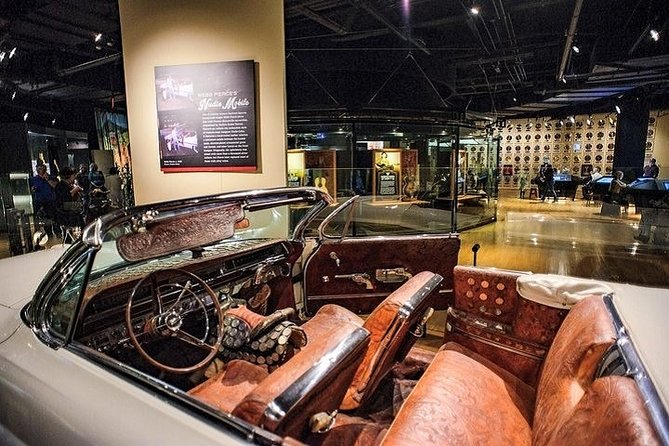
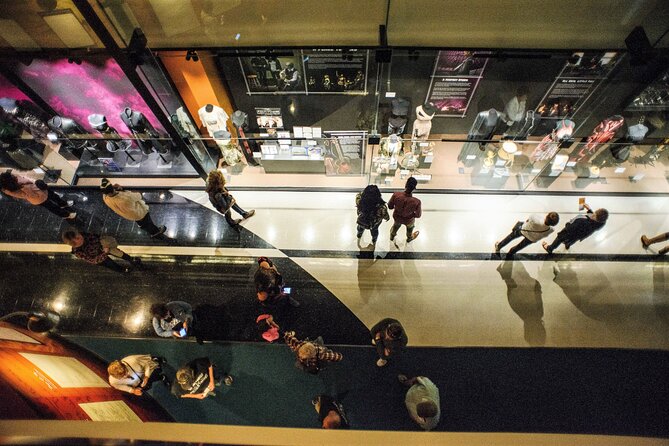
The museum’s visual appeal comes from its objects. Costumes are among the biggest draws, but they work best when viewed as part of a person’s career and public image.
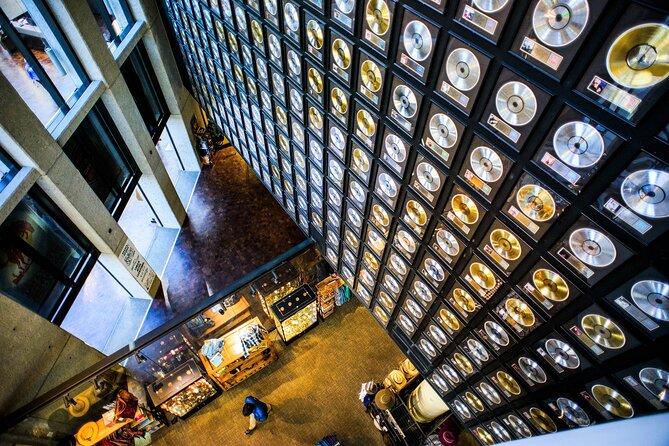
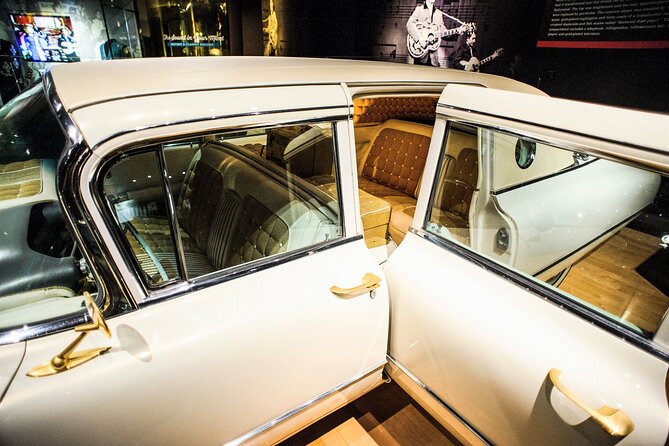
You may see stage clothing, instruments, gold records, automobiles, and other items tied to performers’ lives. Elvis Presley’s gold-plated Cadillac is a memorable example, even though the museum’s focus is country music. The cars and larger objects provide a welcome break from reading panels and looking through cases.
The collection is large enough to feel almost wall-to-wall in places. That is good news if you enjoy memorabilia, but it can also make the visit feel dense. There are more than 2.5 million artifacts held by the museum, though only a portion can be displayed at one time.
I recommend choosing a few artists or periods to follow rather than trying to absorb every name. You will get more from the museum if you pause for a handwritten item, a familiar costume, or a recording that connects to your own memories.
The displays are carefully arranged, but this is not a quick photo stop. You will do plenty of walking and standing. Comfortable shoes are a smart choice, especially if you plan to use the full two floors.
A few more options to weigh up in Nashville
- Nashville Hop On Hop Off Trolley Tour
★ 4.5 · 5,643 reviews - Nashville: Food Tour with 5+ Tastings of Local Delicacies
★ 5.0 · 2,704 reviews - Best of Nashville City Sightseeing Tour on Double Decker Bus
★ 4.5 · 2,601 reviews - Explore the City of Nashville Sightseeing Tour by Golf Cart
★ 5.0 · 2,544 reviews
Films, sound, and interactive stations
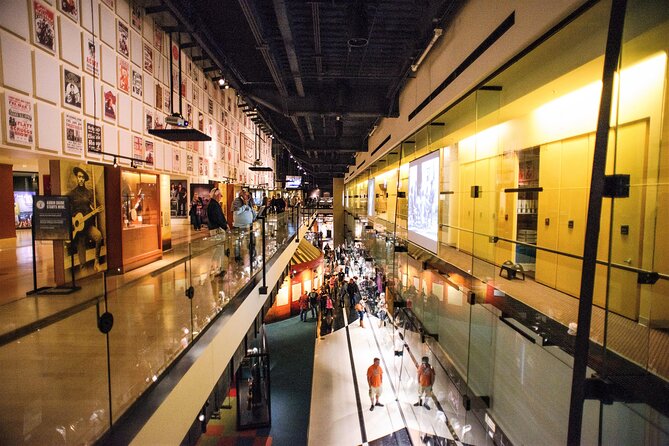
Multimedia helps keep the museum from becoming a silent collection of cases. Video footage and selected sound recordings bring performers and performances into the room, while biographical panels fill in the details.
Interactive stations include music trivia, recording and songwriting areas, and other activities. These features give you a chance to do more than read about the music. They are particularly useful if you are visiting with children or teenagers who may lose interest in long text panels.
Still, keep your expectations measured. The museum is not an arcade or a fully hands-on science center. Several parts are built around artifacts, films, and written explanation. If you want constant interaction, you may find the experience quieter than expected.
That is not necessarily a flaw. The museum’s main job is to preserve and explain country music, and it does that well. The interactive material is a helpful addition, not the entire point.
The forty-foot guitar is one of the more playful visual touches. It gives the building a sense of scale and makes for an easy family photo, while the smaller displays reward slower attention.
Live music and extra experiences inside the museum
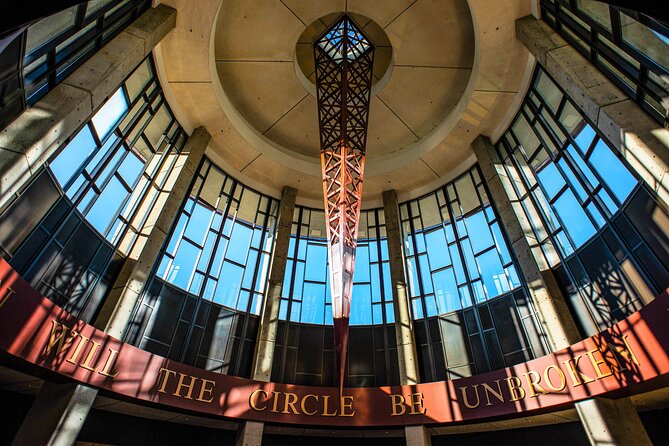
The museum hosts more than 250 programs and activities each year. Depending on the date, you might find live music, archived films, educational programs, or performances by established songwriters and country performers.
A live show can change the feel of your visit. After reading about the songwriting and recording process, hearing music performed in the building gives the subject a direct, human voice. A recent Ford Theater performance by Andy May was described as a welcome treat, and similar programs can make the museum feel like an active music center rather than a static collection.
Check the day’s schedule before you arrive. Some performances and activities may require a separate fee or reservation, and basic museum admission does not automatically mean every program is included.
The Studio B tour is another separate experience mentioned by people who combine it with the museum. It can be a good addition if you want more production history, but you should treat it as an extra plan rather than part of this standard admission.
Hatch Show Print is also located on the property. Its history of music poster printing and the hands-on printing activity have appealed to families, especially those who enjoy making something rather than only looking at displays. Confirm the current details and price if you want to include it.
How much time should you allow?

For a quick introduction, allow about 90 minutes. That gives you time to see the main galleries and a selection of major displays, but you will skip some films and reading.
Two hours is a better target for most people. You can follow the historical sequence, stop at familiar artists, watch short films, and try some interactive stations without feeling hurried.
Three to four hours makes sense if you are a serious country music fan, want to read most panels, or plan to add a live program, restaurant stop, or shop visit. Families may need more time because children often move at a different pace from adults.
The museum is open from 9 a.m. to 5 p.m. daily during the stated 2026 operating period. Starting near opening time has two advantages: you may find the galleries calmer, and you protect your visit from the midday crowd. By late morning, the entry area can feel much busier.
Is the $31.95 admission good value?
At $31.95 per person, this is not a cheap museum stop. The value depends on how you use it.
I think the admission is fair for anyone who plans to spend two or more hours with the exhibits. The museum covers a wide span of American music, includes major artifacts, and offers films, sound recordings, interactive material, and changing exhibitions. For a serious fan, it is one of the most useful places in Nashville to put the music into context.
The value is weaker if you only want a quick look at costumes and famous names. A short 90-minute visit may leave you feeling that the ticket costs a lot for the time spent. One practical answer is to arrive early and protect enough time for the full historical sequence.
Check the direct museum price before buying. One useful piece of advice is to compare the online rate with the price at the venue, since the best deal can vary. If you buy a voucher, use the information desk as soon as you arrive rather than joining the wrong line.
Parking deserves attention. The museum is near public transportation, but the cost of parking can add a noticeable amount to your day. If you are driving, include parking in your budget before deciding that the ticket price alone is reasonable.
Shops and places to eat after the galleries
Four shops give the museum a strong retail side. The Museum Store carries books, music, souvenirs, and country-themed clothing. Circa focuses on gifts and lifestyle items, while Hatch Show Print and the Haley Gallery offer art and locally made products.
The shops are worth a look even if you do not buy anything. They provide a chance to take home something more personal than a standard souvenir, especially if you like posters, original artwork, music books, or regional gifts.
The museum also has three places to eat: 2|22, Red Onion, and Bajo Sexto Taco. Having food on the property makes it easier to turn the museum into a larger downtown stop, though you should not assume a meal is included with admission.
The retail and dining options can help families split up for a short break, but remember that they add cost. I would decide in advance how much time and money you want to give to extras.
Who will enjoy this museum most?
This is an easy recommendation for country music fans, especially first-time visitors to Nashville. The museum brings together early performers, major legends, current stars, and the people behind the songs in one organized visit.
It also works well for couples, solo visitors, and groups of friends. You can move independently, stop at different artists, and meet up again without keeping pace with a guide.
Families can have a good time too, particularly if teenagers recognize contemporary artists. Younger children may become restless during the reading-heavy portions, so use the interactive stations, large objects, and films as natural breaks.
You do not need to be a country music expert. The chronological layout explains the basic story as you go. But if you dislike museums built around memorabilia, written panels, and recorded material, you may find the experience too passive.
The museum is offered in English. Service animals are allowed, and most people can take part. Because the building involves two floors of gallery viewing and plenty of walking, think about your own comfort and stamina when planning the length of your visit.
Should you book the Country Music Hall of Fame?
Book it if you want a well-organized look at country music from its folk beginnings to today. The best parts are the historical sequence, the large collection of costumes and instruments, the mix of older and newer artists, and the chance to add a live program or nearby museum activity.
I would aim for a 9 a.m. arrival, allow at least two hours, wear comfortable shoes, and compare the admission price with the venue before purchasing. If parking is part of your plan, budget for it separately.
Skip it if you only have a short Nashville stop and prefer live music to museum exhibits. For everyone else, especially a first visit to the city, this is a substantial and worthwhile introduction to the music that helped shape Nashville.
Free cancellation is available up to 24 hours before the start time for a full refund. Changes made inside that 24-hour window are not accepted, and poor weather can lead to a new date or full refund under the stated policy.
FAQ
How much does admission cost?
Admission is listed at $31.95 per person.
How long does a visit take?
The suggested visit lasts about two to four hours, though some people complete the main galleries in roughly 90 minutes.
Is the museum self-guided?
Yes. You explore the galleries at your own pace, using displays, films, recordings, biographical panels, and interactive stations.
What are the museum’s opening hours?
The museum is open Monday through Sunday from 9 a.m. to 5 p.m. during the stated 2026 operating period.
Is the experience offered in English?
Yes. The experience is offered in English.
Does the ticket include the Studio B tour or live performances?
The listed admission covers the Country Music Hall of Fame and Museum. Studio B tours, live programs, and other special activities may be separate experiences or have an additional cost.
Can I cancel for a refund?
You can cancel at least 24 hours before the start time for a full refund. Cancellations or changes made less than 24 hours before the start time are not accepted, and poor weather may result in a different date or a full refund.
Just added in Nashville
- Nashville: RCA Studio B & Country Music Hall of Fame Combo★ 4.8 · 322 reviews
- Nashville: Line Dancing Class with Keepsake Video★ 4.9 · 773 reviews
- Nashville: Hop-on Hop-off Trolley Tour★ 4.6 · 1,634 reviews
- From Nashville: Memphis Tour with Graceland VIP Access★ 4.9 · 383 reviews
- Nashville: Grand Ole Opry Show Ticket★ 4.8 · 1,041 reviews
- Nashville: Homes of the Stars Narrated Bus Tour★ 4.6 · 531 reviews
- Nashville: Double-Decker City Tour★ 4.6 · 738 reviews
- Nashville: Grand Ole Opry Backstage Tour★ 4.8 · 433 reviews
Museums, compared.

Empire State Building Tickets – Observatory & Museum
Read our review →

9/11 Memorial, Ground Zero Tour with Optional 9/11 Museum Ticket
Read our review →

All-Access 9/11: Ground Zero Tour, Memorial and Museum, One World Observatory
Read our review →
Browse the lists this tour appears in