
Reviewed · HISTORICAL TOURS
Walk the Historic Freedom Trail with Costumed Guide
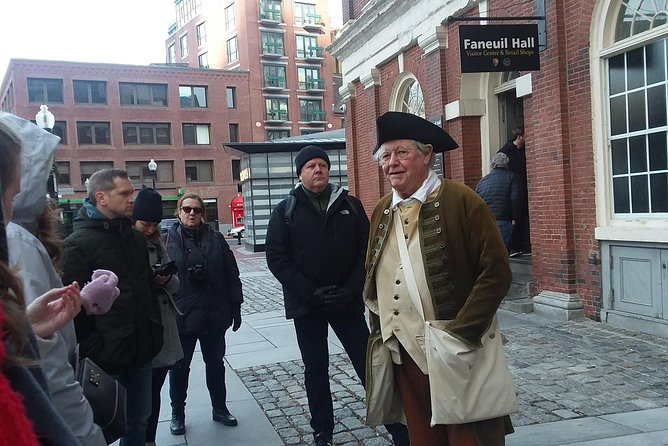
History feels sharper on foot. This 90-minute Boston walk links churches, burial grounds, meetinghouses, and revolution-era landmarks with a guide in period dress. I especially like the short route through 11 of the Freedom Trail’s 16 sites and the way guides such as James Otis, Thomas, Jeff, and Steven add humor to the facts. The main drawback is city noise and group size, which can make it hard to hear at busy crossings.
At $30 per person, this is a sensible introduction to central Boston, especially if you have only one morning or afternoon available. You will walk less than a mile, but you will spend plenty of time standing, so comfortable shoes and weather-ready clothing matter. If you want to tour every Freedom Trail site, this is not the full experience.
In This Review
- Key points before you book
- Starting at Park Street Church and Boston Common
- The State House and Granary Burying Ground
- King’s Chapel and the oldest public school
- Old South Meeting House and the road to rebellion
- Old State House and the Boston Massacre Site
- Ending at Faneuil Hall Marketplace
- What the guides add to the experience
- Is $30 a fair price?
- Timing, walking, and group size
- Who should book this Boston walk?
- Should you book it?
- FAQ
- How long does the Freedom Trail tour last?
- How much does the tour cost?
- Where does the tour begin?
- Where does the tour end?
- Which Freedom Trail sites are included?
- Is the walk difficult?
- Is the tour offered in English?
- Can I cancel for a full refund?
Key points before you book
- Covers major downtown landmarks in 90 minutes: You see Park Street Church, Boston Common, the State House, Granary Burying Ground, King’s Chapel, the Boston Latin School site, Old South Meeting House, Old State House, the Boston Massacre Site, and Faneuil Hall Marketplace.
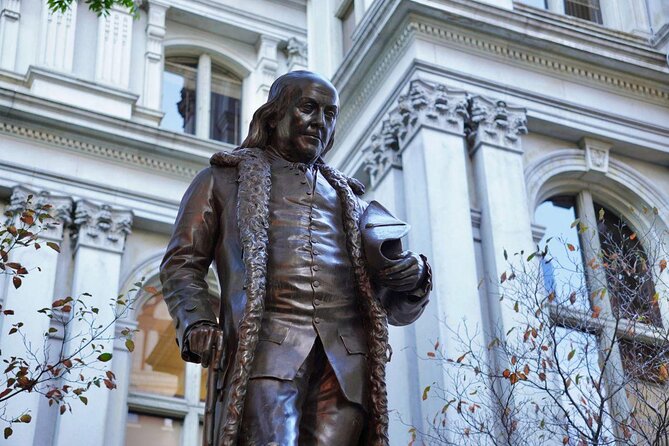
- Period dress adds theatrical flavor: The costumed guide helps turn dates and political arguments into something easier to picture.
- A good first look at Boston: The route gives you a clear sense of how religious disputes, colonial government, protest, and revolution shaped the city.
- Guides are the tour’s biggest strength: James Otis, Thomas, Jeff, Steven, Adri, and Samuel Gray have all been praised for humor, clear storytelling, and strong command of Boston’s past.
- Expect walking and standing, not a strenuous hike: The route is gentle and generally flat, but traffic noise and crowded sidewalks can affect the experience.
- Useful for a tight schedule: Morning and afternoon departures leave time for museums, the North End, harbor sights, or a meal after the tour.
Starting at Park Street Church and Boston Common
The tour begins at 139 Tremont Street, beside Park Street Church. This is a convenient starting point near public transportation and directly beside Boston Common, Boston’s great central green.
Park Street Church gives the opening story a religious angle. The stop connects early Puritan beliefs with the later development of Protestant abolitionism. That shift is important because Boston’s revolutionary story was not only about taxes and soldiers. It also grew from arguments about faith, authority, morality, and who had the right to challenge an established order.
You spend about five minutes here, so expect an exterior-focused introduction rather than an extended church visit. The period costume helps set the mood, but the value comes from the explanation of how religious ideas changed over time.
The next ten minutes take place around Boston Common. Here you hear about Boston’s early development and get your first broad sense of the city’s colonial roots. The Common is an easy place to begin because there is room for the group to gather, though the surrounding roads can still be noisy.
I like this opening because it gives you a framework before the tour reaches the more dramatic events. You are not simply jumping from one famous plaque to another. You start with the setting, then move toward the institutions and people that shaped the rebellion.
More History Tours in Boston
- Boston: Freedom Trail History Small Group Walking Tour
★ 5.0 · 6,450 reviews - Tour of Historic Fenway Park, America’s Most Beloved Ballpark
★ 4.5 · 3,013 reviews - Boston Food & History: Pizza, North End & Freedom Trail
★ 5.0 · 1,772 reviews
The State House and Granary Burying Ground
From Boston Common, the route continues to the Massachusetts State House. The building dates to 1795 and represents a major political idea: government is illegitimate without the consent of the people.
The stop is brief, about five minutes, but the point is large. This is a useful place to connect the American Revolution with broader arguments about representation and public authority. Your guide may frame the building as part of the continuing debate over who should govern and why.
The most substantial stop comes at Granary Burying Ground, where you spend around 15 minutes. This graveyard is more than 350 years old and contains the remains of major figures from Boston’s early political and religious life.
The site is closely tied to the revolutionary era. It has more signers of the U.S. Constitution than any other burial ground in the country, according to the tour description, and the guide uses the graves to put names and personalities behind the textbook events.
This is where the tour’s storytelling matters most. A date in a history book is easy to forget. A person, a grave, and a short account of that person’s role are easier to carry with you.
The drawback is that 15 minutes can feel long if you are less interested in cemeteries, particularly when the group is standing close together. If you enjoy political history, this is likely one of the tour’s best stops. If not, you may prefer the faster-moving sections later in the walk.
King’s Chapel and the oldest public school
King’s Chapel brings you back to religious conflict. The church began as a Church of England congregation and was originally built around 1688. Its presence in colonial Boston shows that the city was not politically or spiritually united before the Revolution.
You spend about ten minutes here. The stop works well after the Puritan and Protestant discussion at Park Street Church because it shows another side of Boston’s religious life. The tour becomes less about isolated buildings and more about competing loyalties within a small colonial city.
The Boston Latin School site follows. Founded in 1635, it is recognized as the oldest public school in the United States.
Only five minutes are allotted here, so you will not get a long school history. Still, it is a valuable reminder that Boston’s early leaders placed great importance on education. The stop also adds variety to the route. After churches, government buildings, and graves, you get a glimpse of civic life through schooling.
This section should appeal to families and anyone who likes social history. One particularly strong feature of the tour is that it does not treat the Revolution as a series of battles alone. Religion, education, government, and public gatherings all appear in the story.
Old South Meeting House and the road to rebellion
Old South Meeting House is one of the key political stops. Around ten minutes here introduces the meetings held at the building, including the gathering just before the Boston Tea Party in 1773.
This is the point where Boston’s growing anger becomes public action. The meetinghouse was a place where large numbers of people could gather, argue, and decide what to do next. That makes it more than an old building. It was a working part of the city’s political machinery.
The guide’s humor can be especially useful here. The subject involves taxes, imperial power, public protest, and escalating tension. A dry recital of dates would make it feel distant. A lively guide can show how heated and uncertain these meetings must have been.
The experience is designed for adults, though teenagers should also get a lot from it. Families with older children may appreciate the brisk pace and clear sequence of events. The tour is not built around games or hands-on activities, so younger children may need help staying engaged during the longer explanations.
More Walking Tours in Boston
- Cambridge: Harvard University Student-Guided Walking Tour
★ 4.6 · 3,931 reviews - Harvard University Campus Guided Walking Tour
★ 4.5 · 3,632 reviews - Boston Freedom Trail Walking Tour with Costumed Guide
★ 4.5 · 2,531 reviews - The Full Revolutionary Story Epic Small Group Boston Walking Tour
★ 5.0 · 2,356 reviews
Old State House and the Boston Massacre Site
The Old State House dates to 1713 and offers one of the clearest physical reminders of the transfer of power. It was first controlled by the British and then taken over by the Americans in 1775.
You spend about five minutes here. The short stop is enough to explain its role without turning the walk into an architectural tour. The building represents the colonial government that once answered to Britain, then became part of the new American political order.
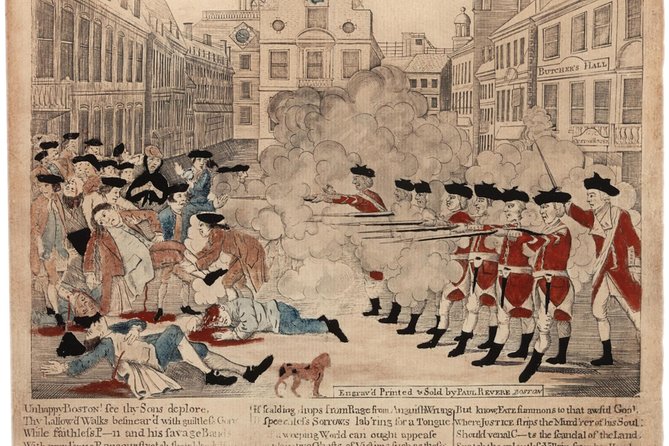
The Boston Massacre Site is nearby and receives about ten minutes. In 1770, five Americans were killed by British soldiers here. Paul Revere later produced a famous engraving of the event, helping shape public opinion against British rule.
This is one of the most recognizable moments on the route, but it also requires careful explanation. The incident was politically powerful because printed images and public storytelling helped turn a street confrontation into a symbol of British oppression.
A good guide can separate the event itself from the way it was presented to the public. That is a useful lesson in how history is remembered and used. It also gives the tour a modern edge, since arguments about public messaging and political persuasion still feel familiar.
City traffic is the clearest problem in this part of the route. Cars, construction, and general downtown noise can make an otherwise strong explanation difficult to follow. The guides use microphones, and if hearing is a concern, stay near the guide at the front rather than drifting toward the back of the group.
Ending at Faneuil Hall Marketplace
The walk ends at Faneuil Hall Marketplace after roughly five minutes of final commentary. Faneuil Hall is a natural conclusion because it connects public debate, commerce, and revolutionary politics.
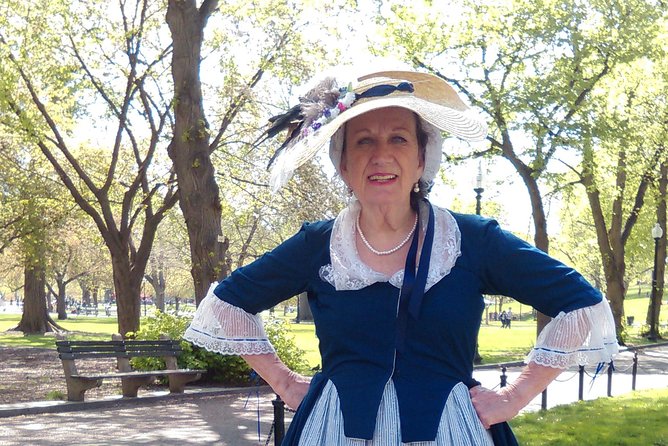
A statue of Samuel Adams is located here. Adams, a major figure in the revolutionary movement, gives the tour a recognizable final character and a clear link back to the protests and meetings discussed earlier.
Ending here is practical. You can continue into the marketplace, make your way toward the North End, or use the location as a launch point for more downtown sightseeing. One guide, Thomas, has even offered food suggestions such as lobster rolls at Legal Sea Foods and places to explore in the North End. Treat those tips as useful extras, not part of the formal tour.
The ending also reinforces the purpose of this shortened walk. You see many of the central sites without committing three hours to the complete route. If you later want more, you can return to individual buildings or choose the provider’s private three-hour option.
What the guides add to the experience
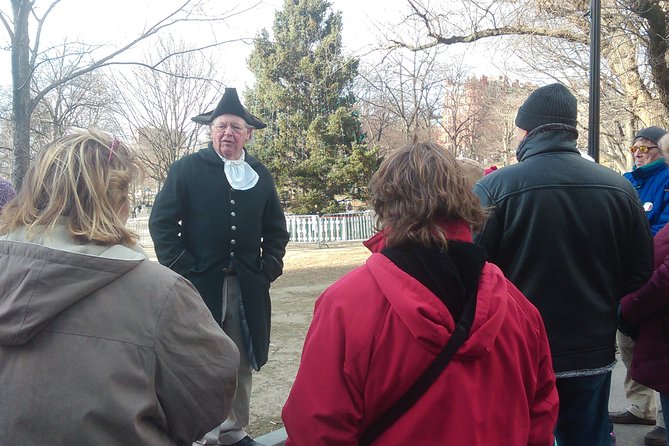
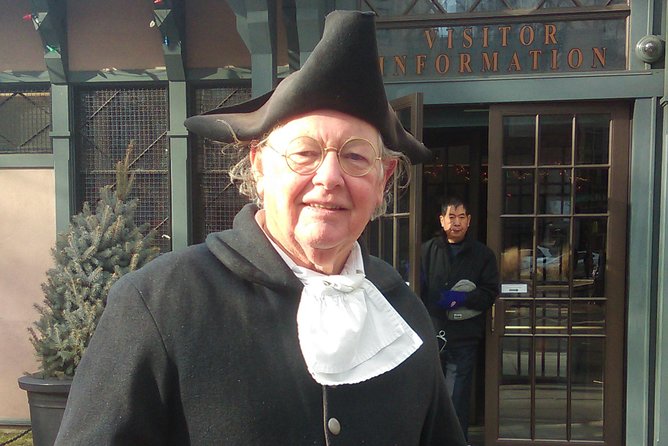
The costumed guide is not just decoration. The best part of this experience is the human delivery of the material.
James Otis, sometimes called the Handsome Man, has reportedly guided Freedom Trail walks for 20 years. Thomas has been praised for quick humor, historical detail, and practical Boston suggestions. Jeff is especially strong on American political figures, including Benjamin Franklin. Steven has been described as patient with questions and easy to follow.
Other named guides include Adri, a Belgian guide whose command of Boston history impressed many people, and Samuel Gray, whose storytelling was described as both engrossing and funny. You cannot choose a specific guide from the information provided, so book this for the format and route rather than for one individual.
The common thread is a mix of facts, personality, and humor. That balance keeps the walk from becoming a list of dates. It also makes the tour suitable for people who want history but do not want a formal lecture.
Still, guide quality can vary from one departure to another. The strong feedback is clear, but the occasional four-star and three-star experience points to the limits of outdoor touring. Even a good guide cannot control road noise, construction, or the behavior of a large group.
Is $30 a fair price?
At $30 per person, the value is strongest if this is your first visit to Boston. You get a 90-minute introduction, a period-dressed guide, and a route through many of the city’s most important revolutionary sites.
The tour does not appear to charge separate admission for the listed stops, and the itinerary is mainly an outdoor walk. You are paying for the guide’s organization, interpretation, and ability to connect the locations into one story.
The price is less compelling if you already know Boston well or plan to walk the Freedom Trail on your own with a guidebook. The red brick line and public streets make much of the route easy to follow independently. The advantage here is not access to every site. It is the live explanation and the chance to ask questions as you go.
For a short visit, the cost can save you planning time. You get the major downtown sequence in one sitting, then use the rest of the day for places the walk does not cover.
Timing, walking, and group size
The tour lasts about 90 minutes and covers less than one mile. It is described as a gentle stroll with no major hills, but do not mistake short distance for no effort. You will stop repeatedly, stand on sidewalks, and remain outdoors for the entire route.
Morning and afternoon departures are helpful. A morning start leaves the afternoon open for museums or the North End. An afternoon departure can work after arrival in Boston, provided you have enough time to reach 139 Tremont Street.
The advertised maximum is 45 people. Some provider responses refer to smaller caps of 30 or 35, so group size may depend on the departure. This matters because a large group is harder to hear and harder to position around busy sidewalks.
Wear comfortable shoes and dress for the weather. Bring patience for traffic noise, construction, and occasional crowding. Service animals are allowed, the meeting point is near public transportation, and most people can take part, but anyone who has difficulty standing for long periods should plan carefully.
Free cancellation is available if you cancel at least 24 hours before the start time. Cancellations within 24 hours are not refunded. Poor weather or failure to meet the minimum number of participants can lead to cancellation, in which case you are offered another date or a full refund.
Who should book this Boston walk?
I would choose this tour for first-time visitors, history fans, couples, families with older children, and anyone with only a few hours in central Boston. It is also a good choice if you want a lively introduction before deciding which sites deserve a longer visit.
The format suits you if you enjoy stories, political context, and a guide who uses humor. It is less suitable if you want to enter every building, move at your own pace, or avoid standing outdoors.
People with hearing concerns should stay close to the guide, since outdoor sound can interfere even when microphones are used. If you are sensitive to crowds, ask about the expected group size before booking.
Should you book it?
Yes, if you want a compact and entertaining introduction to Boston’s revolutionary center. The route covers the essential downtown highlights, the guides are the main attraction, and $30 is reasonable for a well-presented 90-minute orientation.
I would not book it as your only Freedom Trail experience if you have a full day and want all 16 sites. For that, plan additional time or consider the three-hour private option. For most visitors with limited time, though, this walk gives you the names, places, and political arguments you need to make the rest of Boston easier to understand.
FAQ
How long does the Freedom Trail tour last?
The tour lasts approximately 90 minutes.
How much does the tour cost?
The price is $30 per person.
Where does the tour begin?
It begins at 139 Tremont Street, Boston, Massachusetts 02111.
Where does the tour end?
The tour ends at Faneuil Hall Marketplace in Boston, Massachusetts 02109.
Which Freedom Trail sites are included?
The route includes Park Street Church, Boston Common, the Massachusetts State House, Granary Burying Ground, King’s Chapel, the Boston Latin School site, Old South Meeting House, the Old State House, the Boston Massacre Site, and Faneuil Hall Marketplace. The provider describes the walk as covering 11 of the Freedom Trail’s 16 sites.
Is the walk difficult?
It is described as a gentle 90-minute stroll of less than one mile, but it includes considerable walking and standing. Comfortable shoes are recommended.
Is the tour offered in English?
Yes. The tour is offered in English.
Can I cancel for a full refund?
Yes, if you cancel at least 24 hours before the experience start time. Cancellations or changes made within 24 hours are not refunded or accepted.
Just added in Boston
- View Boston Observation Deck Admission Tickets★ 4.5 · 314 reviews
- Delicious Donuts of Boston: A Sweet History Walking Tour★ 5.0 · 1,038 reviews
- Boston’s Freedom Trail: A Revolutionary Walking Tour★ 5.0 · 1,343 reviews
- Freedom Trail Walking Tour 250★ 4.5 · 1,118 reviews
- Sunset Sailing Cruise on a Tall Ship in Boston Harbor★ 4.5 · 414 reviews
- Narrated Sunset Cruise of Boston Harbor★ 4.0 · 532 reviews
- City Cruises Salem High Speed Ferry to/from Boston★ 4.5 · 727 reviews
- Boston’s North End Food and History Walking Tour★ 5.0 · 459 reviews
Historical Tours, compared.


History and Hauntings of Salem Guided Walking Tour
Read our review →
Charleston’s Old South Carriage Historic Horse & Carriage Tour
Read our review →

Big Island in a Day: Volcanoes Waterfalls Sightseeing and History
Read our review →
Freedom Trail History Small Group Walking Tour
Read our review →
Historic Charleston Guided Sightseeing Walking Tour
Read our review →
Starship Landmark 90 Minute Sightseeing Cruise
Read our review →Browse the lists this tour appears in