

Reviewed · MUSEUMS
New Orleans: The National WWII Museum Ticket
This museum asks for more than a quick stop. New Orleans’ National WWII Museum takes you from the D-Day beaches to the Pacific, using landing craft, wartime vehicles, personal stories, film, and carefully built battle scenes. I especially like the New Orleans connection to D-Day, since the landing craft were designed and built here, and I value the museum’s focus on individual service members rather than military dates alone.
I also like the U.S. Freedom Pavilion, where restored aircraft hang above you and catwalks bring you close to the machines. The main drawback is simple: one day may not be enough. The museum is large, reading is extensive, and a late start can leave major sections unseen.
In This Review
- Key points to know before you go
- Why New Orleans has America’s national WWII museum
- Start with the Louisiana Memorial Pavilion
- Follow the roads to Tokyo and Berlin
- Look up at the U.S. Freedom Pavilion
- Add Beyond All Boundaries for a stronger finish
- How long should you spend inside?
- Food, breaks, and practical comfort
- Ticket choices and overall value
- Who will appreciate this museum most?
- Should you book the National WWII Museum ticket?
- FAQ
- Where is the National WWII Museum located?
- How much does admission cost?
- How long is the ticket valid?
- Is museum admission timed?
- Is Beyond All Boundaries included?
- How long is the Campaigns of Courage guided tour?
- Is a live guide included with regular admission?
- Are student tickets available?
- Is the museum wheelchair accessible?
- Can I take photographs inside?
- Is food available at the museum?
- Can I cancel my booking?
Key points to know before you go
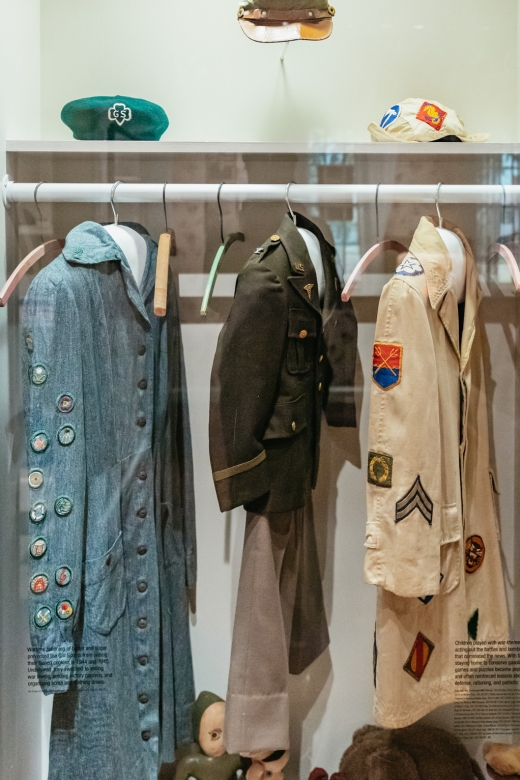
- D-Day began with a New Orleans connection: See how Higgins boats, the landing craft used in Normandy, were designed and built in the city.
- The aircraft are displayed from above: Catwalks offer close views of iconic WWII planes, including a restored B-17E Flying Fortress.
- The museum covers both Europe and the Pacific: Campaigns of Courage follows the roads to Berlin and Tokyo through artifacts, film, and recreated settings.
- Beyond All Boundaries is worth the upgrade: The 4D presentation uses moving effects, physical props, and large-screen imagery to tell the war story.
- Plan at least half a day, preferably a full day: Many visitors need several hours and still leave portions unseen.
- A paper dog tag adds focus: Follow one service member’s story through the exhibits instead of trying to absorb every label.
Why New Orleans has America’s national WWII museum

The National WWII Museum is not a small collection of uniforms and faded photographs. Congress designated it as the official World War II museum of the United States, and the scale matches that title. Five soaring pavilions hold permanent exhibits, restored military equipment, restoration work, a theater, restaurants, and changing displays.
The museum explains why the war began, how the United States and its allies fought it, and what followed when the fighting ended. That broad frame matters. You are not simply looking at weapons. You are tracing decisions, production, sacrifice, strategy, and the effect of war on families at home and abroad.
I appreciate the museum’s balance between large events and small human details. A campaign map can explain an entire front, but a letter, photograph, dog tag, or recorded testimony can make the cost personal. The presentation is patriotic, yet it also makes room for fear, exhaustion, loss, and uncertainty.
This is a serious place, and parts of it are emotional. The tone is respectful rather than sensational, but younger children may find some material difficult. Teenagers and adults with an interest in history, military affairs, family stories, or twentieth-century politics should find plenty to hold their attention.
More Museum Tours in New Orleans:
- The National WWII Museum Admission Ticket New Orleans
★ 5.0 · 2,202 reviews - NYC: 9/11 Memorial & Museum Timed-Entry Ticket
★ 4.8 · 31,428 reviews - NYC: Empire State Building Tickets – Observatory & Museum
★ 4.7 · 25,757 reviews
Start with the Louisiana Memorial Pavilion
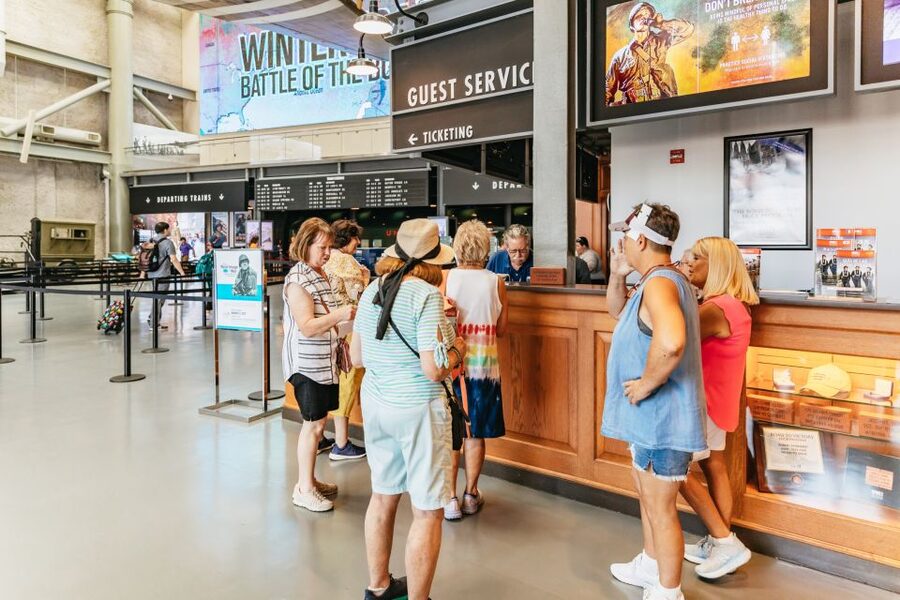
Enter at the main entrance on the north side of Andrew Higgins Boulevard. Staff scan your barcoded ticket and direct you to the correct starting point. You can pick up a visitor guide there, and informational booklets are available in Chinese, English, French, Japanese, and Spanish.
The Louisiana Memorial Pavilion is the natural place to begin. Its D-Day Invasion exhibit gives special attention to the landing craft associated with New Orleans. Andrew Higgins and his company developed and built the boats that carried troops, vehicles, and supplies toward the Normandy shore.
That local connection gives the opening section extra weight. The war was fought overseas, but it depended on factories, engineers, welders, shipbuilders, truck drivers, and families far from the battlefield. The museum makes that point clearly: victory came from soldiers at the front and enormous industrial effort behind them.
The Home Front exhibit adds another layer. You see how the war affected life in the United States, including production and the changes required to support a global conflict. I like this section because it prevents the war from becoming a string of famous battles. It shows the less dramatic work that made those battles possible.
Allow time to read. The displays use photographs, films, objects, and explanatory text, and a quick walk through will give you only the outline. If you enjoy written panels and first-person accounts, you could spend much of your morning here.
Follow the roads to Tokyo and Berlin
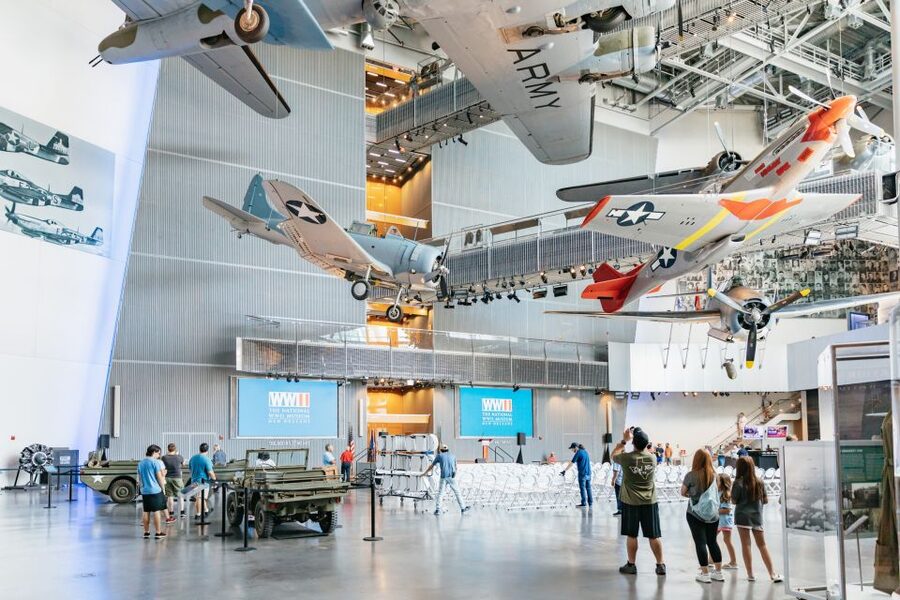
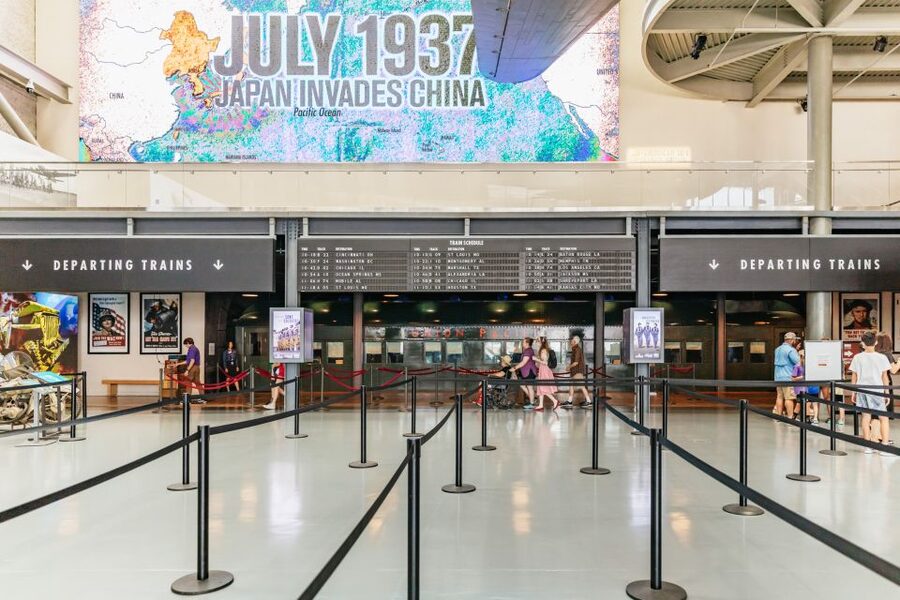
The Campaigns of Courage area is divided into Road to Tokyo and Road to Berlin. These exhibits place the Pacific and European campaigns side by side, but they do not flatten them into the same story.
Road to Tokyo follows the difficult route from Pearl Harbor toward Japan. The Pacific war involved huge distances, island battles, naval power, air attacks, and harsh conditions. The exhibit helps you understand how slow and costly that advance was.
Road to Berlin focuses on the European campaign. Recreated villages and battle settings help explain the ground war as American forces pushed across Europe. The displays are useful for connecting strategy with place. Instead of seeing only arrows on a map, you get a sense of the towns, roads, and terrain that shaped each advance.
I would not rush these sections. They contain plenty of information, and the short films add context as you move through them. The museum is designed to guide you from one section to the next, though the size of the complex can still make the route feel confusing at times. Staff and volunteers are positioned at checkpoints and are happy to point you in the right direction.
You can also add a two-hour guided tour of Road to Tokyo and Road to Berlin. This is a good choice if you prefer a clear narrative and want to ask questions as you go. The standard museum ticket does not include a live guide, so be sure you select the guided option if that matters to you.
Look up at the U.S. Freedom Pavilion
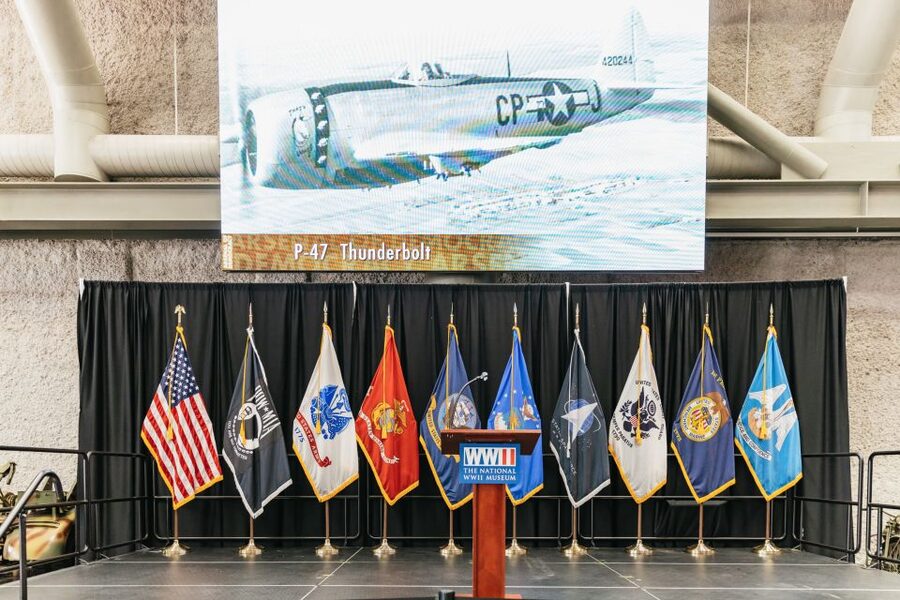
The U.S. Freedom Pavilion is one of the museum’s most memorable spaces. Actual World War II aircraft hang above the floor, restored to their wartime appearance. Catwalks let you look at the planes from closer range and from angles you rarely get in a conventional exhibit hall.
The B-17E Flying Fortress is a major draw. Seeing a large bomber suspended overhead gives you a better sense of its size, but the catwalks also help you notice the cramped positions occupied by its crew. Displays include figures placed in wartime positions, along with information about the aircraft and the people who operated it.
This exhibit works especially well for families and visitors who do not normally read every museum panel. The planes create an instant visual hook, then the labels add the details. You might arrive for the aircraft and leave thinking more about the people inside them.
Wartime tanks and trucks are also displayed in the pavilion. Together, the vehicles show how much equipment had to be designed, shipped, repaired, fueled, and moved before an army could advance.
The catwalks are high, so take your time if heights make you uncomfortable. The museum is wheelchair accessible, but only a limited number of wheelchairs are available for use, on a first-come-first-served basis. If you need one, ask staff when you arrive.
A few more options to weigh up in New Orleans
- New Orleans Premier Ghost, Voodoo and Vampire Walking Tour
★ 4.5 · 12,856 reviews - New Orleans Steamboat Natchez Jazz Cruise with Dinner Option
★ 4.0 · 7,533 reviews - Adults-Only New Orleans Ghost, Crime, Voodoo, and Vampire Tour
★ 5.0 · 6,545 reviews - New Orleans Food Walking Tour of the French Quarter with Small-Group Option
★ 5.0 · 6,118 reviews
Add Beyond All Boundaries for a stronger finish
The Solomon Victory Theatre presents Beyond All Boundaries, a 4D film narrated by Tom Hanks. It is not included with the basic admission ticket, so you need to choose the option that includes the film.
This is more than a standard documentary. The presentation combines large screen images, physical props, sound, and sensory effects. A 4D film can sometimes feel like a theme-park attraction, but here the effects support the story of the war rather than replacing it.
The film is emotional. It compresses the scale of the conflict into a focused presentation, moving from preparation and attack to the wider war and its consequences. I would add it if you want a strong overview before or after the galleries, or if someone in your group is likely to tire before reaching every exhibit.
Your ticket’s printed time is the reserved time for the film. Your museum admission is valid for entry at any time, so you do not need to arrive at the exact movie time to enter the museum. Still, plan your route carefully and arrive early enough to reach the theater without rushing.
Some visitors find the effects intense. Anyone sensitive to loud sound, motion, or emotional wartime imagery should keep that in mind. The film is also a poor substitute for the museum itself. It gives you a powerful overview, but the galleries provide the fuller account.
How long should you spend inside?
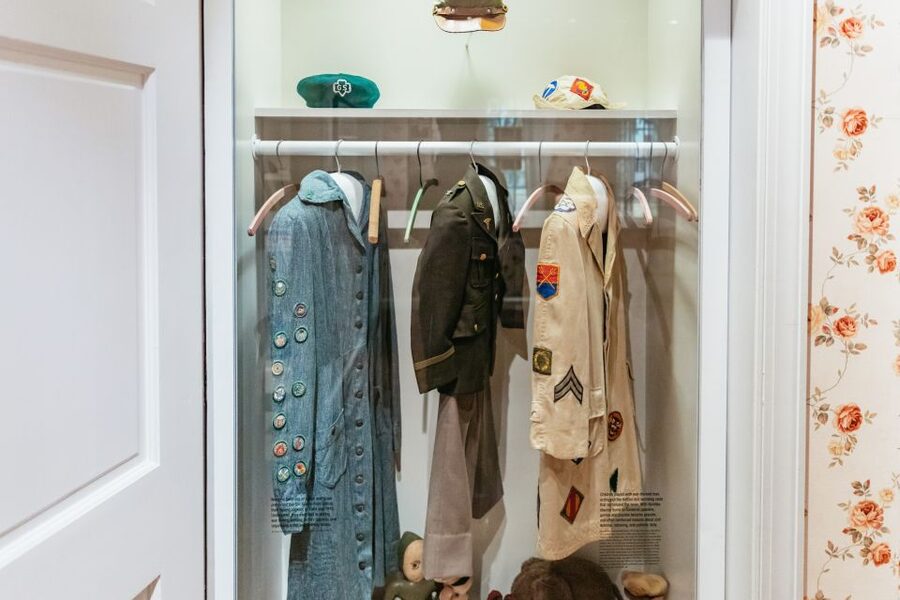
The listed duration is one day, but that does not mean you will see every display in a single visit. I would allow at least four hours for a purposeful visit, five to seven hours if you want to read carefully, watch the films, add the 4D presentation, and take meal breaks.
A half-day works if you choose your priorities. Start with the Louisiana Memorial Pavilion, then visit Campaigns of Courage and the U.S. Freedom Pavilion. Add Beyond All Boundaries if your schedule allows.
A full day is better for first-time visitors. Several sections are text-heavy, and the museum’s size makes backtracking tiring. Reservations after 3:00 PM should be expected to produce a shortened visit, so book an early entry if you want the best chance of seeing the major pavilions.
I would avoid planning another major attraction immediately afterward. The subject matter demands attention, and the museum can leave you thoughtful and tired in the useful way that comes after learning something difficult.
A paper dog tag can help you manage the volume of information. Choose a service member’s story and follow it through the museum. This gives your visit a human thread and keeps the displays from blurring into one long sequence of battles and dates.
Food, breaks, and practical comfort
The American Sector Restaurant and Bar provides a convenient lunch break inside the museum. It is open Sunday through Friday from 11:00 AM to 2:00 PM, and Saturday from 11:00 AM to 3:00 PM.
There are also opportunities for snacks, and the Jeri’s section is noted for its chocolate shake. Beignet fries have also earned praise from people who prefer them to the famous Cafe du Monde version. I would not plan the visit around dessert, but food inside the museum makes a long day much easier.
Restrooms are easy to find, and the facility is clean and impressive. Crowding can make some exhibit areas uncomfortable, especially when several groups stop at the same video or display. Give yourself permission to step aside, take a break, and return to a panel later.
Photography is allowed only within the stated rules. Flash photography and video are not allowed. Follow staff instructions, particularly around the aircraft and theater.
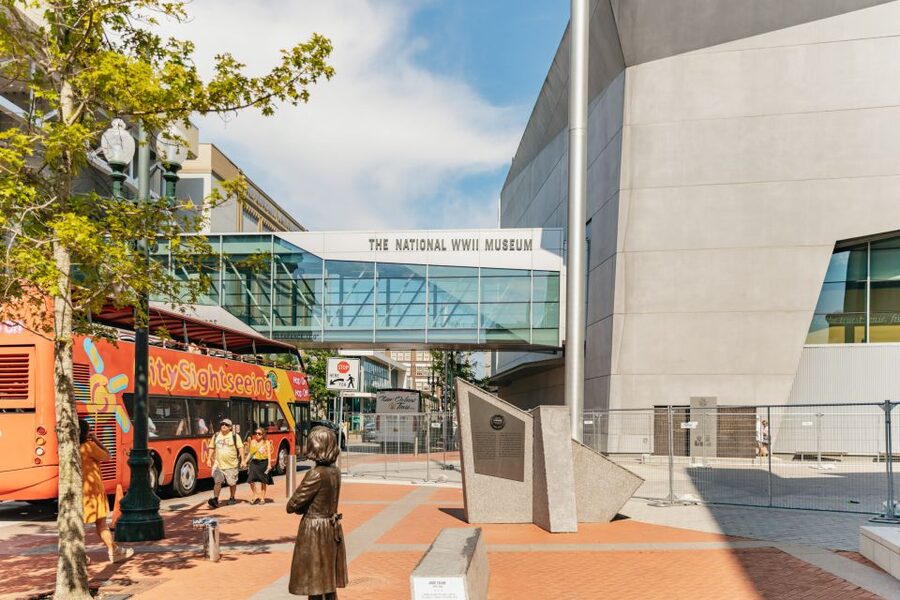
The paid parking garage is at 1024 Magazine Street. If you are driving, include parking time in your plan. The museum is in downtown New Orleans, so the location also works well as part of a day in the city rather than as an isolated stop.
Ticket choices and overall value
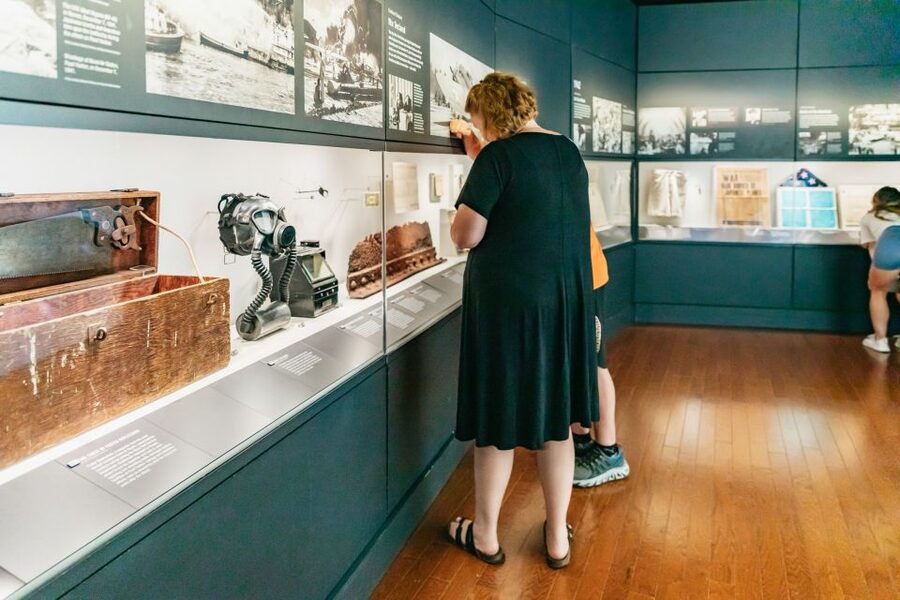
The standard ticket costs $37 per person. That is not a bargain admission price, but the value improves if you use the ticket for a long visit. You are paying for several substantial pavilions, restored aircraft and vehicles, films, personal accounts, and carefully constructed exhibits.
The basic ticket is enough if you mainly want the galleries. I would pay extra for Beyond All Boundaries if you enjoy film presentations and want the museum’s most theatrical account of the war. The two-hour Campaigns of Courage guided tour makes sense for history-focused visitors who want more explanation and structure.
Families should think about stamina. A child or teenager may love the aircraft, vehicles, dog tags, and visual scenes, but not every young person will want to read for six hours. Student tickets apply to children ages 5 to 18 and to students age 19 or older with identification.
The museum offers free cancellation up to 24 hours before the visit, and reserve-now, pay-later booking is available. Timed tickets are useful for securing a desired movie or guided-tour time, while some admission options are non-timed. Check the exact option before paying.
Who will appreciate this museum most?
I recommend it strongly to:
- People with a family connection to World War II
- Military history and aviation enthusiasts
- Teenagers who learn better from objects and films than from textbooks
- Visitors who want a serious New Orleans attraction beyond food and music
- Veterans and active military personnel interested in strategy, equipment, and firsthand testimony
- Anyone willing to give a full morning or day to one subject
It may be less suitable if you want a quick, light attraction between other activities. The museum is focused, large, and at times sad. It also presents the American experience at the center of its story, so you should pair it with other sources if you want a wider account of the war beyond the United States role.
Should you book the National WWII Museum ticket?
Yes, if you can give it time. I would book an early entry, add Beyond All Boundaries, and keep the rest of the day open. Start with D-Day and the Home Front, follow one dog tag story, then continue through Road to Tokyo, Road to Berlin, and the aircraft pavilion.
The $37 admission is easier to justify when you treat this as a full-day museum rather than a two-hour stop. If your New Orleans schedule is tight, choose your sections carefully, but know that you will leave major material unseen.
This is one of the city’s most worthwhile indoor attractions. It teaches through machines, maps, voices, images, and ordinary human stories. Give it the hours it asks for, and the visit will feel substantial rather than rushed.
FAQ
Where is the National WWII Museum located?
It is in downtown New Orleans, Louisiana. The main entrance is on the north side of Andrew Higgins Boulevard.
How much does admission cost?
The listed ticket price is $37 per person. Other options can include the 4D film or a guided tour.
How long is the ticket valid?
The admission ticket is valid for one day.
Is museum admission timed?
This depends on the option selected. Admission may be timed or non-timed. If you choose a ticket with a 4D film or guided tour, the reserved time applies to that film or tour, while museum admission is valid for anytime entry.
Is Beyond All Boundaries included?
It is included only if you select the option that contains the 4D film ticket.
How long is the Campaigns of Courage guided tour?
The guided tour of Road to Tokyo and Road to Berlin lasts two hours.
Is a live guide included with regular admission?
No. A live guide is included only when you choose a guided-tour option.
Are student tickets available?
Yes. Student tickets are valid for children ages 5 to 18 and for students age 19 or older who have identification.
Is the museum wheelchair accessible?
Yes, the museum is wheelchair accessible. A limited number of wheelchairs are available for use on a first-come-first-served basis.
Can I take photographs inside?
Flash photography and video are not allowed. Follow the museum’s posted photography rules and staff instructions.
Is food available at the museum?
Yes. The American Sector Restaurant and Bar is open Sunday through Friday from 11:00 AM to 2:00 PM, and Saturday from 11:00 AM to 3:00 PM.
Can I cancel my booking?
Yes. You can cancel up to 24 hours in advance for a full refund. Reserve-now, pay-later booking is also available.
Just added in New Orleans
- New Orleans: French Quarter, Voodoo and Cultural Experience★ 4.5 · 972 reviews
- From New Orleans: Oak Alley Plantation Tour★ 4.5 · 443 reviews
- New Orleans: Voodoo Queen Tour of French Quarter★ 4.7 · 482 reviews
- New Orleans: Bayou Tour in Jean Lafitte National Park★ 4.8 · 428 reviews
- New Orleans: Sunday Steamboat Jazz Cruise + Optional Brunch★ 4.3 · 470 reviews
- New Orleans: Whitney Plantation Tour with Transportation★ 4.7 · 619 reviews
- New Orleans: Guided Swamp Cruise by Tour Boat★ 4.7 · 570 reviews
- New Orleans: Oak Alley Plantation & Airboat Swamp Combo Tour★ 4.7 · 906 reviews
Museums, compared.
Empire State Building Tickets – Observatory & Museum
Read our review →


9/11 Memorial, Ground Zero Tour with Optional 9/11 Museum Ticket
Read our review →

All-Access 9/11: Ground Zero Tour, Memorial and Museum, One World Observatory
Read our review →
Browse the lists this tour appears in