
Reviewed · MUSEUMS
The National WWII Museum Admission Ticket New Orleans
History hits hard here. New Orleans’ National WWII Museum gives you far more than a few display cases and old uniforms. You move through the American experience of World War II with aircraft overhead, personal stories, battle footage, interactive stations, and carefully presented artifacts. I especially like the campaign galleries, which place you inside the European and Pacific theaters, and the freedom to explore at your own pace. The main drawback is simple: the advertised two to three hours is not enough for most people.
Give yourself a full day if you read every panel, watch the films, and visit more than one building. The museum can also feel intense, with casualty accounts, wartime footage, noise, and constant video screens. That emotional weight is part of the point, but younger children and visitors prone to sensory fatigue may need a slower plan and a break.
In This Review
- Key points to know before you go
- Why this museum deserves a full day in New Orleans
- Starting in the Louisiana Memorial Pavilion
- Campaigns of Courage: Road to Berlin
- Campaigns of Courage: Road to Tokyo
- The US Freedom Pavilion and the machines of war
- Optional experiences that cost extra
- Food, rest, and managing the museum’s size
- How much time should you allow?
- Is the $37.80 admission good value?
- Who will enjoy this experience most?
- Practical planning for your visit
- Should you book the National WWII Museum?
- FAQ
- What does the National WWII Museum admission ticket include?
- How much does general admission cost?
- How long does a visit take?
- Are special experiences included?
- What are the museum’s opening hours?
- Is food included with admission?
- Can I cancel for a full refund?
Key points to know before you go
- Plan for four to seven hours: Two hours lets you see the broad outline, but serious history fans can spend most of a day here and still leave sections for another visit.
- The European and Pacific galleries are the heart of the museum: Road to Berlin and Road to Tokyo use scenery, film, oral histories, artifacts, and chronological storytelling to explain how the war unfolded.
- General admission costs $37.80: This covers the main museum, while special experiences such as Final Mission: USS Tang and Beyond All Boundaries cost extra.
- The museum is emotionally demanding: Expect stories of death, liberation, sacrifice, and the Holocaust, along with wartime sounds and film clips.
- You make your own way there: The museum is in central New Orleans, and your mobile ticket provides general admission during opening hours.
- Food breaks are available inside: The American Sector Restaurant and Soda Shop offer places to pause without ending your visit.
Why this museum deserves a full day in New Orleans
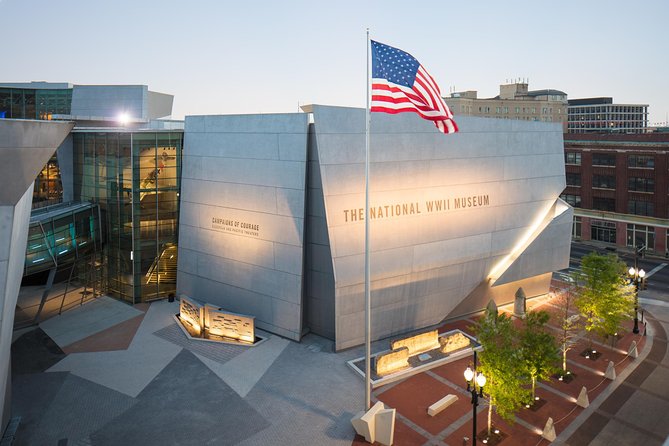
The National WWII Museum tells the story of the American experience in the war, from the reasons it was fought to the way it was won and the price paid afterward. That American focus gives the museum a clear structure, but the story reaches well beyond military hardware.
You see how soldiers prepared, traveled, fought, and returned home. You also encounter the home front, industrial production, political choices, civilian suffering, liberation, and the aftermath in Europe and the United States. This makes the museum useful even if you already know the major dates and battles.
I would not treat this as a quick rainy-day stop between other attractions. At $37.80 per person, the ticket is good value only if you allow enough time to use it properly. The museum is large, spread across several major exhibit buildings, and packed with written material, films, artifacts, and listening stations.
A short visit still gives you a strong introduction. But if you are a World War II enthusiast, a student, or someone who reads every label, you will likely want another half-day. Some people spend six or seven hours inside and still do not see everything.
More Museum Tours in New Orleans:
- New Orleans: The National WWII Museum Ticket
★ 4.8 · 704 reviews - NYC: 9/11 Memorial & Museum Timed-Entry Ticket
★ 4.8 · 31,428 reviews - NYC: Empire State Building Tickets – Observatory & Museum
★ 4.7 · 25,757 reviews
Starting in the Louisiana Memorial Pavilion
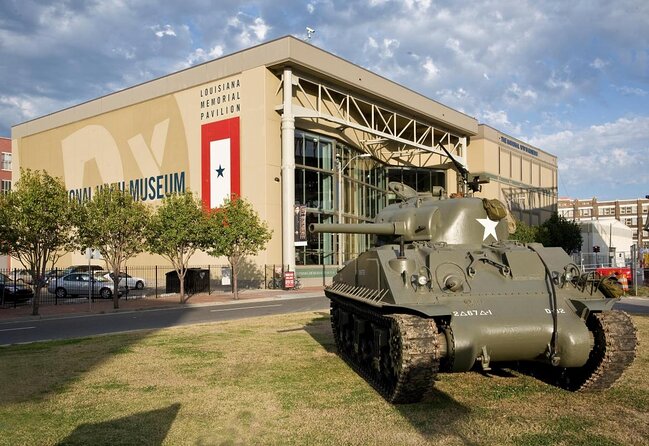
Your visit begins in the Louisiana Memorial Pavilion, where you can get your bearings before moving into the larger galleries. This section includes D-Day and Home Front material, along with an authentic C-47 aircraft.
The C-47 is an important early visual anchor. It connects the broad military story with the equipment used to move people and supplies during the war. Aircraft are displayed at a scale that makes the museum feel more like a working historical setting than a quiet collection of objects.
You can also take part in a mini-train experience connected with your dog tag. The train recalls wartime military transport and gives the opening section a physical sense of movement. You are not simply reading that soldiers went to war. You are placed in a setting that suggests the journey itself.
The dog tag system continues through parts of the museum. At different stations, it helps you follow individual stories and connect large events with particular people. That personal thread is one of the museum’s strongest teaching tools.
Campaigns of Courage: Road to Berlin
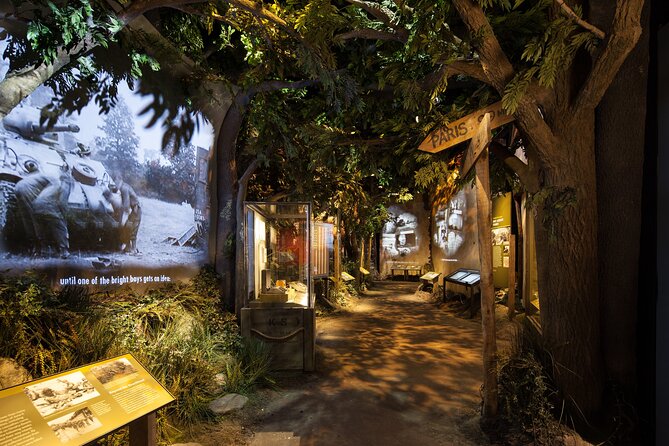
From the second-floor walkway, you enter Campaigns of Courage, the main presentation of the war from an American soldier’s point of view. The European Theater galleries are called Road to Berlin.
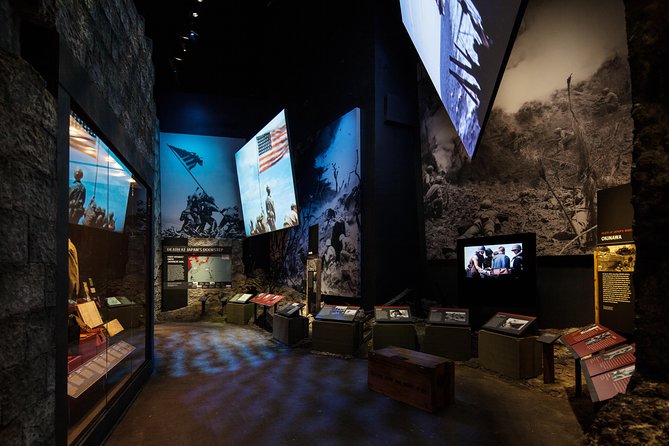
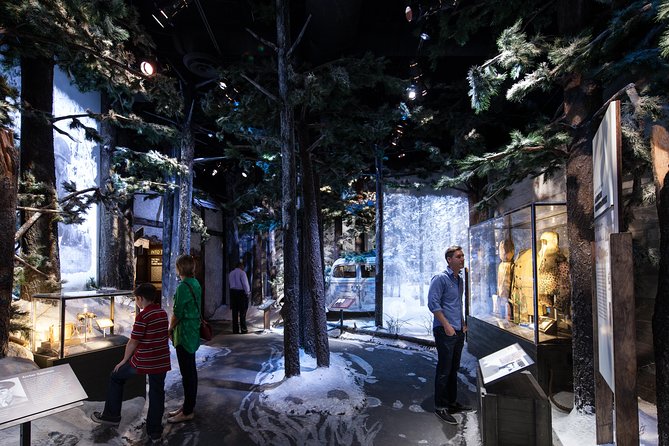
This section moves in chronological order, guiding you through the events and locations of the European campaign. Environmental displays recreate key settings, while narrated video, newsreels, oral histories, and digital material fill out the story.
I like this approach because it gives you a clear sequence. World War II can become a blur of famous names, dates, and battles. Here, you can follow the movement of the conflict and see how one stage led to another.
The displays use plenty of media. You will encounter several short films playing in nearby areas, along with lights, sound, and other effects. That can make the museum vivid and memorable, but it can also become tiring. If you want to study every artifact and read every panel, do not rush because the museum is busy with information.
The Holocaust and liberation material is particularly difficult. The presentation is serious and emotional, and you should allow time to process it rather than treating it as one more gallery on a checklist. I would prepare younger visitors before entering, especially since the museum includes actual wartime footage and direct accounts of mass death.
Campaigns of Courage: Road to Tokyo
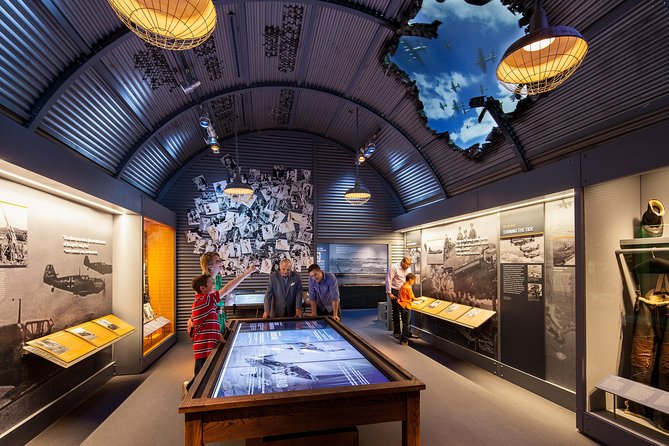
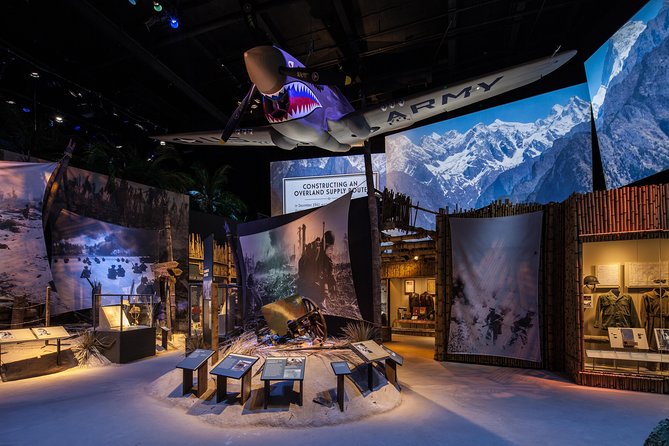
Road to Tokyo presents the Pacific Theater. Like the European galleries, it uses chronological displays, film, oral testimony, artifacts, and recreated environments to explain the war’s progression.
The Pacific campaign is often harder for visitors to picture because the fighting took place across huge distances and very different settings. This gallery helps by placing you inside selected moments and locations rather than giving you only a map and a list of battles.
The American soldier’s point of view remains central, but the material also shows the scale of the conflict and the cost of each advance. The displays ask you to think about difficult decisions, harsh conditions, and the lives lost on all sides.
This is a place where patience pays off. You can move through quickly and collect the main facts, or stop at oral-history stations and personal accounts for a fuller understanding. I would reserve at least an hour for this area if you want to do more than glance at the major displays.
A few more options to weigh up in New Orleans
- New Orleans Premier Ghost, Voodoo and Vampire Walking Tour
★ 4.5 · 12,856 reviews - New Orleans Steamboat Natchez Jazz Cruise with Dinner Option
★ 4.0 · 7,533 reviews - Adults-Only New Orleans Ghost, Crime, Voodoo, and Vampire Tour
★ 5.0 · 6,545 reviews - New Orleans Food Walking Tour of the French Quarter with Small-Group Option
★ 5.0 · 6,118 reviews
The US Freedom Pavilion and the machines of war
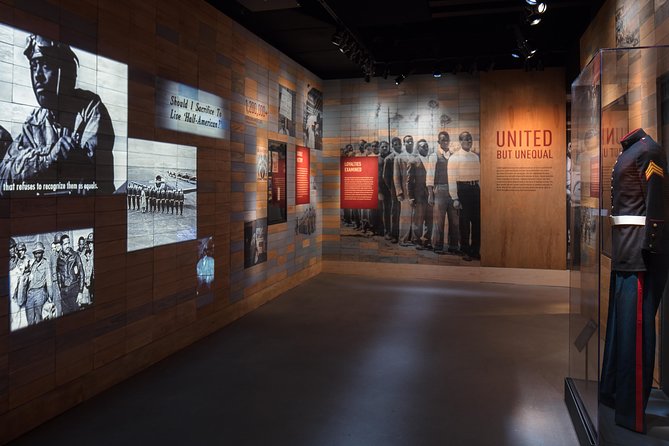
The US Freedom Pavilion provides a different kind of experience. Here, preserved war machines give you a physical sense of the equipment used by American forces.
Large objects can explain scale better than any photograph. You see the size and complexity of the machines, then consider the people who operated them and the conditions in which they were used. The result is impressive, but the gallery also carries a sober tone as it honors American servicemen.
This section works well for visitors who are drawn to engineering, aircraft, vehicles, and military technology. It also gives a needed pause from the dense personal stories in the campaign galleries, though the emotional message remains clear.
Do not assume the pavilion is a quick side room. The museum is made up of several substantial buildings, and any one of them can take a couple of hours if you read carefully. Ask staff for directions if you lose track of where you are. Helpful staff members and volunteers are available throughout the museum.
Optional experiences that cost extra
General admission does not include every major attraction. Two notable additions are Final Mission: USS Tang Submarine Experience and Beyond All Boundaries.
Final Mission is an interactive presentation about USS Tang, one of the most successful submarines of World War II. It is designed to place you inside the submarine’s wartime mission. If you enjoy military technology or want a more active format, this may be worth adding.
Beyond All Boundaries is shown in the Solomon Victory Theater. The approximately 50-minute 4D film was produced by Tom Hanks and combines first-hand accounts from battle and the home front with a large-scale presentation.
The additional experiences are listed at $7, separate from the $37.80 general admission. That makes the total cost higher, so I would choose them based on your interests rather than adding them automatically. If you are visiting for only two or three hours, the main galleries already provide plenty to see.
Food, rest, and managing the museum’s size
You will need a break if you spend most of the day inside. The American Sector Restaurant and the Soda Shop provide places to stop for food or a drink at your own expense.
There is also BB’s Stage Door Canteen, a 1940s-style entertainment venue connected with wartime music and performers. It offers a change of pace from battle accounts and exhibit text, and it helps show that wartime life included entertainment, community, and moments of normality.
I suggest dividing your visit into blocks. Start with one major gallery, take a short rest, then continue to another building. Trying to see all six areas without pausing can leave you mentally worn out, especially because screens, sound, and lighting effects operate in many parts of the museum.
Noise-canceling headphones may help if you are sensitive to overlapping audio. This is not a required item, but the museum can be busy with several video reels playing at once. A slower pace will help you absorb more and avoid sensory fatigue.
How much time should you allow?
The official estimate is two to three hours, but I consider that a minimum orientation visit rather than a complete experience.
Use these time plans as a guide:
- Two hours: See the main galleries at a brisk pace and focus on the largest artifacts and central story.
- Three to four hours: Visit the major European and Pacific sections with selected films and personal accounts.
- A full day: Read more panels, spend time at dog tag stations, visit the Freedom Pavilion, take breaks, and consider an optional experience.
- A return visit: Best for serious World War II students and enthusiasts who want to see every building without rushing.
The ticket lets you spend as long as you like during opening hours. The museum is open daily from 9 a.m. to 5 p.m. That makes an early start especially useful. Arriving near opening gives you the best chance of building a relaxed schedule instead of racing through at the end.
Is the $37.80 admission good value?
For a casual visitor with only an hour, the price may feel steep. You would see only a fraction of the museum, and the main benefit comes from the amount of time you spend inside.
For a history-minded visitor, the value is much stronger. You receive access to a large set of galleries with aircraft, preserved artifacts, personal histories, digital displays, oral histories, and video material. The ability to explore at your own pace also matters. You are not tied to a guide’s schedule or a fixed route.
Families should think about attention span and age. The museum can be a powerful educational experience for older children and teenagers, but the subject matter is heavy. Explain beforehand that the displays include death, soldiers’ sacrifices, liberation, and disturbing wartime footage.
The high rating of 4.8 from 2,202 ratings reflects broad approval, but the useful lesson is not simply that the museum is popular. It is that most people who allow enough time find the experience worthwhile. The occasional negative reaction also matters: some visitors find the repeated casualty stories depressing. That response is understandable, and you should plan a break if the material becomes too much.
Who will enjoy this experience most?
I recommend the museum most strongly to:
- World War II readers and military history fans
- Students studying the war or the modern world
- Families with older children and teenagers
- Visitors interested in personal stories, not only weapons and battles
- Anyone looking for a substantial indoor activity in New Orleans
- People willing to spend at least half a day at one attraction
You may want to skip it if you have very limited time in the city or if you prefer light, fast-moving attractions. The museum asks for attention and emotional energy. It is not a quick photo stop.
The experience also suits visitors who have already seen war museums in Europe. The American focus gives you a different angle, and the personal accounts and restoration work offer details that may not repeat what you saw in Normandy.
Practical planning for your visit
Your mobile ticket covers general admission, and you make your own way to the museum in central New Orleans. The experience is offered in English.
A moderate level of physical fitness is recommended. The museum is large, so expect plenty of walking and standing as you move between buildings and galleries. Plan your route around your energy, and use the restaurant or Soda Shop when you need to reset.
Confirmation is provided at booking. Free cancellation is available if you cancel at least 24 hours before the scheduled start time. Cancellations or changes made within 24 hours are not refunded or accepted, and the stated policy also notes that poor weather can lead to a new date or a full refund.
Should you book the National WWII Museum?
Yes, if you can give it time. I would book this admission for anyone who wants a serious, well-presented account of World War II and is prepared for a moving experience rather than a light afternoon diversion.
The smartest plan is to arrive early, focus first on Campaigns of Courage, and leave room for the US Freedom Pavilion and a food break. Add Final Mission or Beyond All Boundaries only if the extra cost and time fit your interests.
If you have just two hours, book it with realistic expectations. You will see important material, but not the whole museum. If you can spare four hours or more, the $37.80 ticket becomes much better value. For dedicated history fans, plan a full day or a second visit. This is one New Orleans attraction where rushing is the surest way to miss what makes it worthwhile.
FAQ
What does the National WWII Museum admission ticket include?
The ticket includes general admission to the National WWII Museum and access to its main exhibition areas.
How much does general admission cost?
The listed price is $37.80 per person.
How long does a visit take?
The estimated duration is two to three hours, but the museum is large enough to fill four hours, a full day, or even more for visitors who read the displays closely.
Are special experiences included?
No. Final Mission: USS Tang and Beyond All Boundaries are additional experiences and are listed at an extra cost of $7.
What are the museum’s opening hours?
The museum is open Monday through Sunday from 9 a.m. to 5 p.m.
Is food included with admission?
No. Food and drinks cost extra. You can purchase them at the American Sector Restaurant, the Soda Shop, or related on-site venues.
Can I cancel for a full refund?
Yes, if you cancel at least 24 hours before the experience start time. Cancellations or changes made less than 24 hours in advance are not refunded or accepted.
Just added in New Orleans
- New Orleans: French Quarter, Voodoo and Cultural Experience★ 4.5 · 972 reviews
- From New Orleans: Oak Alley Plantation Tour★ 4.5 · 443 reviews
- New Orleans: Voodoo Queen Tour of French Quarter★ 4.7 · 482 reviews
- New Orleans: Bayou Tour in Jean Lafitte National Park★ 4.8 · 428 reviews
- New Orleans: Sunday Steamboat Jazz Cruise + Optional Brunch★ 4.3 · 470 reviews
- New Orleans: Whitney Plantation Tour with Transportation★ 4.7 · 619 reviews
- New Orleans: Guided Swamp Cruise by Tour Boat★ 4.7 · 570 reviews
- New Orleans: Oak Alley Plantation & Airboat Swamp Combo Tour★ 4.7 · 906 reviews
Museums, compared.
Empire State Building Tickets – Observatory & Museum
Read our review →

9/11 Memorial, Ground Zero Tour with Optional 9/11 Museum Ticket
Read our review →

All-Access 9/11: Ground Zero Tour, Memorial and Museum, One World Observatory
Read our review →
Browse the lists this tour appears in